
Who Gets The Frozen Embryos During An Illinois Divorce?
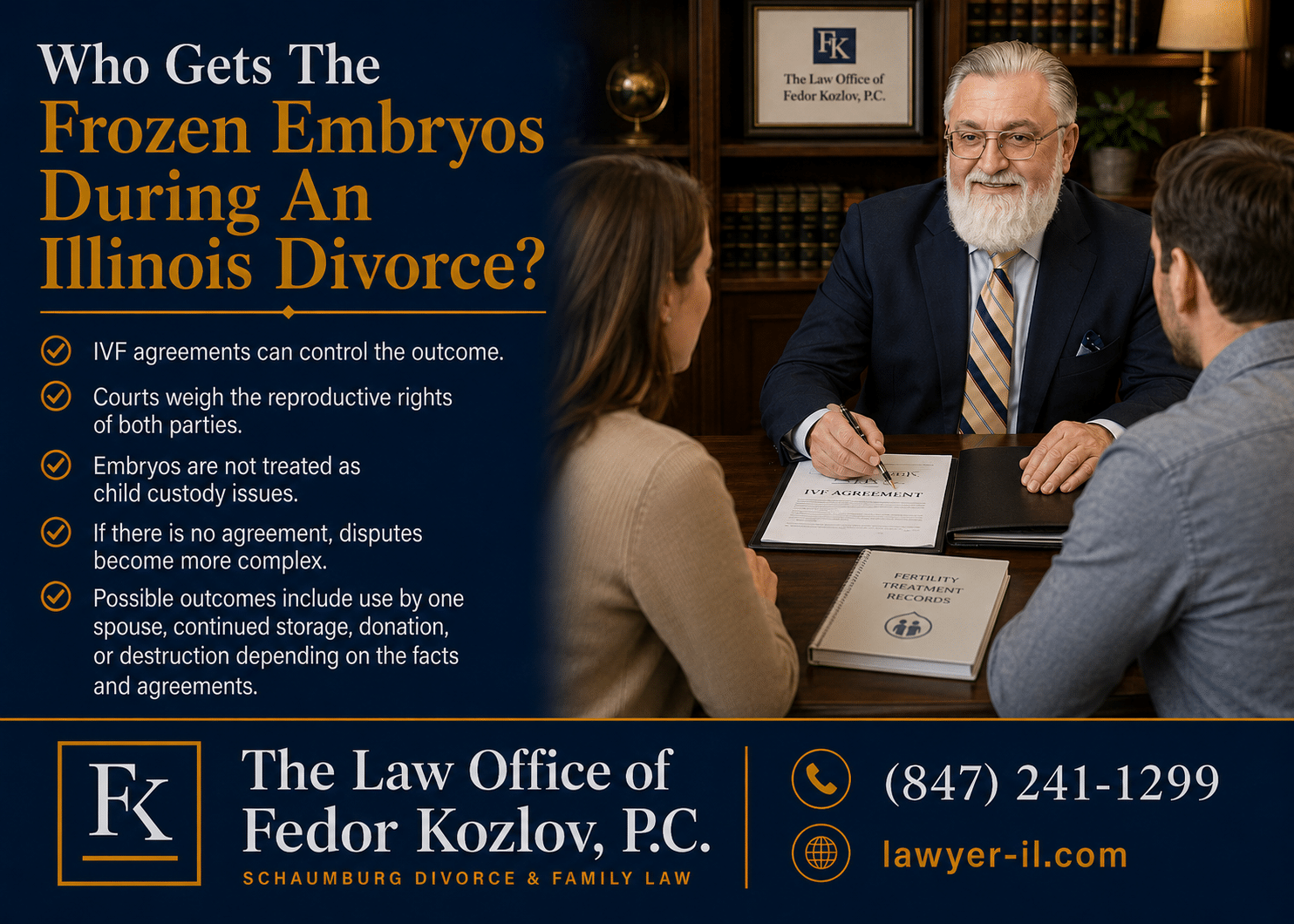
Deciding what happens to frozen embryos during a divorce can be one of the most emotional and complicated issues. Unlike other property, frozen embryos often carry a couple’s hopes for future children. When a marriage ends, each spouse may have different ideas about whether to keep, donate, use, or destroy the embryos. Illinois courts understand that these cases involve personal feelings and important legal questions.
The outcome of a frozen embryo dispute can affect a person’s reproductive rights, future family planning decisions, and financial obligations. Illinois law has developed specific rules for handling these cases, and courts carefully evaluate agreements and competing interests before making decisions. Because these matters often arise alongside divorce proceedings involving property division, parenting issues, child custody matters, visitation rights, paternity concerns, and other family law disputes in Schaumburg, it is important to understand how Illinois courts approach frozen embryo cases. If you are facing a divorce involving stored embryos, understanding your rights under Illinois law can help you make informed decisions about your future.
Understanding Frozen Embryos In Illinois Divorce Cases
Frozen embryos are usually made through in vitro fertilization, or IVF. In IVF, eggs are fertilized outside the body and can be frozen for later use. Couples often sign agreements with fertility clinics about what will happen to the embryos in different situations, including divorce.
When a marriage ends, problems can come up if one spouse wants to use the embryos to have a child and the other does not agree. Courts have to weigh each person’s rights, including one person’s wish to become a parent and the other’s wish not to.
Illinois courts see frozen embryo disputes differently from child custody cases because embryos are not considered legal children. They also do not treat embryos like regular marital property. Instead, courts usually rely on past cases and any agreements the couple signed. The Illinois statute governing these disputes is Section 503 of the Illinois Marriage and Dissolution of Marriage Act, codified at 750 ILCS 5/503. This section addresses the disposition of marital property during divorce proceedings.
Illinois law specifically addresses reproductive material in divorce cases. Under 750 ILCS 5/503(l), courts must first determine whether the parties entered into a written agreement regarding the disposition of embryos, sperm, eggs, or other reproductive material. If a valid agreement exists, the court generally enforces that agreement.
This law shows that Illinois prefers to enforce agreements made before any disputes happen. Most fertility clinics ask patients to fill out detailed consent forms that cover what should happen in the future, such as in cases of separation, divorce, disability, or death.
When a valid agreement clearly addresses divorce, Illinois courts will often honor the parties’ stated intentions.
The Importance Of IVF Agreements
The main question in most frozen embryo disputes is whether the couple signed an agreement that the court can enforce.
Many IVF clinics require patients to execute documents specifying what will happen to stored embryos under different circumstances. These agreements may state that embryos will be:
- Awarded to one spouse
- Donated to research
- Donated to another couple
- Destroyed
- Maintained in storage
Illinois courts look closely at these agreements because they usually show what both people wanted before the marriage ended.
Courts usually prefer to enforce written contracts if they are clear, voluntary, and follow public policy. If both spouses agreed to a certain outcome, judges are often hesitant to ignore that agreement later.
However, disputes can still arise when agreements are ambiguous, incomplete, or silent regarding divorce.
What Happens If There Is No Agreement?
Not every fertility clinic agreement clearly addresses divorce. In some cases, no written agreement exists at all.
When there is no enforceable agreement, Illinois courts must evaluate competing interests. Judges often consider factors such as:
- Each spouse’s interest in procreation
- Each spouse’s interest in avoiding parenthood
- Whether one spouse has alternative opportunities to have biological children
- The circumstances surrounding the creation of the embryos
- The overall fairness of the requested outcome
Illinois courts generally place substantial weight on an individual’s right to avoid becoming a parent against his or her wishes. As a result, courts are often hesitant to compel a party to become a biological parent when that person objects.
Balancing Reproductive Rights
Frozen embryo disputes involve constitutional and privacy concerns that extend beyond ordinary divorce litigation.
One spouse may argue that the embryos represent the only realistic opportunity to have a biological child. The other spouse may argue that allowing implantation would force lifelong biological parenthood despite the end of the marriage.
Illinois courts attempt to balance these competing interests fairly. Judges recognize that both interests deserve significant consideration.
The right to procreate and the right to avoid procreation are both important personal liberties. Courts, therefore, analyze each case individually rather than applying a one-size-fits-all approach.
How Frozen Embryos Differ From Child Custody Cases
Many people assume that disputes involving embryos are treated like child custody proceedings. That is not the case.
Under the Illinois Marriage and Dissolution of Marriage Act, parental responsibilities and parenting time issues involving children are governed by provisions including 750 ILCS 5/602.5 and 750 ILCS 5/602.7. These statutes focus on the best interests of a child.
Frozen embryos are not treated as legal children under Illinois law. Therefore, courts do not conduct a best interests analysis when determining who receives control of embryos.
Instead, courts focus on contractual obligations, property considerations, and reproductive rights.
This distinction is important because the legal framework is entirely different from custody and visitation disputes involving living children.
Potential Outcomes In Frozen Embryo Disputes
Several outcomes may occur depending on the facts of the case.
One possibility is that the embryos are awarded to one spouse for future reproductive use. This often occurs when a valid agreement authorizes that result.
Another possibility is continued storage until the parties reach an agreement or additional legal proceedings occur.
Courts may also order the destruction or donation of embryos if a prior agreement requires such action.
In some situations, one spouse may waive any future rights or interests in the embryos as part of a negotiated marital settlement agreement.
Because these cases involve highly personal decisions, negotiated settlements are often preferable to lengthy litigation.
Why Legal Representation Matters
Frozen embryo disputes present unique challenges that do not arise in most divorces. These cases combine family law, contract law, constitutional rights, and reproductive technology issues.
The outcome can have permanent consequences for both parties. A carefully prepared legal strategy may involve reviewing fertility clinic agreements, analyzing Illinois statutes, evaluating relevant court decisions, and presenting evidence regarding the parties’ intentions and circumstances.
Whether you seek control of the embryos or wish to prevent their use, having experienced legal counsel can help protect your rights throughout the divorce process.
Frozen Embryo Agreement Frequently Asked Questions
Can My Former Spouse Use Frozen Embryos Without My Permission?
The answer depends on the facts of the case and any agreements that were signed. If a valid contract grants one spouse authority to use the embryos after divorce, a court may enforce that agreement. If there is no enforceable agreement, the court will evaluate the competing interests of both parties before determining whether the embryos may be used.
Are Frozen Embryos Considered Marital Property In Illinois?
Frozen embryos are not typically treated the same way as ordinary marital property, such as bank accounts, vehicles, or real estate. Illinois courts recognize that embryos involve unique reproductive interests that require a different legal analysis. Courts often focus on contractual agreements and constitutional considerations rather than applying traditional property division principles.
Does Illinois Automatically Award Embryos To The Woman Who Will Carry The Pregnancy?
No. Illinois law does not automatically award embryos to either spouse. Courts review the specific facts of each case, including any agreements signed by the parties and the competing reproductive interests involved.
Can A Court Force Me To Become A Parent Against My Wishes?
Illinois courts generally take concerns about involuntary parenthood very seriously. If one spouse objects to the use of embryos, courts often carefully examine whether allowing implantation would unfairly infringe upon that person’s right to avoid parenthood. The outcome depends on the facts and any applicable agreements.
What If The Embryos Represent My Only Chance To Have A Biological Child?
This can be a significant factor in litigation. Courts may consider whether a spouse has other opportunities to have biological children when balancing competing interests. The analysis is highly fact-specific and often involves medical evidence and personal circumstances.
Do Fertility Clinic Consent Forms Really Matter?
Yes. Consent forms and IVF agreements are often among the most important pieces of evidence in these cases. Illinois law strongly favors enforcement of valid agreements concerning reproductive material. Courts frequently begin their analysis by examining the language contained in fertility clinic documents.
Can Frozen Embryo Issues Be Settled Outside Of Court?
Yes. Many couples resolve these disputes through negotiation, mediation, or settlement agreements. A negotiated resolution often provides more control and privacy than allowing a judge to make the final decision.
Do Frozen Embryo Cases Affect Child Custody Or Parenting Time Decisions?
Generally, no. Frozen embryo disputes are separate from issues involving parental responsibilities, parenting time, and visitation rights for existing children. Courts apply different legal standards to each type of issue.
What Happens If The IVF Agreement Is Unclear?
If the agreement is ambiguous, incomplete, or silent regarding divorce, the court may consider additional evidence regarding the parties’ intentions and circumstances. The judge may also balance the competing reproductive interests involved.
Should I Hire A Divorce Attorney If Frozen Embryos Are Part Of My Divorce?
Yes. Frozen embryo disputes involve unique legal questions that can have lifelong consequences. An attorney can review agreements, explain your rights under Illinois law, and advocate for your interests throughout the divorce process.
Speak With Fedor Kozlov About Frozen Embryo Disputes In An Illinois Divorce
Disputes involving frozen embryos are among the most sensitive issues that can arise during a divorce. These cases involve deeply personal decisions, significant legal rights, and long-term consequences that may affect your future family planning choices. Whether you are seeking to preserve your ability to have a biological child or protect your right to avoid parenthood, it is important to understand your legal options under Illinois law. I represent clients on either side of divorce proceedings and also handle child custody matters, visitation disputes, paternity cases, and other family law matters throughout Illinois.
If you are involved in a divorce that includes frozen embryos or other complex family law issues, contact the Law Office of Fedor Kozlov today. I represent clients in Schaumburg and throughout Chicago, Illinois, and I am prepared to help you protect your rights and pursue the outcome that best serves your interests. Contact our Chicago embryo dispute attorney the Law Office of Fedor Kozlov at (847) 241-1299 to receive a consultation.
