
What Is The Illinois Parentage Act And Why Does It Matter?
Family relationships can involve complicated legal questions, especially when parents are not married or when there is a disagreement about parental rights and responsibilities. The Illinois Parentage Act plays a significant role in determining who is legally recognized as a child’s parent and what rights and obligations come with that status. Whether a case involves child custody, parenting time, visitation, child support, or paternity, the Parentage Act often serves as the foundation for resolving disputes.
Many parents in Schaumburg are surprised to learn that biological parenthood and legal parenthood are not always the same thing under Illinois law. Understanding how the Illinois Parentage Act works can help parents protect their relationships with their children and make informed decisions during family law proceedings.
Understanding The Illinois Parentage Act
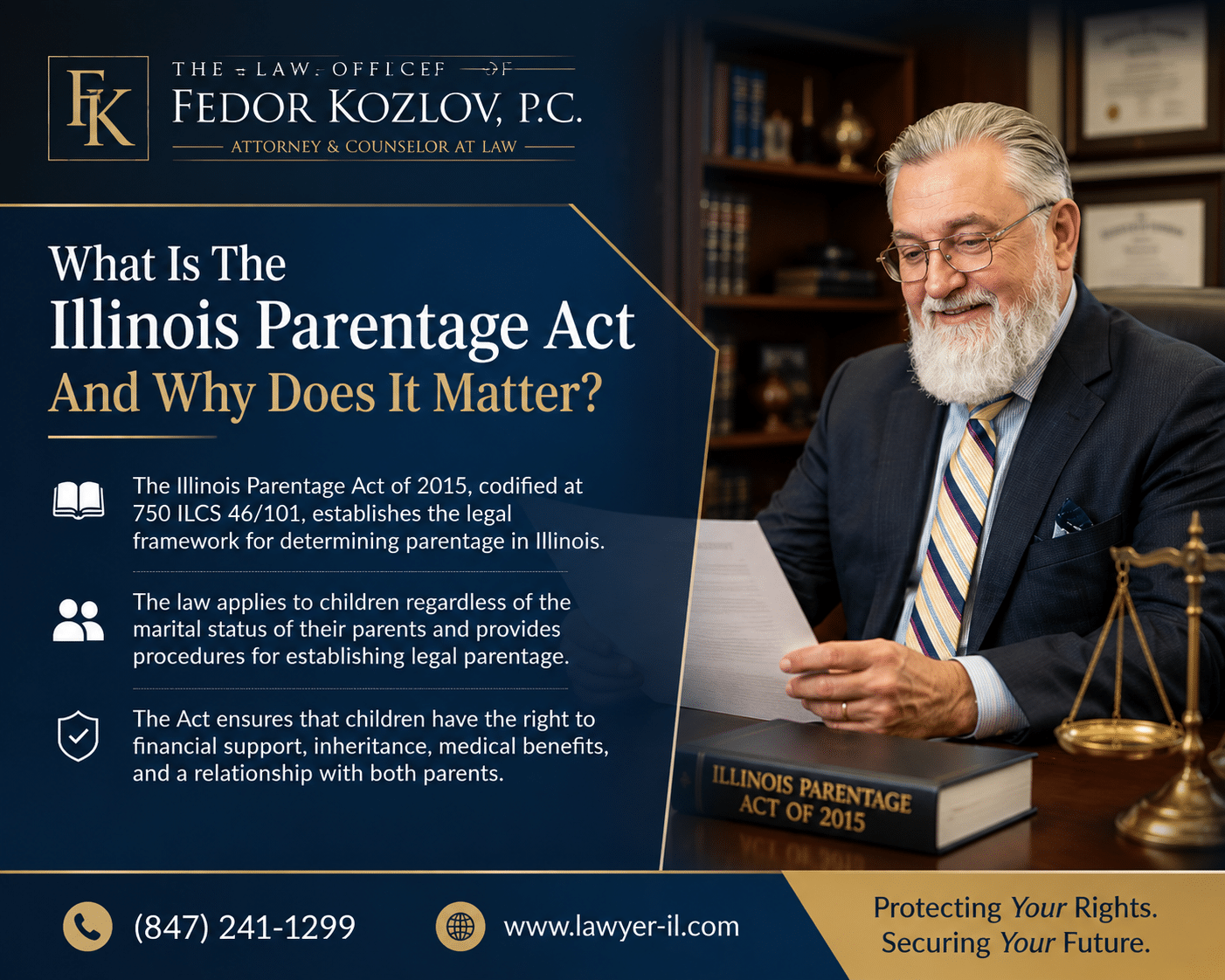
The Illinois Parentage Act of 2015, codified at 750 ILCS 46/101, establishes the legal framework for determining parentage in Illinois. The law applies to children regardless of the marital status of their parents and provides procedures for establishing legal parentage.
Parentage is important because a person must generally be recognized as a legal parent before seeking parental responsibilities, parenting time, visitation rights, or child support. Without a legal determination of parentage, a parent may face significant obstacles when attempting to exercise rights involving a child.
The Act was designed to ensure that children have legally recognized parents and to provide a consistent process for resolving disputes regarding parentage. It also promotes the best interests of children by creating legal certainty regarding parental rights and responsibilities.
Why Parentage Matters In Family Law Cases
Parentage affects nearly every aspect of a family law case involving children. Once parentage is established, a parent may seek an allocation of parental responsibilities, parenting time, decision making authority, and other rights recognized under Illinois law.
Under 750 ILCS 5/602.5 of the Illinois Marriage and Dissolution of Marriage Act, courts may allocate significant decision making responsibilities involving education, healthcare, religion, and extracurricular activities. Under 750 ILCS 5/602.7, courts determine parenting time based on the child’s best interests.
If parentage has not been legally established, an individual may not have standing to request these rights. This is one reason why establishing parentage is often one of the first steps in cases involving unmarried parents.
Parentage also creates legal obligations. Once a person is legally recognized as a parent, they may be responsible for paying child support under Illinois law.
How Parentage Is Established In Illinois
Illinois law recognizes several methods for establishing parentage. One common method is the Voluntary Acknowledgment of Paternity (VAP). Under 750 ILCS 46/301, parents may voluntarily sign an acknowledgment establishing legal parentage without court intervention. When properly executed, the acknowledgment has the same effect as a judicial determination of parentage.
Parentage may also be presumed under certain circumstances. Under 750 ILCS 46/204, a person may be presumed to be a parent when specific statutory conditions are met, such as being married to the child’s mother at the time of birth or within certain periods surrounding the child’s birth.
When disputes arise, either parent may file a court action seeking a judicial determination of parentage. The court may order genetic testing under 750 ILCS 46/501 and related provisions to help determine biological parentage.
The Relationship Between Parentage And Parenting Time
Many parents mistakenly believe that establishing parentage automatically guarantees equal parenting time. Illinois law does not create an automatic presumption of equal parenting time simply because parentage has been established.
Instead, courts evaluate parenting time requests under the best interests of the child standard contained in 750 ILCS 5/602.7. Judges consider numerous factors, including the child’s relationship with each parent, the child’s needs, each parent’s ability to care for the child, and the willingness of each parent to facilitate a relationship with the other parent.
Establishing parentage gives a parent the legal ability to seek parenting time, but the specific schedule will depend upon the facts of the case and the child’s best interests.
Parentage And Visitation Rights
Illinois law uses the term “parenting time” rather than visitation when referring to a parent’s time with a child. However, many people continue to use the term visitation when discussing custody matters.
Once parentage is established, a parent generally has the right to request parenting time with their child. Courts cannot simply deny a legal parent access to a child without a valid legal basis.
Under 750 ILCS 5/603.10, restrictions on parenting time may only be imposed when a parent’s conduct seriously endangers the child’s physical, mental, moral, or emotional health. Courts typically encourage children to maintain meaningful relationships with both parents whenever appropriate.
For parents who were never married, establishing parentage is often the key that opens the door to obtaining parenting time and involvement in a child’s life.
Parentage Issues During Divorce Proceedings
When married parents divorce, parentage is often presumed and may not become a contested issue. However, disputes can arise regarding biological parentage, parental rights, or the allocation of parental responsibilities.
In some divorce cases, parentage issues become intertwined with custody disputes, parenting time schedules, child support determinations, and decision making authority. The Parentage Act and the Illinois Marriage and Dissolution of Marriage Act frequently work together to resolve these issues.
Whether I represent a mother or a father during divorce proceedings, I focus on protecting parental rights while advocating for arrangements that serve the child’s best interests.
Legal Consequences Of Failing To Establish Parentage
Failing to establish parentage can create serious legal problems. A parent who has not legally established parentage may have difficulty obtaining parenting time, participating in important decisions regarding the child’s upbringing, or protecting their relationship with the child.
Children may also be affected. Legal parentage can impact child support, inheritance rights, access to medical information, health insurance coverage, and other important benefits.
Because the consequences can be significant, addressing parentage issues as early as possible is often critical to protecting both parental and child rights.
Protecting Your Rights Under Illinois Law
Every family situation is different. Some parentage cases involve cooperative parents seeking legal recognition of an existing relationship. Others involve contested paternity disputes, custody disagreements, or litigation concerning parenting time and decision making authority.
The Illinois Parentage Act provides important protections for parents and children alike. Understanding how the law applies to your circumstances can help you make informed decisions and avoid costly mistakes that could affect your family for years to come.
Illinois Parentage Act FAQs
What Is The Purpose Of The Illinois Parentage Act?
The Illinois Parentage Act establishes procedures for determining who is legally recognized as a child’s parent. The law helps ensure that children have legally recognized parents and provides a framework for resolving disputes involving parental rights, parenting time, decision making authority, and child support.
Does A Father Automatically Have Rights If His Name Is On The Birth Certificate?
Not necessarily. While being listed on a birth certificate may be important evidence, legal parentage can depend on several factors. In some situations, additional legal steps may be necessary to fully establish parental rights under Illinois law.
Can An Unmarried Father Seek Parenting Time?
Yes. Once legal parentage has been established, an unmarried father generally has the right to seek parenting time and an allocation of parental responsibilities under Illinois law. The court will evaluate requests based on the child’s best interests.
Can A Mother Refuse To Allow A Father To See The Child If The Parents Were Never Married?
If parentage has not been legally established, disputes can arise regarding parental rights. Once legal parentage is established, however, both parents generally have rights and responsibilities concerning the child. Parenting time issues should be resolved through proper legal procedures rather than unilateral decisions.
What Happens If There Is A Dispute About Who The Child’s Father Is?
A parentage action may be filed in court. The court may order genetic testing under the Illinois Parentage Act to help determine biological parentage. The results often play a significant role in the court’s decision.
Is Genetic Testing Required In Every Parentage Case?
No. Many parentage cases are resolved through voluntary acknowledgments or legal presumptions. Genetic testing is typically used when parentage is disputed or when additional evidence is needed.
Can Parentage Be Challenged After It Has Been Established?
In some situations, yes. However, Illinois law imposes deadlines and legal requirements that may limit when and how challenges can be brought. The facts of each case are important.
Does Establishing Parentage Automatically Create Equal Custody Rights?
No. Establishing parentage gives a parent standing to seek parental rights. The court must still determine parenting time and decision making responsibilities based on the child’s best interests under Illinois law.
Can A Parent Be Ordered To Pay Child Support After Parentage Is Established?
Yes. Establishing parentage can create legal obligations as well as rights. A legal parent may be required to provide financial support for a child under Illinois child support laws.
Why Should I Speak With A Family Law Attorney About A Parentage Issue?
Parentage disputes can affect custody, parenting time, visitation rights, child support, and long term relationships between parents and children. An attorney can help protect your rights, explain your options, and ensure that your interests and your child’s interests are properly presented to the court.
Contact Our Paternity Attorney To Schedule A Consultation
Questions involving paternity, child custody, parenting time, visitation rights, and parental responsibilities can have lasting effects on both parents and children. Whether you are seeking to establish parentage, protect your relationship with your child, modify an existing parenting arrangement, or resolve a dispute during a divorce proceeding, obtaining knowledgeable legal guidance can make a significant difference in the outcome of your case.
At the Law Office of Fedor Kozlov, I represent mothers and fathers in family law matters throughout Schaumburg, Chicago, and surrounding Illinois communities. I handle cases involving divorce, child custody, parenting time, visitation rights, paternity, parental responsibilities, and related family law disputes. To discuss your situation and learn how Illinois law may apply to your case, call our paternity attorney at the Law Office of Fedor Kozlov at (847) 241-1299 to receive a consultation.
