
What Happens To IVF Embryos When A Marriage Ends?
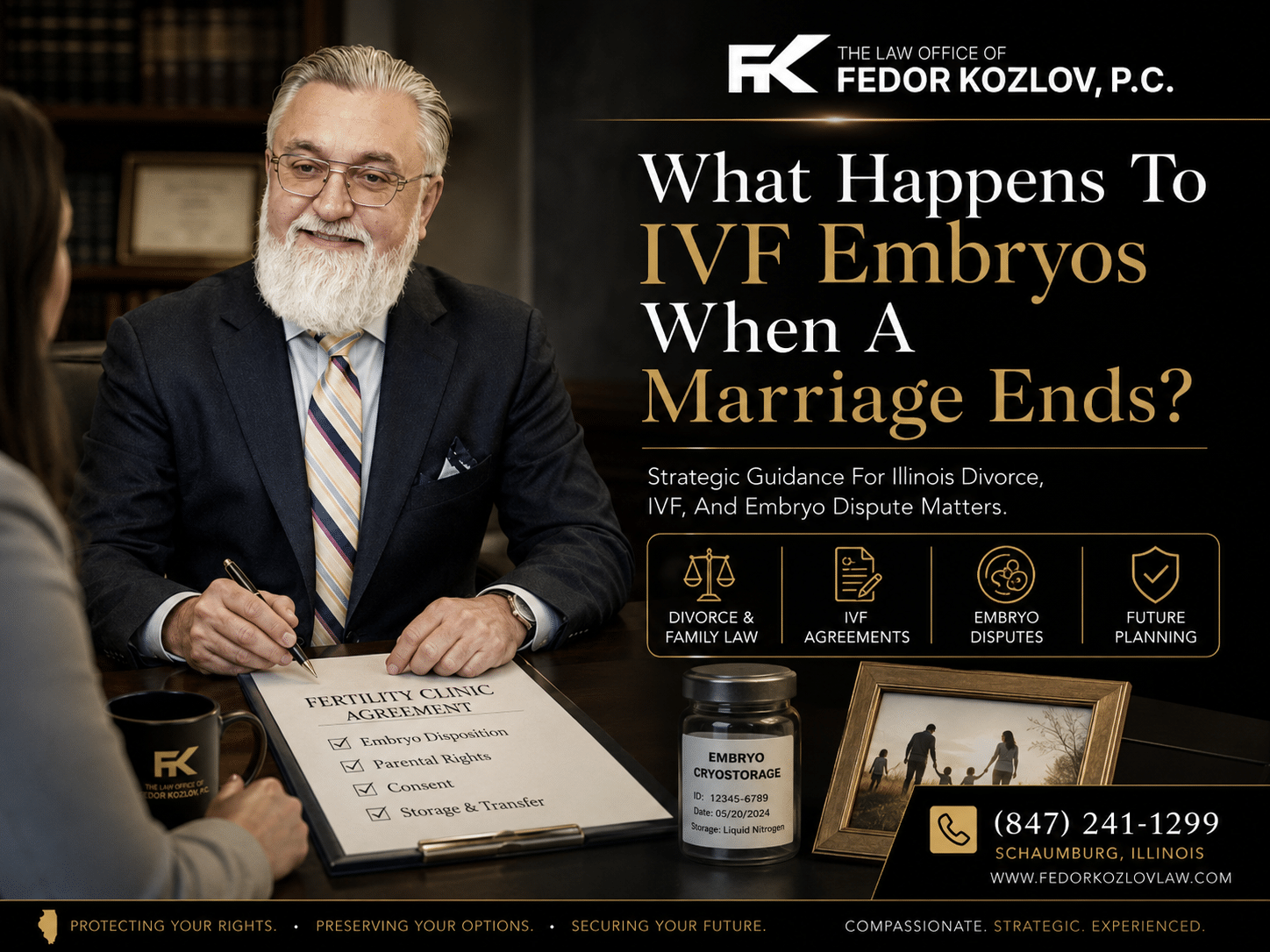
Divorce often means making tough choices about property, money, parenting, and family relationships. If a couple has created embryos through IVF, things can get even more complicated. Disputes over frozen embryos bring up personal questions about parenthood, reproductive rights, and future family plans. Many couples start fertility treatment expecting to raise children together, but things can change before the embryos are used.
Deciding what happens to stored embryos after a marriage ends is often one of the most emotional parts of a divorce. Illinois courts look at these cases using contract law, constitutional rights, and family law, so it’s important for spouses to know their legal rights and responsibilities.
Why IVF Embryos Create Unique Divorce Issues
Embryos are not like other marital assets and don’t fit into the usual property division categories. Things like bank accounts, retirement funds, cars, or homes can be valued and split under Illinois divorce laws. Embryos are different because they represent the chance for future life and parenthood. For one spouse, they might be the only way to have a biological child. For the other, being made a parent after divorce may be something they strongly do not want.
Because both spouses may want different things, courts handle embryo disputes differently than other property issues. Judges have to weigh each person’s rights and wishes, and they also look at any agreements made during fertility treatment. The emotional importance of embryos can make it harder to reach a settlement, which can lead to higher legal costs and a longer divorce process.
I tell my clients that embryo disputes are not just about money. These cases involve deeply personal issues that can impact both people for years after the divorce is over.
The Importance Of Fertility Clinic Agreements
One of the first things courts typically examine is whether the spouses signed agreements with the fertility clinic before creating or storing embryos. Most fertility clinics require patients to complete extensive consent forms addressing what will happen to embryos under various circumstances, including divorce, death, incapacity, or abandonment.
These agreements can become highly significant if a dispute later arises. Courts frequently evaluate whether the parties clearly expressed their intentions concerning embryo disposition before the embryos were created. If the agreement specifically addresses divorce and provides a clear process for resolving disputes, a court may give substantial weight to those provisions.
However, not every fertility clinic document resolves all potential issues. Some agreements contain ambiguous language, while others may not fully address changing circumstances that occur years later. As a result, even when agreements exist, litigation can still occur regarding their interpretation and enforceability.
How Illinois Courts Analyze Embryo Disputes
Illinois courts generally recognize that disputes involving embryos require careful consideration of both parties’ rights. While Illinois does not have a specific statute that completely governs every embryo dispute arising from divorce, courts frequently rely on contractual principles and constitutional considerations when evaluating these cases.
Judges usually start by looking at any written agreements the couple signed. If there is a valid agreement that clearly says what should happen to the embryos after divorce, the court may follow those terms. If there isn’t an enforceable agreement, the court will weigh each spouse’s interests and decide what is fair based on the situation.
For example, a court might look at whether one spouse wants to use the embryos to have a child while the other does not want to become a parent after divorce. Courts often recognize that making someone a parent against their wishes is a serious legal issue.
Each case is highly fact-specific, making experienced legal representation particularly important when embryo disputes arise.
Are IVF Embryos Considered Marital Property?
Illinois courts usually do not treat embryos like other marital property. The Illinois Marriage and Dissolution of Marriage Act (750 ILCS 5/503) covers how property is divided in divorce. Even though embryos might technically be marital assets since they were created during the marriage, courts understand that embryos involve more than just property rights.
Unlike a home or retirement account, embryos cannot simply be divided between spouses. Their unique nature requires courts to consider additional factors beyond financial value. The legal analysis often focuses on reproductive rights, prior agreements, and the intentions of the parties when the embryos were created.
As a result, embryo disputes often proceed differently from standard property division issues and may require separate legal arguments addressing constitutional and family law considerations.
What Happens If One Spouse Wants To Use The Embryos?
One of the most common disputes occurs when one spouse wants to use the embryos after divorce while the other spouse objects. This situation often arises when a spouse faces fertility challenges and views the embryos as the best or only opportunity to have a biological child.
Courts must balance competing interests in these situations. One spouse may argue that denying access to the embryos eliminates the possibility of biological parenthood. The other spouse may argue that being compelled to become a parent after divorce violates fundamental personal rights.
The outcome often depends upon the language contained in fertility agreements, the circumstances surrounding embryo creation, and the specific facts of the case. Courts generally seek to avoid outcomes that unfairly burden either party while respecting valid agreements that were previously executed.
Because these cases involve sensitive constitutional and family law issues, there is rarely a simple answer that applies to every situation.
How Embryo Disputes Can Affect Future Parenting Issues
If embryos are ultimately used and a child is born, Illinois family law will govern future parenting issues. Once a child exists, the focus shifts away from the embryo dispute and toward the child’s best interests.
Under 750 ILCS 5/602.7, courts allocate parental responsibilities based upon numerous factors affecting a child’s welfare. These factors include the child’s needs, the relationship between the child and each parent, the parties’ ability to cooperate, and other circumstances relevant to the child’s best interests.
Similarly, parenting time issues are governed by Illinois law rather than by private agreements that attempt to predetermine every future parenting arrangement. Courts retain authority to review parenting matters and enter orders that serve the child’s welfare.
This means that even if spouses previously entered agreements concerning embryos, future decisions regarding parenting time and parental responsibilities remain subject to judicial review once a child is born.
Why Early Legal Planning Matters
Many couples focus entirely on the medical aspects of IVF and give little attention to the legal implications. Unfortunately, failing to address these issues early can create substantial problems if the marriage later deteriorates.
Carefully drafted agreements can help reduce uncertainty and provide guidance if disputes arise. While no agreement can guarantee that litigation will never occur, clear documentation of the parties’ intentions may significantly improve the likelihood of a predictable outcome.
I encourage individuals considering IVF to think carefully about future possibilities and ensure that any agreements accurately reflect their intentions. Addressing these issues before conflict develops is usually far easier than attempting to resolve them during a contested divorce.
FAQs About IVF Embryos And Divorce In Illinois
Can IVF Embryos Be Divided Like Other Marital Property?
No. Although embryos may be connected to the marital estate, courts generally recognize that they are different from traditional assets such as homes, vehicles, or retirement accounts. Embryos involve significant personal and reproductive interests that require additional legal analysis. Because embryos cannot simply be divided between spouses, courts often focus on agreements, reproductive rights, and the parties’ intentions when determining how disputes should be resolved.
Do Fertility Clinic Consent Forms Matter During Divorce?
Yes. Fertility clinic agreements can play a major role in embryo disputes. Courts often review these documents to determine whether the parties previously agreed on what should happen to embryos if the marriage ended. If the language is clear and enforceable, courts may give substantial weight to those provisions. However, ambiguous language or changing circumstances can still lead to litigation.
Can One Spouse Use The Embryos Without The Other Spouse’s Consent?
The answer depends on the specific facts of the case and any agreements that were signed. Some fertility agreements require mutual consent before embryos can be used. Others may provide specific instructions concerning divorce. Courts often examine the parties’ intentions and legal rights before determining whether one spouse may proceed without the other’s approval.
What Happens If The Fertility Agreement Does Not Address Divorce?
If the agreement is silent regarding divorce, courts may need to evaluate the competing interests of both spouses. Judges often consider the parties’ reproductive rights, the circumstances surrounding embryo creation, and other relevant factors. Because there is no universal rule that applies in every situation, outcomes can vary significantly from case to case.
Can A Court Force Someone To Become A Parent After Divorce?
Courts are often reluctant to impose parenthood on an individual who objects. Many embryo disputes involve balancing one spouse’s desire to have a child against the other spouse’s desire to avoid parenthood after the marriage has ended. These cases raise important constitutional and personal rights considerations that courts take seriously.
If A Child Is Born From An Embryo, How Are Parenting Issues Decided?
Once a child is born, Illinois family law governs issues involving parental responsibilities and parenting time. Under 750 ILCS 5/602.7, courts determine these matters according to the child’s best interests. Prior embryo agreements may provide context, but judges retain authority to enter orders that promote the child’s welfare.
Can Embryo Disputes Increase The Cost Of Divorce?
Yes. Embryo disputes often involve complex legal and factual issues that require extensive litigation. Because these cases frequently involve constitutional rights, contract interpretation, and family law concerns, they can significantly increase the length and expense of divorce proceedings.
Should I Consult A Family Law Attorney Before Starting IVF?
Many people benefit from obtaining legal guidance before beginning fertility treatment. Reviewing proposed agreements and discussing potential future issues may help reduce uncertainty and clarify expectations. Early planning often provides greater protection than attempting to resolve disputes after problems arise.
Schedule A Consultation With Our IVF Attorneys
Disputes involving IVF embryos can create difficult legal and emotional challenges during a divorce. Questions involving embryo ownership, future parenthood, parental responsibilities, parenting time, paternity, and related family law issues require careful analysis under Illinois law. Understanding your rights before making important decisions can help protect your interests and provide greater clarity throughout the legal process.
At the Law Office of Fedor Kozlov, I represent clients in Schaumburg and throughout Chicago, Illinois, in divorce proceedings, allocation of parental responsibilities disputes, parenting time matters, visitation issues, paternity cases, and other family law matters. If you are involved in a dispute concerning IVF embryos or have questions about how fertility issues may affect your divorce, contact our IVF attorney the Law Office of Fedor Kozlov at (847) 241-1299 to schedule a consultation.
