
What Happens If My Spouse Files Before I Am Ready?
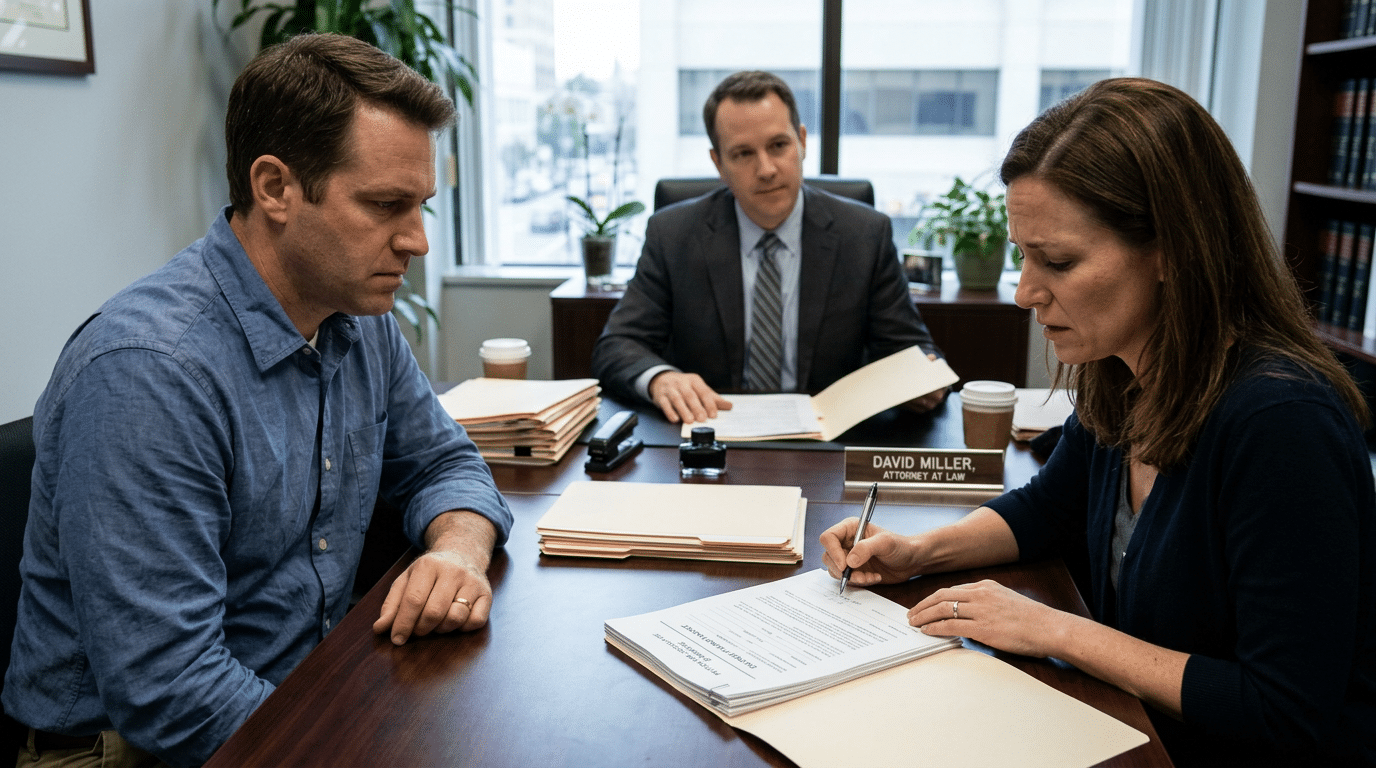
Getting divorce papers unexpectedly can make it feel like your spouse already has the upper hand. You might still be considering counseling, hoping to fix the marriage, or just trying to understand what happened, while your spouse has started the legal process. But filing first does not let your spouse decide how property is divided, how parenting time is set, or whether you get maintenance.
Illinois divorce law lets both spouses take part in the process and protect their rights. What matters most after you are served is how you respond, not whether you were emotionally ready. I tell clients in Schaumburg to treat the filing as a serious legal event and start protecting their rights, even if they are unsure about ending the marriage.
Your Spouse Does Not Need Your Permission To File For Divorce
One of the first things I explain is that one spouse does not need the other spouse’s consent to begin an Illinois divorce. Under 750 ILCS 5/401, Illinois permits dissolution when irreconcilable differences have caused the irretrievable breakdown of the marriage, efforts at reconciliation have failed or future efforts would be impracticable and not in the family’s best interests, and the statutory requirements have been satisfied.
Illinois is a no-fault divorce state. Your spouse does not have to prove that you caused the marriage to fail through adultery, abandonment, cruelty, or another form of marital misconduct. Likewise, refusing to agree to the divorce generally does not permanently prevent the dissolution from occurring. If the marriage has legally broken down and the statutory requirements are met, the court may eventually dissolve it even when only one spouse wants the divorce.
It can be hard to accept this if you still hope to work things out. Legally, though, your main concern should be making sure the divorce process does not continue without your involvement.
Filing First Does Not Mean Your Spouse Wins
Some people think the person who files first automatically has an advantage. Illinois law does not give the spouse who files first any special position when it comes to dividing property, maintenance, parenting time, child support, or decision-making for children.
For example, marital property is addressed under 750 ILCS 5/503. The court identifies marital and non-marital property and divides the marital estate in just proportions after considering the statutory factors. The petitioner does not receive a larger share simply because the petitioner filed first.
The same principle applies when children are involved. A parent’s status as petitioner or respondent does not determine who receives more parenting time or significant decision-making authority. Those questions are governed by the child’s best interests rather than which parent’s name appears first on the caption of the divorce case.
There may still be practical advantages associated with preparation. A spouse who planned the filing may already have collected financial records, considered parenting proposals, and developed litigation goals. That makes it especially important for the responding spouse to become organized quickly.
Do Not Ignore The Divorce Papers
Not feeling ready emotionally does not stop the legal process. Once you are served, there are steps and deadlines you need to pay attention to right away. Ignoring the papers because you do not want the divorce can put you at risk.
The divorce paperwork should be reviewed carefully. The petition may contain statements concerning the marriage, children, property, debts, maintenance, and other issues. You need to understand what your spouse is asking the court to do and whether you agree with the factual allegations and requested relief.
If you do not take part, important decisions could be made without your input. I suggest starting your legal preparation as soon as you are served, even if you need more time to process the end of the marriage personally.
Temporary Orders Can Affect Your Life While The Divorce Is Pending
A divorce case can take time, and families frequently need rules governing finances and children before a final judgment is entered. Illinois law therefore allows either party to request certain temporary relief under 750 ILCS 5/501.
Depending on the circumstances, temporary issues may include child support, maintenance, possession of the marital residence, payment of household expenses, and other financial concerns. Under 750 ILCS 5/603.5, the court may also enter a temporary allocation of parental responsibilities when doing so is in the child’s best interests.
Temporary decisions are important and should not be overlooked. Even though a temporary order is not final, it can set the rules for your family for a long time while the case is ongoing. If your spouse asks for temporary relief, do not wait until the final hearing to address these issues.
Be Careful About Changing The Parenting Routine
One common mistake after an unexpected filing is reacting emotionally and changing your children’s routine without thinking it through. Some parents move out suddenly, stop seeing their children as often, block the other parent’s access, or make informal arrangements that are hard to change later.
Illinois courts look at the child’s best interests and each parent’s caregiving history under 750 ILCS 5/602.7. What you do early in the separation can matter later. I encourage parents to stay involved in their children’s lives and not use parenting time to get back at the other parent.
If there are legitimate concerns about abuse, violence, neglect, substance abuse, or another threat to a child’s safety, the situation requires a different analysis and potentially immediate legal intervention. Otherwise, preserving stability for the children while developing an appropriate parenting arrangement can be important.
You May Need To Prepare A Parenting Plan
When parental responsibilities are at issue, Illinois law requires significant attention to parenting plans. Under 750 ILCS 5/602.10, parents generally must submit a proposed parenting plan to the court within 120 days after service of a petition for allocation of parental responsibilities or the filing of an appearance, unless good cause supports additional time.
A parenting plan addresses much more than where the children sleep. It can address regular parenting schedules, holidays, transportation, communication, significant decision-making responsibilities, access to records, and procedures for dealing with disagreements.
If your spouse has already begun preparing a detailed parenting proposal, you should develop your own position rather than simply reacting to what has been requested. I want the court to understand your actual involvement with the children, the practical needs of the family, and the arrangement you believe serves their best interests.
Protect Your Financial Position Without Acting Rashly
An unexpected divorce filing can create fear about money. You may worry that your spouse will empty accounts, stop paying bills, conceal assets, or leave you responsible for marital debts. The answer is not to immediately drain joint accounts or transfer property yourself.
Under 750 ILCS 5/503, property acquired by either spouse during the marriage is generally presumed to be marital property unless a statutory exception applies. Retirement benefits, investment assets, real estate, business interests, bank accounts, and debts may all require careful classification and valuation.
I recommend gathering financial information as soon as possible. Tax returns, bank statements, investment records, retirement statements, mortgage documents, credit card records, business documents, insurance information, and pay records can become important evidence. Preserving information is very different from hiding or transferring assets.
If immediate financial protection is necessary, Illinois law provides procedures for requesting appropriate court relief rather than engaging in self-help measures that may later create problems.
Maintenance And Child Support May Become Immediate Issues
When spouses have significantly different incomes, unexpected divorce papers often raise concerns about how household expenses will be paid. Temporary maintenance may be available under 750 ILCS 5/501, while final maintenance issues are governed principally by 750 ILCS 5/504.
Child support is governed by 750 ILCS 5/505. Illinois uses an income shares framework that considers the parents’ incomes and other statutory factors. Parenting time can also affect certain support calculations, depending on the circumstances.
Whether you expect to pay or receive support, you should understand the financial information being presented to the court. Income, bonuses, commissions, self-employment earnings, benefits, and other financial resources may require careful examination. I represent spouses on either side of these disputes and focus on making certain that the relevant financial picture is accurately presented.
You Can Still Explore Reconciliation
Being served with divorce papers does not prohibit you and your spouse from discussing reconciliation. Filing creates a legal case, but it does not necessarily mean the parties must aggressively litigate every issue or that reconciliation is impossible.
What I would not recommend is ignoring the legal case while hoping reconciliation occurs. You can protect your rights while continuing discussions about the marriage. If reconciliation succeeds, the legal case can be addressed accordingly. If it does not, you will be far better positioned because you responded appropriately from the beginning.
Protecting yourself legally should not be interpreted as declaring war on your spouse. It means recognizing that a court proceeding now exists and that important decisions concerning your children, property, income, and future may eventually be made within that proceeding.
Being Unprepared Today Does Not Mean You Have To Remain Unprepared
Your spouse may have spent weeks or months preparing before filing, while you learned about the divorce when papers arrived at your door. That difference in preparation can feel substantial, but it does not determine the final result.
Once I become involved in a case, I focus on identifying what has already happened, what your spouse is requesting, what immediate issues require attention, and what information needs to be collected. From there, the case can be approached methodically rather than emotionally.
The most important thing is not to allow surprise to become inaction. You may not have chosen when the divorce started, but you can still make informed decisions about how you respond.
Speak With The Law Office Of Fedor Kozlov If Your Spouse Filed For Divorce
Finding out that your spouse has filed for divorce before you were ready can leave you feeling several steps behind, but filing first does not determine the outcome of an Illinois divorce. You still have important rights concerning marital property, finances, maintenance, parenting time, parental responsibilities, child support, and other family law issues. What you do after receiving the papers can matter considerably more than who filed them.
At the Law Office of Fedor Kozlov, I represent clients on either side of divorce proceedings and handle matters involving divorce, child custody decisions, allocation of parental responsibilities, parenting time and visitation rights, paternity, financial disputes, and other aspects of Illinois family law. I work to identify the immediate issues, protect my client’s position, and develop a strategy based on the actual facts of the case rather than the surprise of being served first. Contact our Schaumburg divorce lawyers at the Law Office of Fedor Kozlov at (847) 241-1299 to receive a consultation.
