
What Evidence Can Help Win A Parenting-Time Dispute In Illinois?
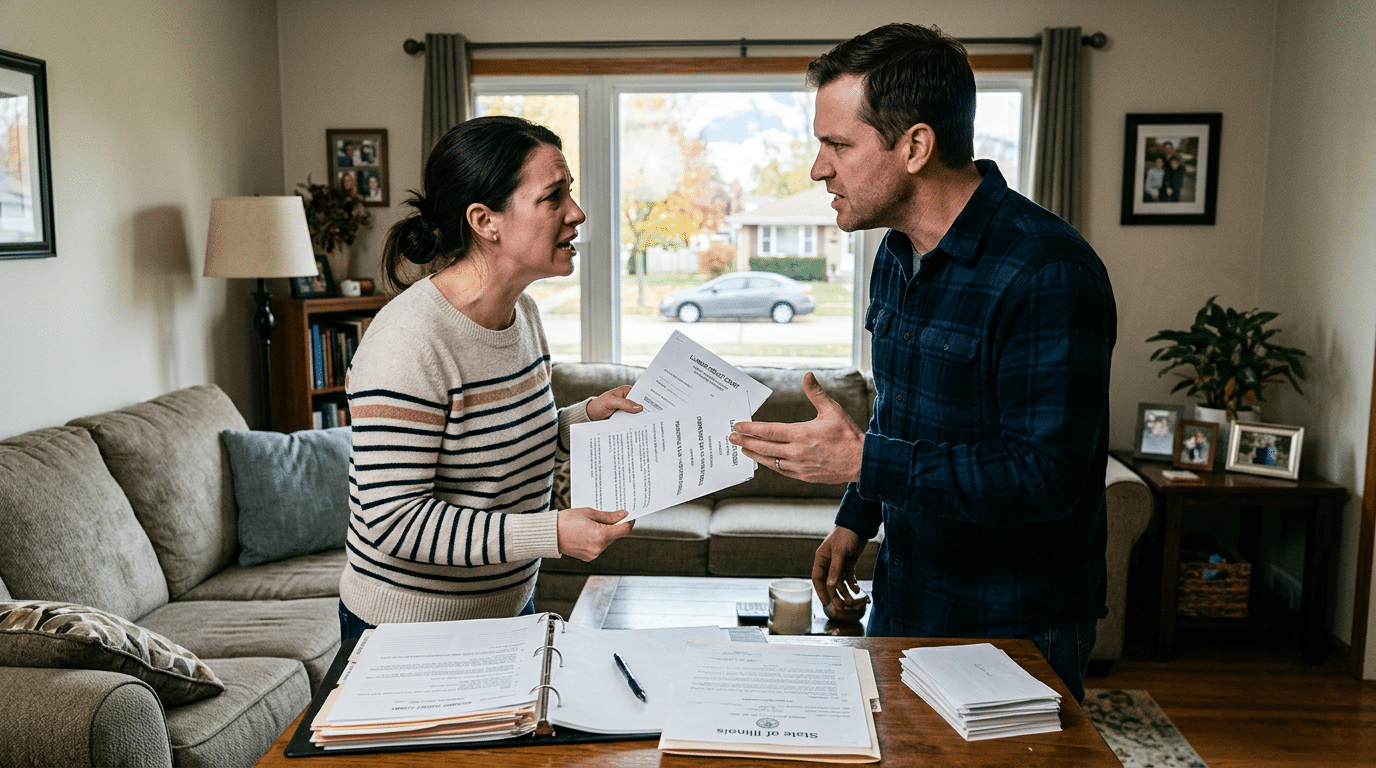
Parenting-time disputes are not usually decided by just one accusation, photo, or text. Illinois courts look at the overall history of each parent’s relationship with the child to decide what is best for the child. If you want more parenting time, you need to show reliable evidence of your consistent involvement, good judgment, and ability to meet your child’s needs. If you are opposing a proposed schedule, you should back up any safety or welfare concerns with facts, not guesses. I help parents on both sides gather evidence, understand the law, and present a clear case for what will best support their child.
Illinois law usually uses the term “parenting time” instead of “visitation” when talking about the time a parent spends with a child. While families in Schaumburg might still say visitation, the court focuses on parenting time and how parental responsibilities are shared. Strong, credible evidence can make a big difference in the final schedule.
The Child’s Best Interests Control The Court’s Decision
Under 750 ILCS 5/602.7, an Illinois court must allocate parenting time according to the child’s best interests. The statute directs the judge to consider all relevant circumstances, including the child’s needs, the wishes of the parents, the child’s adjustment to home and school, the distance between the parents’ homes, and each parent’s past involvement in caregiving. The court may also consider the parents’ ability to cooperate and whether each parent encourages a positive relationship between the child and the other parent.
Winning a parenting-time dispute is not about showing the other parent’s flaws. All parents make mistakes. What matters most is whether the schedule you want will help your child stay safe, stable, and able to grow and keep important relationships. The best evidence clearly links a parent’s actions to the legal best-interest factors.
The same child-focused standard applies in divorce, parentage, and post-judgment proceedings. An unmarried parent may first need to establish legal parentage under the Illinois Parentage Act of 2015, 750 ILCS 46, before requesting an enforceable allocation of parenting time and decision-making responsibilities.
Parenting Calendars Can Establish Consistent Involvement
A detailed parenting calendar can be valuable because it documents the actual care each parent has provided. The calendar may record overnights, school transportation, medical appointments, extracurricular activities, missed visits, late exchanges, and requests for additional time. Records created consistently over several months are generally more persuasive than a timeline assembled from memory immediately before a hearing.
I advise parents to make factual entries and avoid emotional descriptions. An entry stating that the other parent arrived 45 minutes late and did not provide advance notice is more useful than an entry calling that parent irresponsible. Dates, times, locations, and supporting documents make a record easier to verify.
A calendar can also show that the real schedule is different from what either parent says. If one parent often takes care of school mornings, homework, doctor visits, and weekend plans, those notes can show their caregiving role. If a parent often misses scheduled time, that pattern matters too, though the court will look at why the time was missed.
School And Medical Records May Confirm A Parent’s Role
School records can show if a parent went to conferences, helped with special education plans, talked with teachers, or was involved in school issues. Report cards, attendance sheets, emails from teachers, and activity schedules can help prove which parent stays informed and involved. These records can also show if moving between homes, travel issues, or parent conflicts have affected the child’s attendance or grades.
Medical and counseling records may serve a similar purpose. Appointment histories can show who arranged care, attended visits, followed treatment recommendations, and communicated with providers. A child’s private health information must be handled carefully, and counseling records may be subject to confidentiality protections. A parent should not assume that every record can be obtained or used without following the proper legal process.
Under 750 ILCS 5/602.5, courts allocate significant decision-making responsibilities concerning education, health, religion, and extracurricular activities according to the child’s best interests. Evidence of a parent’s informed and consistent involvement in these areas can therefore affect both parenting time and decision-making authority.
Messages Between Parents Can Show Cooperation Or Conflict
Texts, emails, and messages sent through parenting apps can be important evidence, especially if they are about exchanges, medical care, school issues, schedule changes, or following the parenting plan. These messages can show if a parent gives proper notice, shares needed information, suggests solutions, or causes ongoing conflict.
A few angry messages taken out of context may not establish a pattern. Courts are more likely to find a sustained history meaningful, particularly when the communications are connected to actual consequences for the child. Complete message threads are usually more reliable than isolated screenshots because they allow the court to understand what led to each response.
Parents should expect that a judge or child representative might read their messages later. Keeping messages short, factual, and focused on the child helps protect everyone. Threats, insults, constant accusations, or dragging the child into adult arguments can really hurt a parent’s credibility.
Neutral Witnesses Can Provide Independent Information
Testimony from neutral witnesses can be very important because these people usually don’t have a personal stake in the case. Teachers, daycare staff, coaches, doctors, neighbors, and other adults who see the child often can talk about each parent’s involvement, the child’s behavior, and any ongoing issues.
Witnesses should have direct knowledge of the matters they discuss. A person who personally observed an exchange or regularly interacted with the family is generally more useful than a relative repeating something the parent told them. Character testimony stating that a parent is a good person may add little unless the witness can identify specific conduct relevant to the child’s care.
Professional witnesses may be limited by confidentiality rules, evidentiary requirements, or professional obligations. Before relying on a teacher, therapist, or physician, I consider whether the testimony is legally available, genuinely helpful, and necessary to establish a disputed fact.
Evidence Of Safety Concerns Must Be Specific And Credible
Allegations involving domestic violence, substance misuse, neglect, dangerous driving, untreated mental health concerns, or unsafe living conditions can affect parenting time. Depending on the circumstances, supporting evidence may include police reports, orders of protection, photographs, medical records, toxicology results, criminal records, admissions, or testimony from people with firsthand knowledge.
Under 750 ILCS 5/603.10, a court may restrict parenting time when a parent’s conduct seriously endangers the child’s physical, mental, moral, or emotional health or significantly impairs the child’s emotional development. Restrictions may include supervised parenting time, limitations on transportation, substance testing, treatment requirements, or other protective conditions.
A criminal charge or allegation does not automatically decide a parenting case. The court will examine the nature of the conduct, its connection to the child, its frequency, and whether the concern remains current. False or exaggerated accusations can harm the accusing parent’s credibility and make resolution more difficult. Genuine concerns should be documented promptly and presented through lawful channels.
Photographs And Videos Require Context
Photographs and videos can help demonstrate living conditions, injuries, unsafe conduct, damaged property, or events occurring during an exchange. However, visual evidence is not automatically conclusive. The court may need to know when the image was recorded, who recorded it, whether it was altered, and what occurred before and after the captured moment.
A photograph of a cluttered room may have little significance if it reflects a temporary condition. A series of dated photographs showing a continuing hazard may be more meaningful. Similarly, a short video of a distressed child may not explain why the child was upset or whether a parent prompted the reaction.
Parents should not coach, question repeatedly, or secretly record children in an effort to create evidence. Such conduct may place the child in the middle of the dispute and raise separate legal concerns. Evidence gathering should protect the child rather than turn the child into an investigator or messenger.
The Child’s Wishes Are Only One Part Of The Case
Illinois law permits a court to consider the child’s wishes while accounting for the child’s maturity and ability to express an independent preference. The child does not simply choose the parenting schedule. A judge considers the child’s views together with the other factors listed in 750 ILCS 5/602.7.
Under 750 ILCS 5/604.10, the court may interview the child in chambers. The court may also appoint a professional to conduct an evaluation or investigation when appropriate. In some cases, an attorney, guardian ad litem, or child representative may be appointed under 750 ILCS 5/506 to protect or represent the child’s interests.
Parents should not pressure a child to select one household or rehearse statements for court. Evidence that a parent has manipulated the child or interfered with the other parent’s relationship can become highly damaging. A parent generally presents a stronger case by protecting the child from adult conflict.
Compliance With Existing Orders Can Shape The Outcome
Existing parenting plans and court orders matter. Evidence that a parent follows exchange times, shares information, honors holiday schedules, and complies with decision-making procedures can demonstrate reliability. Repeated violations may support enforcement proceedings or a request for modification, depending on their seriousness and effect on the child.
Under 750 ILCS 5/602.10, parents involved in an allocation proceeding are generally required to submit proposed parenting plans. A thoughtful proposal should address regular schedules, holidays, transportation, communications, decision-making, and methods for resolving future disagreements. A realistic plan that reflects the child’s school and activity schedule may be more persuasive than a proposal designed mainly to reduce the other parent’s time.
Parenting time may later be modified under 750 ILCS 5/610.5 when changed circumstances make a modification necessary to serve the child’s best interests. Records showing how the existing arrangement has worked in practice can become central evidence in a modification case.
Presenting A Focused Parenting-Time Case
The strongest case is usually organized around the statutory factors rather than personal grievances between the adults. I look for records that show the child’s routine, each parent’s involvement, the practicality of the requested schedule, and any verified concerns affecting the child’s welfare. Evidence should be lawfully obtained, properly preserved, and presented in a form the court can consider.
A large quantity of documents does not necessarily create a strong case. Ten relevant communications supported by records and credible testimony may be more persuasive than hundreds of repetitive screenshots. Careful preparation helps distinguish meaningful evidence from material that distracts from the child’s needs.
Speak With Our Schaumburg Family Law Lawyer About Your Parenting-Time Case
A parenting-time dispute can affect your relationship with your child and shape the family’s daily life for years. I evaluate the history of the parenting arrangement, identify the evidence tied to Illinois best-interest factors, and help clients present a focused case. The Law Office of Fedor Kozlov handles either side of contested divorce proceedings, child custody and parental-responsibility disputes, parenting-time matters, visitation rights, paternity proceedings, and other family law cases.
If you are preparing for a parenting-time dispute or responding to allegations made by the other parent, early preparation can help preserve important records and prevent avoidable mistakes. I represent clients in Schaumburg and throughout Chicago, Illinois. Contact our Schaumburg custody attorneys at the Law Office of Fedor Kozlov at (847) 241-1299 to receive a consultation and discuss the evidence, legal standards, and practical concerns affecting your case.
