
What Documents Should You Gather Before Discussing Divorce?
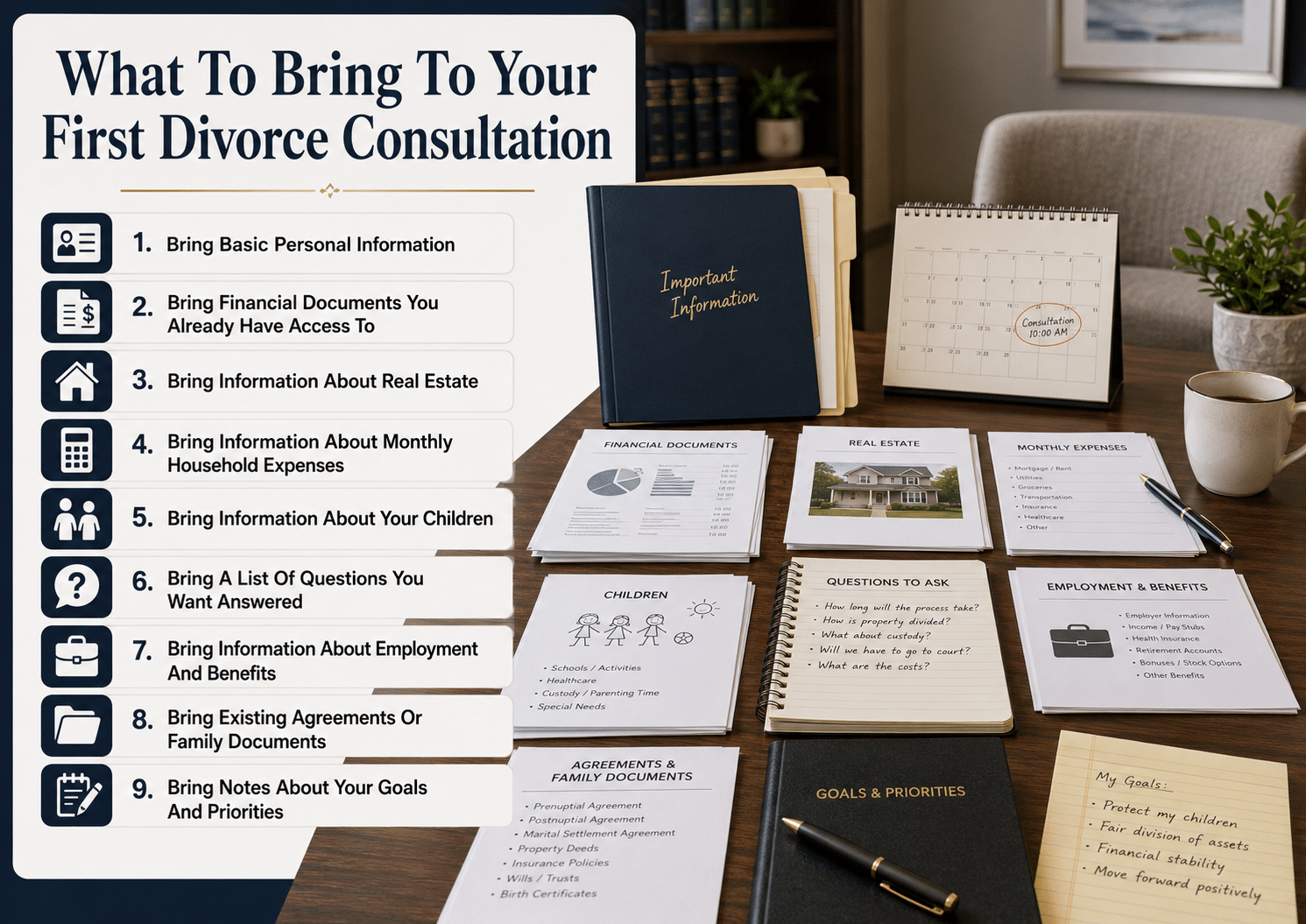
Thinking about divorce can be overwhelming, especially when you are unsure where to begin. Many people spend weeks or months worrying about legal issues before ever speaking with an attorney. One of the most productive things you can do before discussing divorce is gather important documents that provide a clear picture of your finances, your children, and your household responsibilities.
Divorce is not simply about ending a marriage. It is also about dividing property, establishing parenting arrangements, determining financial obligations, and creating a stable future for everyone involved. The more organized you are at the beginning of the process, the easier it often becomes to make informed decisions throughout your case.
I regularly tell clients that collecting documents early does not mean you have decided to file for divorce immediately. It means you are preparing yourself with information. Whether you ultimately decide to move forward with a divorce, pursue counseling, or remain separated for a period of time, having accurate records available places you in a much stronger position.
Why Gathering Documents Before Divorce Is So Important
One of the biggest mistakes people make is waiting until after divorce proceedings begin before collecting important records. Unfortunately, once a spouse knows a divorce is imminent, obtaining certain information may become more difficult. Financial accounts may change, documents may become harder to locate, and valuable information may become scattered among multiple institutions.
Divorce decisions are heavily dependent upon facts. Illinois courts rely on documentation to determine marital assets, debts, income, parental responsibilities, and other important issues. Memories can be inaccurate, but documents often provide objective evidence that helps clarify disputes. Having complete records also helps reduce delays because your attorney can begin evaluating your situation immediately instead of spending months requesting basic information.
Organization also lowers stress. Divorce can already be emotionally exhausting. Knowing where your information is located can provide a greater sense of control during a difficult time.
Gather Income And Employment Records
Income documentation is one of the first categories I ask clients to gather because it impacts numerous aspects of a divorce case. Courts need accurate information regarding both spouses’ earnings to properly evaluate financial issues.
Important income documents may include recent pay stubs, W-2 forms, 1099 forms, tax returns from the past several years, employment contracts, commission statements, bonus records, pension statements, and any records involving self-employment income. If one spouse owns a business, additional records may also be necessary.
These documents may ultimately impact decisions involving child support, maintenance, and property division. The more complete these records are, the easier it is to create an accurate financial picture. Even if you do not currently work outside the home, gathering any available employment history can still be beneficial.
Collect Bank Account And Financial Account Statements
Financial transparency is an important component of Illinois divorce proceedings. I encourage clients to gather statements for every account they can identify, regardless of whose name appears on the account.
This may include checking, savings, money market, certificate of deposit, investment, brokerage, cryptocurrency, retirement, and college savings accounts. Ideally, you should gather statements from at least the previous twelve months, and, in some situations, several years of records may be appropriate.
These documents help establish patterns involving deposits, withdrawals, transfers, and overall spending habits. They may also reveal assets that one spouse has forgotten about or assets that require further investigation. Having these records available early often helps prevent surprises later in the divorce process.
Gather Information About Marital Debts
Many people focus entirely on assets while overlooking debts. However, debts are equally important during divorce proceedings.
You should gather documents involving mortgages, home equity loans, vehicle loans, personal loans, credit card statements, student loans, and any outstanding tax obligations. Illinois courts evaluate both assets and liabilities when dividing marital property.
Understanding the complete financial picture is essential before making any settlement decisions. Sometimes, individuals are surprised to learn about debts they were previously unaware of. Early discovery of financial obligations may significantly impact legal strategies moving forward. Maintaining organized records of debt can also help prevent disputes over repayment responsibility.
Gather Property Ownership Documents
Property ownership records provide important information regarding what exists within the marital estate. Depending on your circumstances, this may involve substantial documentation.
You should gather deeds, mortgage statements, property tax records, vehicle titles, boat titles, business ownership records, insurance policies, appraisals, and records involving valuable personal property such as jewelry, collectibles, artwork, or firearms collections.
Illinois follows equitable distribution principles, meaning marital property is divided fairly under 750 ILCS 5/503. Fairly does not always mean equally. Courts evaluate numerous factors when dividing property, making documentation extremely important. The more complete your records are, the easier it becomes to identify what property exists and determine how it may ultimately be allocated.
Gather Documents Related To Your Children
When children are involved, organization becomes even more important. Courts prioritize the best interests of children when making decisions regarding parental responsibilities and parenting time.
I encourage clients to gather school records, report cards, medical records, vaccination records, daycare information, activity schedules, counseling records, and any existing parenting schedules. These documents may help establish each parent’s level of involvement in the child’s life.
Under 750 ILCS 5/602.7, Illinois courts allocate parental responsibilities according to a child’s best interests. Judges consider numerous factors, including each parent’s involvement, the child’s needs, and the parties’ ability to cooperate in raising their children. Providing organized information can help present a clearer picture of family dynamics.
Gather Existing Court Orders And Legal Documents
Some families already have legal documents in place before divorce discussions begin. These records should always be collected.
Examples include prenuptial agreements, postnuptial agreements, prior divorce judgments, existing parenting plans, orders of protection, child support orders, paternity judgments, and previous court filings involving family matters.
Paternity matters may also become relevant in some situations. The Illinois Parentage Act of 2015, codified at 750 ILCS 46, governs many parent-child legal issues that may intersect with divorce proceedings. Having these documents available allows your attorney to immediately identify legal obligations that already exist.
Keep Copies Instead Of Removing Original Documents
One concern I frequently hear from clients is whether they should take original documents from the family home before discussing divorce. In most circumstances, I recommend creating copies instead of removing original records whenever possible.
Digital copies can often be stored securely and organized efficiently. Removing original documents without explanation may unnecessarily increase conflict between spouses. If you have legitimate concerns that records may disappear, discuss those concerns with an attorney immediately. The goal is to gather information responsibly while preserving accurate records for future use.
Preparation Often Leads To Better Decisions
Many people assume they must have every answer before speaking with a divorce attorney. That is not true. You do not need perfect organization before scheduling a consultation. However, gathering as much information as possible beforehand often makes those conversations far more productive.
Divorce involves numerous moving pieces that affect finances, parenting responsibilities, and future stability. Good preparation helps you understand your circumstances more clearly and allows you to make informed decisions based on facts instead of assumptions.
Even if you are only beginning to think about divorce, organizing your records today may save significant time, money, and stress later.
Frequently Asked Questions About Documents To Gather Before Divorce
Should I Gather Documents Before Telling My Spouse I Am Considering Divorce?
Yes. Gathering information early often makes the process easier and more efficient. Collecting records before announcing your intentions may help ensure important information remains accessible. This is not about hiding assets or being dishonest. It is about making sure you have accurate information available before major decisions are made.
How Many Years Of Tax Returns Should I Collect?
I generally recommend gathering at least 3 years of tax returns, though some cases may require more. Tax returns often provide a valuable overview of income sources, investments, business interests, deductions, and overall financial history.
Do I Need To Gather My Spouse’s Financial Documents?
If you have lawful access to household financial records, gathering copies may be beneficial. However, you should not attempt to access accounts or information you are legally prohibited from viewing. Discuss any concerns with an attorney before taking action.
What If My Spouse Handles All Of The Finances?
This is extremely common. Start by gathering whatever information you can identify. Bank statements, tax returns, mortgage statements, retirement account statements, and insurance policies are often good starting points. Additional information may later be obtained through the legal discovery process.
Should I Gather Social Media Evidence?
Potentially. Social media may become relevant in some divorce cases involving parenting issues, hidden assets, or other disputes. However, avoid excessive monitoring or improper access to another person’s private accounts.
What Documents Are Most Important If We Have Children?
School records, medical records, extracurricular schedules, daycare information, counseling records, and calendars showing parental involvement are often extremely helpful. These records may help demonstrate each parent’s role in the child’s life.
Do I Need Business Records If My Spouse Owns A Company?
Yes. Business ownership frequently adds complexity to divorce proceedings. Tax returns, profit and loss statements, payroll records, ownership agreements, and other business documents may become important during property division.
What If I Cannot Find Certain Documents?
Do not panic. Gather whatever information you can locate and discuss missing records with your attorney. Illinois divorce procedures provide methods to obtain additional information when necessary.
Contact The Law Office Of Fedor Kozlov For Guidance Before Discussing Divorce
Preparing for divorce begins long before filing paperwork with the court. Gathering financial records, property information, and documents involving your children can make a significant difference throughout the process. Whether you are considering divorce, dealing with parental responsibilities, facing parenting time disputes, addressing visitation issues, pursuing paternity matters, or facing other family law concerns, early preparation can help you make informed decisions.
At the Law Office of Fedor Kozlov, I represent clients in Schaumburg and throughout Chicago, Illinois, in divorce proceedings, allocation of parental responsibilities, parenting time disputes, visitation matters, paternity cases, and many other family law issues. If you are preparing to discuss divorce and want to understand your rights and options, contact our divorce attorney in Schaumburg at the Law Office of Fedor Kozlov at (847) 241-1299 to receive a consultation.
