
Virtual Divorce Hearings In Illinois
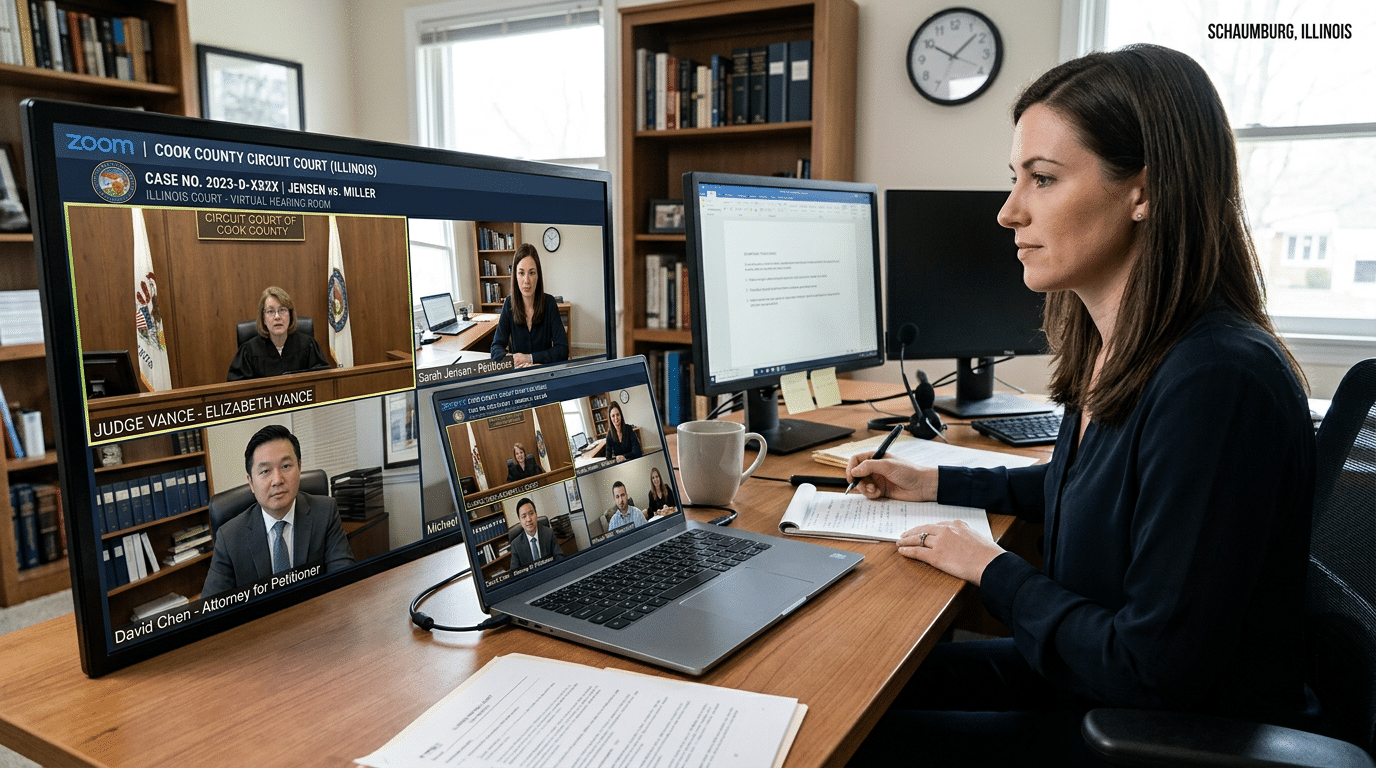
In recent years, divorce proceedings in Schaumburg have changed as courts use virtual technology for hearings, status conferences, and other family law matters. Many people now appear before a judge online instead of in a traditional courtroom. Virtual hearings can be more convenient, but they also bring new concerns about preparation, courtroom behavior, presenting evidence, child-related issues, and following procedures. If you are involved in a divorce, you might feel unsure about how these online hearings work or worry about making mistakes that could affect your case. Even when hearings are remote, Illinois courts expect professionalism, preparation, and compliance with court rules. Learning how virtual divorce hearings work can help you protect your interests and avoid problems during your case.
How Virtual Divorce Hearings Work In Illinois
Many family courts in Illinois now use video platforms for some hearings. Depending on the county and the type of case, a judge may use Zoom or another approved platform. Some hearings are fully online, while others may combine remote and in-person appearances.
Illinois Supreme Court Rule 45 authorizes courts to permit remote appearances through telephone or video conferencing technology under certain circumstances. The rule allows courts flexibility in handling proceedings while still protecting due process rights and maintaining fairness for all parties involved.
Virtual hearings are commonly used for status conferences, temporary support hearings, parenting schedule disputes, discovery issues, emergency motions, and case management conferences.
Some contested trials and evidentiary hearings may still require in-person appearances depending on the complexity of the issues and the court’s preferences.
Even if your hearing is online, it is still a formal court appearance. Judges expect you to dress appropriately, be respectful, avoid interruptions, and follow courtroom procedures during the hearing.
Legal Issues That Can Arise During Virtual Divorce Hearings
Virtual hearings can bring up legal and procedural issues in Illinois divorce cases. Technical problems, internet outages, privacy concerns, and trouble presenting evidence can all impact your case.
Illinois divorce cases are governed primarily by the Illinois Marriage and Dissolution of Marriage Act under 750 ILCS 5/101. Courts handling remote hearings must still ensure compliance with statutory requirements involving parenting responsibilities, child support, maintenance, and property division.
A common issue in virtual hearings is how to present evidence. You may need to submit documents, text messages, photos, financial records, and other electronic communications ahead of time, following local court rules. If you do not submit exhibits properly, the judge may not consider important evidence.
Witness testimony is another concern. The court must make sure witnesses are not being coached or influenced while testifying online. Judges may add extra rules during hearings about custody or when there are questions about someone’s honesty.
Privacy is also important during online hearings. Divorce cases often include sensitive personal and financial details. You should not join a hearing from a public place where others might overhear private information.
Virtual Hearings And Child Custody Matters
Child custody and parenting disputes often involve emotionally difficult issues that require careful presentation before the court. Illinois law now refers to custody as the allocation of parental responsibilities and parenting time under 750 ILCS 5/600.
Virtual hearings involving children can address issues such as parenting schedules, school decisions, relocation disputes, holiday parenting time, child support, emergency parenting issues, and visitation modifications.
When deciding parenting-related disputes, Illinois courts apply the best interests of the child standard under 750 ILCS 5/602.7. A judge considers numerous factors, including the child’s relationship with each parent, the parents’ ability to cooperate, the child’s adjustment to home and school, and any history of domestic violence or abuse.
Virtual hearings can help parents who have trouble traveling to court. However, it can be harder to present emotional testimony or judge how truthful someone is online.
Do not assume a virtual hearing is less important than going to court in person. What you say during an online hearing can affect your parenting rights, visitation, and decisions about your child.
Preparing For A Virtual Divorce Hearing
It is important to prepare carefully for any Illinois divorce hearing, whether it is online or in person.
Before your virtual hearing, review all court notices, instructions, and local rules. If you miss login details, do not test your audio, or show up late, the judge may get a bad impression.
Remember that courtroom rules still apply during virtual hearings. Judges may react badly to rude behavior, distractions, or showing frustration online.
Property Division And Financial Issues During Remote Proceedings
Illinois follows equitable distribution rules during divorce proceedings under 750 ILCS 5/503. Courts divide marital property fairly rather than automatically splitting assets equally.
Virtual hearings may address financial disputes involving:
- Marital property division
- Retirement accounts
- Business interests
- Debt allocation
- Spousal maintenance
- Temporary support
- Hidden assets
Financial issues usually need detailed records and documents. You may have to share bank statements, tax returns, business records, and other financial papers before the hearing.
Remote hearings can make financial disputes harder because judges have to review many electronic records online. Being organized and preparing ahead of time is especially important in these cases.
If a spouse does not share financial information or breaks the rules about exchanging documents, the court may issue penalties.
Paternity And Family Law Proceedings In Virtual Court
Virtual hearings are also used in Illinois paternity and parentage matters. Parentage cases are governed by the Illinois Parentage Act of 2015 under 750 ILCS 46/101 et seq.
Remote proceedings may involve:
- Establishing paternity
- Child support disputes
- Parenting time requests
- Modification proceedings
- Enforcement actions
A paternity determination can significantly affect parental rights and financial obligations. Courts may order DNA testing or conduct hearings concerning parental responsibilities and support obligations through remote appearances.
Family law cases often mean parents have to keep talking even after court is over. Virtual hearings can sometimes lower tension by reducing face-to-face conflict.
What To Expect From The Judge During A Virtual Hearing
Judges handling remote divorce hearings generally follow the same legal procedures used during traditional courtroom proceedings. The judge may place participants under oath, hear testimony, review evidence, and issue rulings during the online appearance.
The court may also establish procedural requirements concerning:
- Submission deadlines for exhibits
- Screen sharing protocols
- Witness testimony procedures
- Recording restrictions
- Confidentiality protections
Individuals should avoid interrupting the judge or opposing counsel during remote hearings. Technical delays sometimes create brief pauses or audio overlap, so patience and professionalism remain important throughout the proceedings.
Judges may continue or reschedule hearings if significant technical problems interfere with fairness or due process.
FAQs About Virtual Divorce Hearings In Illinois
Are Virtual Divorce Hearings Legally Valid In Illinois?
Yes. Illinois courts have the authority to conduct remote hearings under Illinois Supreme Court rules and local court procedures. Orders issued during virtual hearings carry the same legal force as orders issued during in-person proceedings. Parties must comply with all court rulings, regardless of whether the hearing was held remotely or in a courtroom.
Can A Judge Require Me To Attend A Virtual Hearing?
A judge can require remote participation depending on the court’s procedures and the nature of the case. Some Illinois counties routinely schedule status conferences and non-evidentiary matters through online platforms. Failing to appear at a scheduled virtual hearing may result in sanctions, default rulings, or other negative consequences.
What Happens If I Have Technical Problems During The Hearing?
Technical problems occasionally occur during remote proceedings. If you experience connection issues, you should attempt to reconnect immediately and notify your attorney if possible. Courts may pause or continue hearings depending on the severity of the issue. Repeated technical problems or inadequate preparation, however, may frustrate the judge and delay the case.
Can Evidence Be Presented During A Virtual Divorce Hearing?
Yes. Courts may allow electronic submission of exhibits, financial records, text messages, emails, photographs, and other evidence. Local court rules often require exhibits to be exchanged before the hearing. Proper preparation is important because a judge may refuse to consider evidence that was not timely disclosed.
Are Child Custody Hearings Conducted Virtually In Illinois?
Many parenting-related proceedings can occur remotely, including temporary parenting time disputes and status hearings. Some highly contested custody matters or evidentiary hearings may still require in-person appearances, depending on the court and the complexity of the issues.
Can Someone Record A Virtual Divorce Hearing?
Unauthorized recording of court proceedings may violate court rules or judicial orders. Judges often prohibit parties from recording hearings unless specifically authorized by the court. Violating recording restrictions could result in sanctions or contempt proceedings.
Do I Still Need A Lawyer For A Virtual Divorce Hearing?
Remote proceedings can create the false impression that the case is informal or less serious. Divorce hearings involving child custody, visitation, property division, or support obligations can have long-term consequences regardless of the hearing format. Legal representation may help protect your interests, ensure compliance with procedural requirements, and present your case effectively before the court.
How Should I Dress For A Virtual Court Hearing?
You should dress professionally and treat the hearing like a traditional courtroom appearance. Judges expect respectful behavior and appropriate attire even during remote proceedings. Casual clothing, distractions, or inappropriate conduct may negatively affect the court’s perception of your case.
Speak With Our Schaumburg Divorce Attorney About Virtual Divorce Hearings In Illinois
Virtual divorce hearings can affect important decisions involving your children, finances, property rights, and future. Proper preparation and understanding of Illinois family law procedures can make a significant difference during remote court proceedings. The Law Office of Fedor Kozlov represents clients in divorce proceedings, child custody disputes, visitation matters, paternity cases, and other family law issues throughout Illinois.
If you are facing a virtual divorce hearing or other family law proceeding in Illinois, contact our Schaumburg divorce attorneys at the Law Office of Fedor Kozlov at (847) 241-1299 to receive a consultation. The firm represents clients in Schaumburg and throughout Chicago, Illinois.
