
Things Parents Should Avoid Saying To Children During A Custody Dispute
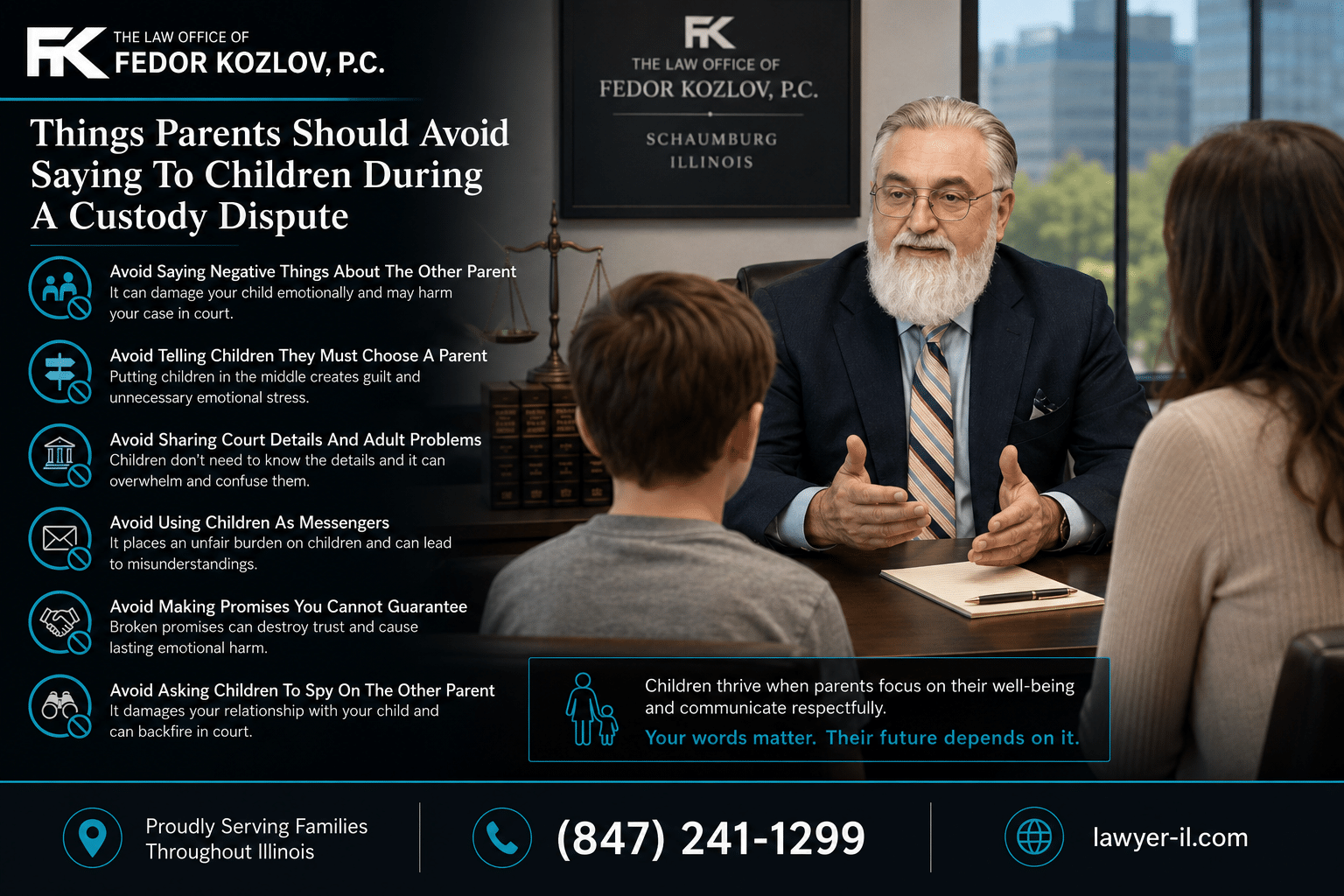
Divorce and custody disputes in Schaumburg are tough for everyone, but children often feel the emotional effects the most. In these moments, parents might feel upset or overwhelmed and sometimes say things that put kids in the middle of adult problems. Even comments that seem harmless can make children anxious or confused and leave lasting emotional scars. I often remind parents that every conversation with their children during a custody dispute can impact both the child’s well-being and the outcome of the case. Illinois courts want parents to help children have good relationships with both parents whenever possible. Being careful about what you say around your children can protect them emotionally and also help your case in court.
Why Your Words Matter During An Illinois Custody Dispute
Parents sometimes don’t realize how much children pick up on during divorce and custody cases. Even if kids don’t understand the legal details, they notice when there is tension or anger between parents. Children often take these conflicts to heart and may start blaming themselves for problems that aren’t their fault.
Illinois family courts prioritize the best interests of the child in every parenting case. Under 750 ILCS 5/602.7, courts evaluate numerous factors when allocating parental responsibilities and parenting time. One factor judges consider is each parent’s willingness and ability to facilitate and encourage a close and continuing relationship between the child and the other parent. A parent’s words and actions can become evidence that the court examines when making decisions.
I often tell clients that custody disputes are more than just legal matters. They are a chance to show maturity, emotional strength, and a real focus on putting your child’s needs first.
Avoid Saying Negative Things About The Other Parent
One of the most damaging mistakes parents make is speaking negatively about the other parent in front of their child. Statements such as “Your mother only cares about herself” or “Your father does not love you” may temporarily satisfy a parent’s anger, but they can severely harm a child emotionally.
Children generally see themselves as part of both parents. When one parent attacks the other, the child may feel personally attacked or torn between loyalties. This internal conflict can create anxiety, sadness, and guilt that may persist long after the legal case ends.
Illinois courts do not look favorably upon behavior that interferes with a child’s relationship with the other parent. Judges expect parents to encourage healthy bonds whenever appropriate. Repeated attempts to alienate a child from the other parent can negatively affect parenting time decisions and the allocation of parental responsibilities.
Avoid Telling Children They Must Choose A Parent
Children should never be asked to choose between their parents. Questions such as “Who do you want to live with?” or “Would you rather stay with me instead of your dad?” place children in impossible emotional situations.
A child should never feel responsible for deciding which parent wins a custody dispute. That burden is far too heavy for children to carry. Even older children can experience tremendous stress when they feel responsible for hurting one parent’s feelings.
Under 750 ILCS 5/602.7, a child’s wishes may sometimes be considered depending on the child’s maturity and circumstances, but that does not mean parents should actively seek their input or pressure them into taking sides. Courts distinguish between considering a child’s preferences and parents manipulating those preferences.
I encourage parents to reassure children that the adults and the court system will make decisions that prioritize their well-being.
Avoid Sharing Court Details And Adult Problems
Parents should avoid discussing court hearings, legal strategies, financial disputes, or allegations involving the other parent. Children do not need to know every detail about what is happening behind the scenes.
Statements such as “Your mother is trying to take all my money” or “Your father is lying in court” force children into adult conflicts they are not equipped to process. These conversations often create unnecessary fear and insecurity.
Children thrive when they feel safe and protected. Exposing them to adult disputes can create emotional burdens that interfere with school performance, social development, and overall mental health. Parents should instead provide age-appropriate reassurance without involving children in legal battles.
Avoid Using Children As Messengers
Parents should never use children to communicate with the other parent. Statements like “Tell your dad he is late on child support” or “Tell your mother she needs to change the schedule” place children directly in the middle of parental conflict.
Children should not become intermediaries or negotiators between adults. Over time, this behavior may cause children to resent both parents and develop feelings of anxiety every time transitions occur.
Illinois courts encourage parents to communicate directly with one another regarding parenting issues whenever possible. Healthy co-parenting requires adults to handle adult responsibilities without placing children in uncomfortable situations.
Technology has made communication easier through text messages, email, and parenting applications. Parents should use those resources rather than relying on children to carry messages.
Avoid Making Promises You Cannot Guarantee
Parents sometimes make promises in an effort to comfort children during uncertain times. They may say things like, “I promise you’ll live with me full time,” or “You’ll never have to see your other parent again.”
These promises can become problematic because custody decisions are ultimately determined by Illinois courts. Circumstances may change, and outcomes cannot always be guaranteed.
When promises are broken, children may feel betrayed or disappointed. Instead of making guarantees, parents should focus on providing reassurance. Telling a child that both parents love them and that everyone is working to create a stable future is far more appropriate.
Avoid Asking Children To Spy On The Other Parent
Parents should never ask children questions designed to gather evidence against the other parent. Questions such as “Who was at mom’s house?” or “Did dad have someone spend the night?” place children in uncomfortable and inappropriate positions.
Children quickly recognize when they are being used to gather information. This can damage trust and make children feel anxious every time they transition between households.
If legitimate concerns exist regarding safety or parenting conduct, those issues should be addressed through attorneys and the legal process rather than through a child. Children should never become investigators in their parents’ disputes.
How Illinois Courts View Parental Conduct During Custody Cases
Illinois courts place significant importance on a parent’s ability to support a child’s relationship with the other parent. Under 750 ILCS 5/602.7, judges evaluate each parent’s willingness to facilitate a close and continuing relationship between the child and the other parent.
Additionally, under 750 ILCS 5/602.5, courts allocate significant decision-making responsibilities based upon the child’s best interests. A parent’s conduct throughout litigation may influence these decisions.
I often tell clients that judges pay close attention to behavior patterns. One isolated comment may not determine the outcome of a case, but repeated attempts to manipulate children, alienate the other parent, or expose children to conflict can become substantial concerns.
Parents who remain child-focused, respectful, and emotionally stable often place themselves in a stronger position both legally and personally.
Healthy Alternatives Parents Can Say To Their Children
Parents do not need perfect words, but they should strive for consistency and reassurance. Children benefit from hearing statements that create stability rather than conflict.
Helpful alternatives include:
“I love you, and your other parent loves you too.”
“This situation is not your fault.”
“The adults are working together to figure things out.”
“You do not have to choose sides.”
“You can always love both of your parents.”
These simple messages provide security during an uncertain period in a child’s life.
Child Custody Communication Frequently Asked Questions
Can Something I Say To My Child Affect My Custody Case?
Yes. Illinois judges may consider patterns of behavior that interfere with a child’s relationship with the other parent. Repeatedly making negative comments or involving children in disputes can potentially impact parenting time and parental responsibility decisions.
Is It Illegal To Speak Negatively About The Other Parent?
There is no law that specifically prohibits every negative comment, but repeated efforts to alienate a child from the other parent can become an important issue during custody proceedings. Courts expect parents to encourage healthy relationships whenever appropriate.
Can I Tell My Child About A Court Hearing?
Generally, it is better to avoid discussing legal proceedings in detail. Children usually do not need to know information about hearings, motions, allegations, or legal strategies.
Can My Child Decide Which Parent To Live With In Illinois?
Illinois courts may consider a child’s wishes depending on the child’s maturity and circumstances under 750 ILCS 5/602.7. However, children do not independently decide custody matters.
Is It Wrong To Ask My Child What Happens At The Other Parent’s House?
Parents should avoid questioning children in a manner that makes them feel like investigators. Ordinary conversations are different from attempts to gather evidence against the other parent.
What Should I Do If The Other Parent Is Speaking Negatively About Me?
Avoid retaliating. Document concerning behavior, continue supporting your child’s relationship with the other parent when appropriate, and discuss your concerns with your attorney.
Should I Correct False Statements The Other Parent Tells The Child?
Every situation is different. In many cases, calm and age-appropriate responses are more effective than criticizing the other parent in return.
How Can I Reduce Stress For My Child During A Custody Case?
Maintain routines, avoid exposing your child to conflict, communicate positively, and reassure your child that they are loved by both parents.
Schedule A Consultation With Our Schaumburg Custody Attorneys
Custody disputes can be emotionally challenging, and the words parents choose can have lasting effects on both their children and their legal cases. Thoughtful communication can protect your child’s emotional health while helping you present yourself as a parent who prioritizes stability and cooperation. Whether your case involves divorce, parenting time, paternity, allocation of parental responsibilities, or visitation issues, early legal guidance can help you make informed decisions throughout the process.
At the Law Office of Fedor Kozlov, I represent clients on either side of family law disputes involving divorce, child custody, parenting time, visitation rights, paternity, and many other family law matters. I represent clients in Schaumburg and throughout Chicago, Illinois. If you have questions about protecting your parental rights and creating parenting strategies that support your child, contact our Schaumburg custody attorneys at the Law Office of Fedor Kozlov at (847) 241-1299 to receive a consultation and discuss your family law matter.
