
How Divorce Can Affect Your IVF Agreement
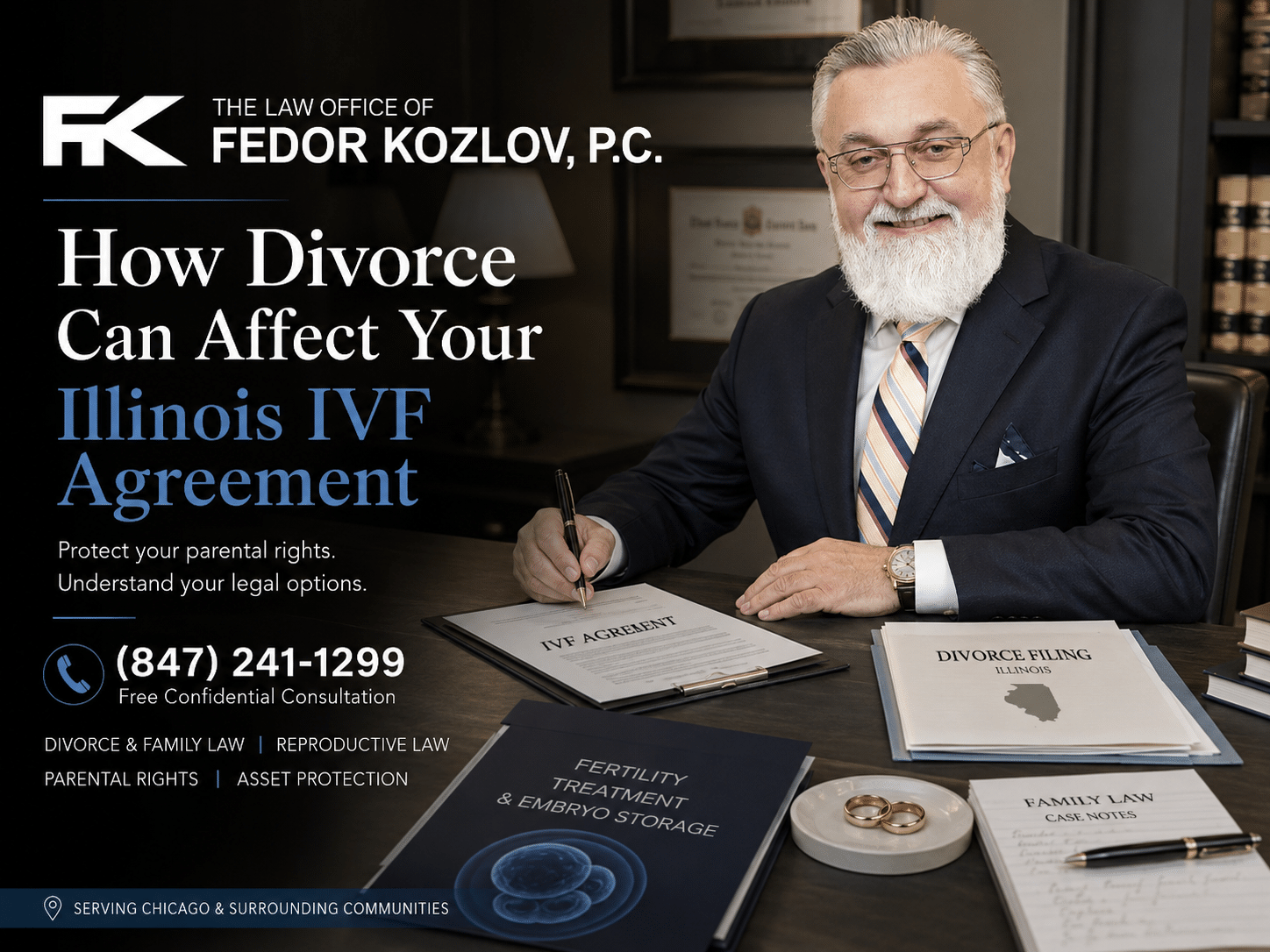
Starting a family through in vitro fertilization often takes years of planning, emotional effort, and a big financial investment. Most couples begin IVF focused on their shared future and do not think about how divorce might change those plans. Sometimes, relationships shift during fertility treatment or even years after embryos are created and stored.
If divorce happens, disagreements about frozen embryos, future parenthood, parental rights, and financial responsibilities can quickly turn into complex legal issues. Illinois family law offers guidance in these situations, but the outcome often depends on the wording of your IVF agreement and the details of your case. Taking legal steps early can help protect your interests and make things clearer during a tough time.
Many people in Schaumburg do not realize that divorce can affect more than just dividing property or setting parenting schedules. Fertility agreements can become key issues in a divorce because they may shape future family planning and even affect children who are not yet born. If you are thinking about IVF, in treatment, or facing divorce with frozen embryos, it is very important to know your legal rights.
Why IVF Agreements Become Important During Divorce
An IVF agreement is a legal document that outlines how certain issues related to assisted reproductive technology will be handled. These agreements may address ownership of embryos, future use of embryos, financial obligations, and what happens if the relationship ends before implantation occurs.
Many couples sign these documents without fully appreciating their long-term significance. At the beginning of the IVF process, both parties are usually aligned in their goals and focused on becoming parents. Divorce can dramatically change those circumstances and create disagreements that neither person anticipated when the agreement was originally signed.
I often tell clients that IVF agreements should be viewed as long-term family planning documents rather than simply fertility clinic paperwork. They may eventually become highly significant during divorce proceedings because they can influence decisions involving future reproduction and financial responsibilities. The stronger and more detailed the agreement is before a dispute arises, the more likely it is to provide clarity if the marriage ends.
How Illinois Courts View IVF Agreements
Illinois usually accepts agreements made voluntarily between capable adults. IVF agreements are different, though, because they involve both contract law and family law issues.
Courts look closely at these agreements because they deal with very personal rights, like reproductive freedom. Judges check if both people signed willingly, understood the terms, and meant to be legally bound by the agreement.
At the same time, courts also recognize that circumstances can evolve over the course of a marriage. What seemed fair ten years earlier may become more complicated when a divorce occurs. Every case requires an individualized analysis.
It is also important to understand that certain aspects of an IVF agreement may be treated differently from other portions of a divorce settlement. Some provisions may be enforceable while others could be subject to additional judicial review.
Frozen Embryos Can Become A Major Source Of Conflict
One of the most difficult issues that can arise during divorce involves deciding what happens to frozen embryos. The emotional stakes are often extremely high because the dispute may involve one person’s desire to become a parent and another person’s desire to avoid future parenthood.
Some agreements provide clear instructions regarding embryo disposition in the event of divorce. For example, the agreement may state that embryos will be destroyed, donated, or awarded to one spouse under certain conditions. Other agreements may require mutual consent before embryos can ever be used.
Unfortunately, some couples either do not have an agreement or signed documents that contain vague language. When that happens, courts may be forced to intervene and determine the parties’ rights based on multiple factors. These disputes can quickly become expensive, emotionally draining, and legally complex. Early legal planning often provides the strongest protection against future uncertainty.
Divorce Can Affect Future Parenthood Decisions
People are often surprised to learn that divorce can affect whether one spouse may pursue a future pregnancy using previously created embryos. In some situations, one spouse may want to move forward while the other strongly objects.
Illinois courts may consider the parties’ prior agreements and intentions. However, these cases frequently involve balancing competing constitutional interests. Judges recognize that decisions involving reproduction are deeply personal and deserve careful consideration.
This is one reason why detailed IVF agreements are so important. They provide evidence regarding each person’s intentions before the conflict developed. While no agreement can eliminate every dispute, thoughtful planning often reduces ambiguity. The language used in these agreements can significantly influence how future disagreements are resolved.
How Divorce Affects Parenting Rights If A Child Is Born Through IVF
If a child has already been born through IVF, the focus shifts away from the agreement itself and toward protecting the child’s best interests.
Illinois no longer uses traditional custody terminology in most cases. Instead, courts allocate parental responsibilities and parenting time according to Illinois law. Under 750 ILCS 5/602.7, courts evaluate numerous factors when determining parenting arrangements.
Judges may consider the child’s needs, each parent’s involvement in the child’s life, each parent’s ability to cooperate, and the willingness to foster a healthy relationship between the child and the other parent.
Regardless of how the child was conceived, Illinois courts prioritize the child’s welfare above all else. IVF does not diminish either parent’s legal obligations once parentage has been properly established.
How The Illinois Parentage Act Impacts IVF Cases
The Illinois Parentage Act of 2015, codified at 750 ILCS 46, plays an important role in assisted reproduction cases.
The law establishes legal parent-child relationships and addresses situations involving assisted reproductive technology. Under 750 ILCS 46/204, certain presumptions of parentage may apply under specific circumstances.
When IVF is involved, establishing legal parentage may become particularly important if disputes arise during divorce proceedings. Parentage determines numerous rights and obligations, including decision-making authority, parenting time, and child support responsibilities.
I often encourage clients to ensure their parentage documentation aligns with their IVF agreements. Consistency between legal documents can reduce confusion and strengthen legal protections later.
Property Division May Also Impact IVF-Related Expenses
Many couples spend tens of thousands of dollars on fertility treatment. During divorce proceedings, questions may arise regarding reimbursement for IVF expenses, storage fees, and ongoing costs associated with preserving embryos.
Illinois follows equitable distribution principles under 750 ILCS 5/503. This means marital property is divided fairly rather than automatically divided equally.
Depending on the circumstances, courts may evaluate whether fertility-related expenses were paid using marital assets and how future expenses should be handled. The specific facts of each case can significantly influence these outcomes. Planning for these possibilities ahead of time can help reduce future disputes.
Why Early Legal Planning Matters
Many couples avoid discussing divorce while pursuing fertility treatment because it feels uncomfortable and contradictory to their goals. However, legal planning is not about expecting a marriage to fail. It is about creating clear expectations while communication is still healthy.
Relationships evolve over time. Financial situations change. Priorities sometimes shift in unexpected ways. Preparing for those possibilities often reduces conflict rather than creating it.
Proper legal planning can protect both parties and provide valuable guidance if disagreements arise years later. The earlier these conversations occur, the more opportunities both individuals have to make informed decisions together.
FAQs About Divorce And IVF Agreements In Illinois
Can An IVF Agreement Override A Divorce Decree?
No. An IVF agreement may influence certain decisions, but divorce courts still have the authority to review many family law issues independently. Certain portions of an IVF agreement may remain enforceable while others may require additional judicial review depending on the circumstances.
Can My Spouse Use Our Frozen Embryos After Divorce Without My Consent?
That depends on the language contained within your IVF agreement. Some agreements require mutual consent, while others provide specific instructions for embryo disposition after divorce. If no agreement exists, courts may need to determine the parties’ rights.
Does Divorce Automatically Cancel An IVF Agreement?
No. Divorce does not automatically invalidate an IVF agreement. Courts may still consider the agreement’s provisions when resolving disputes involving frozen embryos and reproductive rights.
Who Owns The Frozen Embryos After Divorce?
Ownership is often one of the central disputes in these cases. Courts may review the IVF agreement, fertility clinic documents, and each party’s intentions before making a decision.
Can An IVF Agreement Determine Future Child Custody?
No. Once a child is born, Illinois courts determine parenting arrangements based on the child’s best interests rather than solely relying on a prior agreement.
What Law Governs Parenting Time In Illinois?
Illinois courts determine parenting time under 750 ILCS 5/602.7. Judges evaluate numerous factors to determine what arrangement best serves the child.
Can I Modify An IVF Agreement During My Marriage?
Yes. Couples may update their agreements if both parties voluntarily agree to the modifications. Updating documents as circumstances change is often beneficial.
Should IVF Agreements Be Reviewed During A Divorce?
Absolutely. These agreements can have significant legal and financial implications. Reviewing them early in the divorce process allows both parties to better understand their rights and obligations.
Contact The Law Office Of Fedor Kozlov For Help With IVF-Related Divorce Matters
IVF agreements can have lasting consequences that extend far beyond fertility treatment itself. If divorce becomes a possibility, understanding how these agreements interact with Illinois family law is extremely important. Taking action early may help protect your rights, clarify expectations, and reduce future disputes involving embryos, parentage, and parenting issues.
At the Law Office of Fedor Kozlov, I represent clients on either side of family law disputes involving divorce proceedings, allocation of parental responsibilities, parenting time, visitation rights, paternity matters, and IVF-related legal issues. I represent clients in Schaumburg and throughout Chicago, Illinois, and I work to help families address these complex situations with practical legal guidance. If you have questions about how divorce may affect your IVF agreement, contact our IVF agreement attorney the Law Office of Fedor Kozlov at (847) 241-1299 to schedule a consultation.
