
How Child Support Is Calculated in Illinois (Income Shares Model)
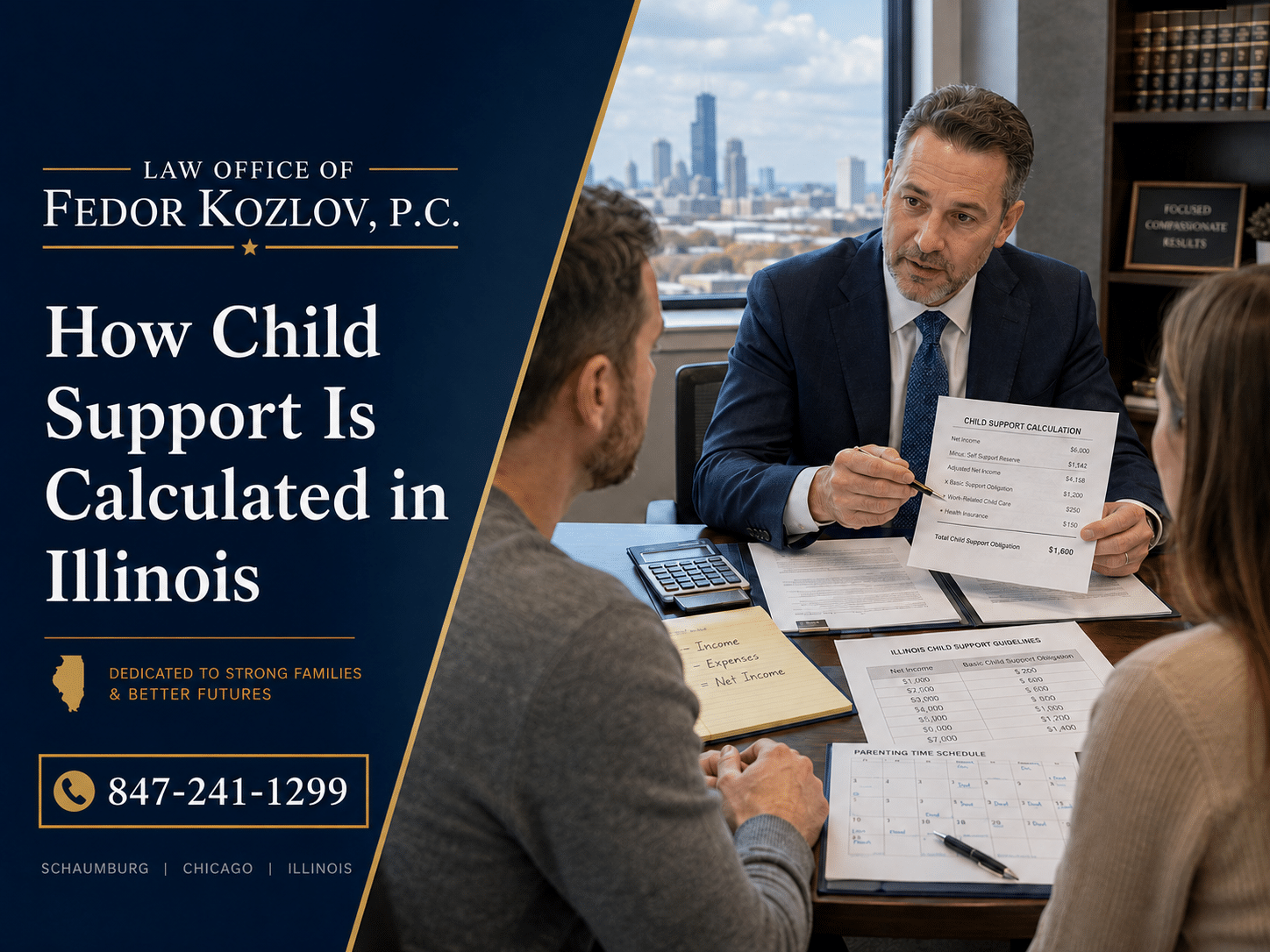
If you are going through a divorce or parentage case in Illinois, you may have concerns about child support. Many parents worry about affording monthly payments, whether the calculation is fair, and how parenting time affects what they owe. Illinois uses the Income Shares Model to figure out child support. This method estimates what a child would have received if both parents had stayed together. The law looks at each parent’s income, the number of children, health insurance, childcare costs, and parenting time. If you are dealing with a child support dispute in Schaumburg or the Chicago area, knowing how Illinois courts calculate support can help you make informed choices for yourself and your child.
Understanding Illinois Child Support Laws
Illinois child support laws mainly follow the Illinois Marriage and Dissolution of Marriage Act, found at 750 ILCS 5/505. This law requires courts to use the Income Shares Model to calculate child support. The goal is to split the financial responsibility for raising a child between both parents based on their incomes.
Before Illinois used the Income Shares Model, child support was mostly based on a percentage of the paying parent’s net income. The current system aims to be more balanced by looking at both parents’ finances. Courts add up both parents’ net incomes and then decide each parent’s share of the total support.
Under 750 ILCS 5/505(a)(1), Illinois courts must consider the financial resources and needs of the child, the financial resources and needs of both parents, the standard of living the child would have enjoyed if the marriage had not ended, and the physical and emotional condition of the child.
Child support cases can come up during divorce, paternity actions, disputes over parental responsibilities, or when parents want to change an existing order. I help parents on both sides, whether they are asking for support or challenging an unfair calculation.
How The Income Shares Model Works
The Income Shares Model starts by figuring out each parent’s net income. Net income usually includes wages, salaries, commissions, bonuses, self-employment income, rental income, and other earnings. If a parent owns a business or works as an independent contractor, courts look closely at their business income.
Illinois law under 750 ILCS 5/505(a)(3.1) explains how net income is determined. Certain deductions may be allowed, including federal and state income taxes, Social Security taxes, mandatory retirement contributions, union dues, and health insurance premiums for the parent.
Once both parents’ net incomes are calculated, the After both parents’ net incomes are added together, the court uses the Illinois child support guidelines tables from the Department of Healthcare and Family Services. These tables show how much a household with that combined income would usually spend on raising children.0 per month and the support table indicates that parents at that income level generally spend $2,000 monthly on one child, the court allocates responsibility proportionally between the parents based on their incomes.
If one parent earns 70% of the total income and the other earns 30%, the support amount is divided in the same way. The parent who has more parenting time may get support from the other parent, depending on the situation.
Parenting Time And Child Support
Parenting time can significantly affect child support calculations in Illinois. Under 750 ILCS 5/505(a)(3.8), courts use a shared parenting adjustment when each parent exercises at least 146 overnights per year with the child.
When both parents share parenting time more equally, courts see that each parent pays for the child’s expenses during their time together. Because of this, support amounts may be lowered compared to cases where one parent has most of the parenting time.
Some parents think that having equal parenting time means no one pays child support, but that is not true. Even with equal schedules, one parent may still have to pay support if there is a big difference in incomes.
Illinois courts always put the child’s best interests first when deciding on parenting and support. Child support and parenting time are separate legal issues. A parent cannot deny parenting time if support is unpaid, and cannot refuse to pay support because of parenting time disagreements.
Additional Expenses Included In Illinois Child Support Cases
Basic child support is not always the only cost in an Illinois family law case. Courts often divide extra child-related expenses between parents.
Under 750 ILCS 5/505(a)(3.7), courts may order parents to contribute to health insurance premiums, uninsured medical expenses, extracurricular activity costs, childcare expenses, and educational expenses.
Childcare costs matter a lot when one or both parents work full-time. Daycare can add a lot to the total expenses. Courts usually split these costs based on each parent’s income.
Medical expenses are a source of disagreement. Parents may not agree on what counts as a necessary medical cost, especially for therapy, counseling, orthodontics, or special care. Courts can issue detailed orders on how these costs are split and paid back.
Imputing Income In Illinois Child Support Cases
A key issue in many child support cases is imputed income. Courts can assign income to a parent who is not working or is working less by choice.
Illinois law lets courts assign income based on what a parent could earn if they think the parent is lowering their income on purpose to avoid paying support. Judges look at work history, education, job options, past earnings, and lifestyle.
For example, if a parent used to earn $120,000 a year but suddenly takes a much lower-paying job without a good reason, the court may set support based on their past earning ability instead of their current income.
These cases often involve complicated financial evidence and require careful legal preparation. Business owners and self-employed individuals may face additional scrutiny regarding claimed expenses and reported income.
Modifying Child Support Orders In Illinois
Child support orders are not always permanent. Illinois law allows modifications when a substantial change in circumstances occurs. Under 750 ILCS 5/510, parents may seek modifications based on job loss, significant income changes, changes in parenting time, disability, or other major life events.
A parent cannot simply decide to stop paying support because financial problems arise. Until a court modifies the order, the original obligation remains enforceable. Unpaid support can lead to wage garnishment, driver’s license suspension, tax refund interception, property liens, and contempt proceedings.
Courts also periodically review support obligations as children grow older and circumstances evolve. What may have been appropriate several years ago may no longer reflect the financial realities facing either parent.
FAQs About Illinois Child Support
How Does Illinois Calculate Child Support If One Parent Is Self-Employed?
Self-employment income can create complicated child support disputes because income is not always straightforward. Courts examine business records, tax returns, profit and loss statements, bank records, and business expenses to determine actual earnings. Some business deductions allowed for tax purposes may not reduce income for child support purposes. Courts may also investigate whether personal expenses are being paid through the business. If the court believes income is being hidden or manipulated, it can impute additional income based on evidence presented during the case.
Does Child Support Continue After A Child Turns 18 In Illinois?
In many situations, child support ends when a child turns 18 or graduates from high school, whichever occurs later. However, support can continue beyond age 18 if the child is still attending high school. Illinois courts may also order contributions toward college expenses under 750 ILCS 5/513. College contribution cases can involve tuition, housing, books, fees, transportation, and living expenses. Courts examine each parent’s financial ability and the child’s educational plans when making these decisions.
Can Parents Agree To A Different Child Support Amount?
Parents can reach agreements regarding child support, but the court must approve the agreement. Illinois courts focus on whether the arrangement serves the child’s best interests. If a judge believes the agreed amount is unfair or inadequate, the court may reject it. Even when parents cooperate, it is important to create a legally enforceable agreement that clearly addresses support obligations, medical expenses, extracurricular costs, and future modifications.
What Happens If A Parent Refuses To Pay Child Support?
Illinois courts take unpaid child support very seriously. Enforcement actions can include wage garnishment, seizure of tax refunds, bank account levies, property liens, suspension of driver’s licenses, passport restrictions, and contempt proceedings. In severe cases, a parent who willfully refuses to comply with support orders may face jail time. Courts have broad authority to enforce support obligations and collect arrearages.
Does Equal Parenting Time Mean No Child Support?
No. Equal parenting time does not automatically eliminate child support obligations. Courts still examine the incomes of both parents. If one parent earns substantially more than the other, support may still be ordered to ensure the child enjoys a reasonably consistent standard of living between households. Shared parenting adjustments can reduce support amounts, but they rarely eliminate support entirely unless incomes are very similar.
Can Child Support Be Modified After Divorce?
Yes. Illinois law permits modifications when substantial changes in circumstances occur. Common reasons include job loss, significant raises or reductions in income, changes in parenting schedules, relocation, disability, or changes involving the child’s needs. Parents must file a formal request with the court to modify support. Existing orders remain enforceable until a judge signs a new order.
What Income Counts Toward Child Support In Illinois?
Illinois courts may consider wages, salaries, commissions, bonuses, overtime, self-employment earnings, rental income, investment income, unemployment benefits, workers’ compensation benefits, and certain disability payments. Courts carefully review financial disclosures to ensure all relevant income is included in the calculation. Attempting to hide income can seriously damage credibility before the court.
Contact Our Schaumburg Divorce Law Attorney To Protect Your Interests
Child support disputes can impact your finances, your relationship with your child, and your future stability. Whether you are asking for support, challenging an unfair amount, dealing with paternity, seeking parenting time, or requesting a change, having an experienced lawyer can make a big difference in your case.
At the Law Office of Fedor Kozlov, I represent clients on both sides of Illinois family law disputes involving divorce, child support, child custody, visitation rights, allocation of parental responsibilities, and paternity matters. I work closely with clients to protect their parental rights while pursuing practical and effective legal solutions tailored to their circumstances.
Our law firm represents clients in Schaumburg and throughout Chicago. Schedule a consultation with our Schaumburg child support attorney at the Law Office of Fedor Kozlov by calling (847) 241-1299.
