
Dividing Frozen Embryos During Divorce: Questions Illinois Couples Should Ask
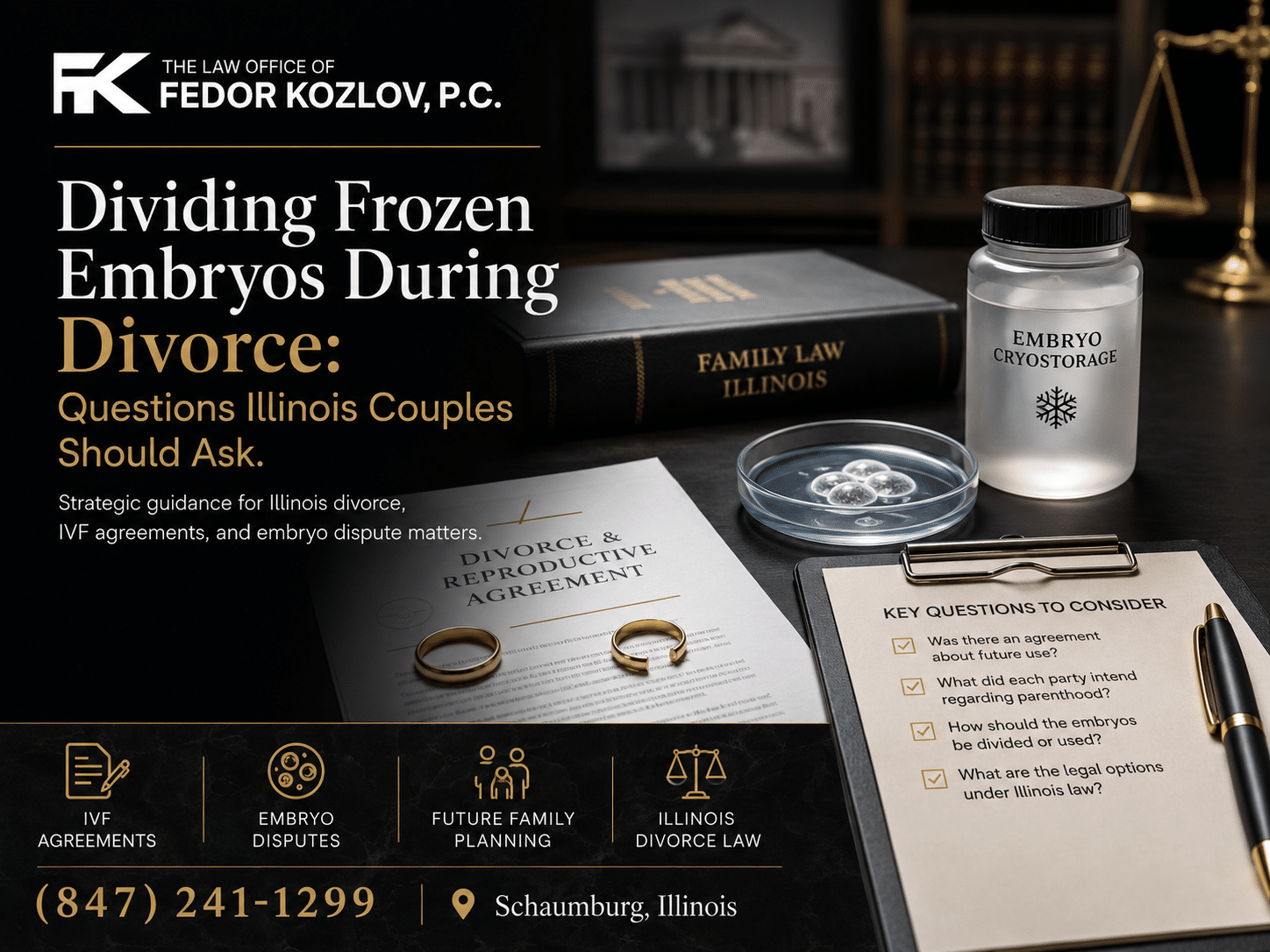
Divorce often requires spouses to make difficult decisions about property, finances, parenting arrangements, and their future. When a couple has undergone fertility treatment and created frozen embryos, the divorce process can become even more complicated. Unlike many marital assets, frozen embryos carry both emotional and legal considerations that make these disputes unique. One spouse may view the embryos as potential future children, while the other may view them as genetic material that should not be used without mutual consent.
Because Illinois courts must balance contractual rights, reproductive rights, and family law principles, disputes involving frozen embryos can quickly become among the most challenging issues in a divorce case. Understanding the questions to ask before negotiating or litigating these matters can help spouses make informed decisions during an already stressful time.
Why Frozen Embryos Create Unique Divorce Issues
Most marital assets can be divided through negotiation or court orders. Bank accounts, retirement plans, real estate, and personal property can generally be assigned a value and distributed between spouses. Frozen embryos are different because they involve deeply personal questions about reproduction and family planning.
In many situations, couples signed agreements with fertility clinics before beginning IVF treatment. These documents often contain provisions addressing what should happen to embryos if the parties later divorce, separate, become incapacitated, or pass away. While these agreements can provide important guidance, disputes may still arise over whether they are enforceable or how they should be interpreted.
The emotional nature of these cases often makes settlement difficult. One spouse may believe the embryos represent the only opportunity to have a biologically related child, while the other spouse may strongly oppose becoming a parent after the marriage ends. Courts must carefully evaluate competing interests while applying Illinois law and established legal principles.
What Does The Fertility Clinic Agreement Say?
One of the first questions I ask clients involved in embryo disputes is whether they signed a fertility clinic agreement before treatment began. These documents often include instructions for embryo disposition in the event of divorce.
Many fertility clinics require patients to make advance decisions concerning future scenarios. The agreement may specify whether embryos will be destroyed, donated, stored, or awarded to one spouse if the marriage ends. Courts often examine these documents closely because they may reflect the parties’ intentions at the time the embryos were created.
However, simply having a signed agreement does not always end the dispute. Questions may arise regarding whether the agreement was clear, whether circumstances have changed significantly, or whether enforcement would be appropriate under the facts of the case. A thorough review of all fertility treatment documentation is often one of the most important steps in evaluating these matters.
Are Frozen Embryos Considered Marital Property?
Illinois courts have recognized that frozen embryos do not fit neatly into traditional categories of marital property. They are not equivalent to a savings account or a piece of real estate. At the same time, they are not legally treated as children for purposes of custody determinations.
Under the Illinois Marriage and Dissolution of Marriage Act, 750 ILCS 5/503, courts generally divide marital property in a manner that is fair and equitable. Frozen embryos often require separate analysis due to the significant constitutional and personal interests involved. Courts frequently focus on the parties’ agreements and reproductive rights rather than simply applying traditional property division principles.
Because Illinois law continues to evolve in this area, outcomes often depend on the specific facts of each case. The existence of written agreements, the availability of alternative reproductive options, and the parties’ intentions can all influence the court’s decision.
Should One Spouse Have The Right To Use The Embryos?
A common question in these cases is whether one spouse should be allowed to use frozen embryos without the other spouse’s consent after the divorce is finalized. This issue often creates the most intense disagreements because it directly affects future parenthood.
One spouse may argue that the embryos represent the only realistic opportunity to have a biological child. The other spouse may argue that being forced into parenthood after divorce would violate important reproductive rights. Courts around the country have reached different conclusions depending on the circumstances and the language contained in fertility agreements.
When evaluating these disputes, courts frequently consider whether the parties previously agreed to a specific outcome. The court may also consider whether one spouse has other reasonable opportunities to have biological children and whether enforcing a prior agreement would be fair under current circumstances.
How Do Future Parenting Issues Affect Embryo Disputes?
Although frozen embryos are not treated as children under Illinois law, disputes involving embryos can eventually lead to future parenting issues if a child is born. For that reason, it is important to consider how family law principles may affect the situation.
Illinois courts determine parenting matters according to the child’s best interests. Under 750 ILCS 5/602.7, courts allocate parental responsibilities based upon factors such as the child’s needs, each parent’s involvement, and the ability of the parties to cooperate regarding important decisions. Parenting time determinations are also based on the child’s best interests rather than the preferences of either parent.
If an embryo dispute ultimately results in the birth of a child, questions regarding parentage, parenting time, decision-making authority, and child support may arise. Addressing these possibilities early can help parties understand the potential long-term consequences of their decisions.
What Role Does The Illinois Parentage Act Play?
The Illinois Parentage Act of 2015, found at 750 ILCS 46, governs the establishment of legal parent-child relationships. This statute may become relevant if disputes arise concerning the legal status of a child conceived through assisted reproductive technology.
Parentage issues can be especially important when embryos are used after a divorce or separation. Questions may arise regarding who qualifies as a legal parent, what rights and responsibilities attach to that status, and whether prior agreements affect the analysis. Proper legal planning before fertility treatment often helps reduce uncertainty if these situations occur later.
Understanding how the Parentage Act interacts with divorce law is an important part of evaluating embryo disputes and protecting future legal rights.
Why Early Legal Advice Matters
Many people do not think about frozen embryo issues until divorce proceedings begin. By that point, positions may already be firmly established, making resolution more difficult. Early legal advice can help identify relevant agreements, evaluate legal options, and develop strategies for addressing these highly sensitive disputes.
Every embryo case presents unique facts. The language of fertility agreements, the medical circumstances of the parties, and their reproductive goals can all influence the outcome. Careful preparation often places clients in a stronger position, whether they are seeking a negotiated resolution or preparing for litigation.
When significant emotional and constitutional interests are involved, obtaining accurate legal guidance can make a substantial difference in protecting your rights and achieving your objectives.
FAQs About Dividing Frozen Embryos During Divorce In Illinois
Can Frozen Embryos Be Divided Like Other Marital Property?
Frozen embryos are generally not treated the same way as traditional marital property. While courts may consider them during divorce proceedings, judges often analyze reproductive rights, contractual agreements, and the parties’ intentions rather than simply dividing the embryos as assets. These cases involve unique legal and personal considerations that distinguish them from ordinary property disputes.
Does A Fertility Clinic Agreement Control What Happens To The Embryos?
In many cases, fertility clinic agreements play a significant role in determining the outcome of embryo disputes. Courts frequently review these agreements to understand the parties’ intentions when the embryos were created. However, disputes may still arise concerning the interpretation, validity, or enforceability of those documents. The specific language contained in the agreement often becomes critically important.
Can One Spouse Use Frozen Embryos Without The Other Spouse’s Permission?
The answer depends on the facts of the case, the terms of any signed agreements, and applicable law. Some agreements require mutual consent before embryos may be used. Others may contain provisions addressing what happens after divorce. Courts often balance contractual rights with important reproductive interests when resolving these disputes.
Are Frozen Embryos Considered Children Under Illinois Law?
No. Frozen embryos are not treated as children for purposes of custody or parenting time determinations. However, because they may eventually result in the birth of a child, courts recognize that important family law issues can arise from disputes involving embryos.
What Happens If A Child Is Born From An Embryo After Divorce?
If a child is born, Illinois family law may govern issues involving parentage, parental responsibilities, parenting time, and child support. Courts will generally focus on the child’s best interests when addressing these matters. The circumstances surrounding the embryo agreement and subsequent use may also become relevant.
Can A Court Order Embryos To Be Destroyed?
Depending on the circumstances and the agreements signed by the parties, a court may enforce provisions that require embryos to be destroyed, donated, or otherwise disposed of in a specified manner. Each case depends on its unique facts and legal issues.
What If The Embryos Represent My Only Chance To Have A Biological Child?
This issue frequently arises in embryo disputes. Courts may consider whether a spouse has alternative opportunities to have biological children when evaluating competing interests. Medical evidence and individual circumstances may become important factors in the court’s analysis.
Should I Hire A Family Law Attorney If Frozen Embryos Are Involved In My Divorce?
Yes. Embryo disputes often involve a combination of divorce law, contract law, reproductive rights, and parentage issues. Because these matters can have long-lasting consequences, obtaining legal advice early in the process can help protect important rights and interests.
Contact The Law Office Of Fedor Kozlov About Your Frozen Embryo Disputes
Disputes involving frozen embryos often involve some of the most personal and emotionally significant issues that arise during a divorce. Decisions made during these cases may affect future reproductive opportunities, parental rights, and family relationships for years to come. Careful legal analysis is essential when evaluating fertility clinic agreements, divorce issues, parentage concerns, and potential future parenting matters.
At the Law Office of Fedor Kozlov, I represent clients in Schaumburg and throughout Chicago, Illinois, in divorce proceedings, allocation of parental responsibilities disputes, parenting time matters, visitation issues, paternity cases, and other family law matters. If frozen embryos have become an issue in your divorce or you have questions about protecting your rights during fertility-related disputes, contact our embryo custody attorney the Law Office of Fedor Kozlov at (847) 241-1299 to schedule a consultation.
