
Can You Secretly Record Your Spouse Before Filing For Divorce In Illinois?
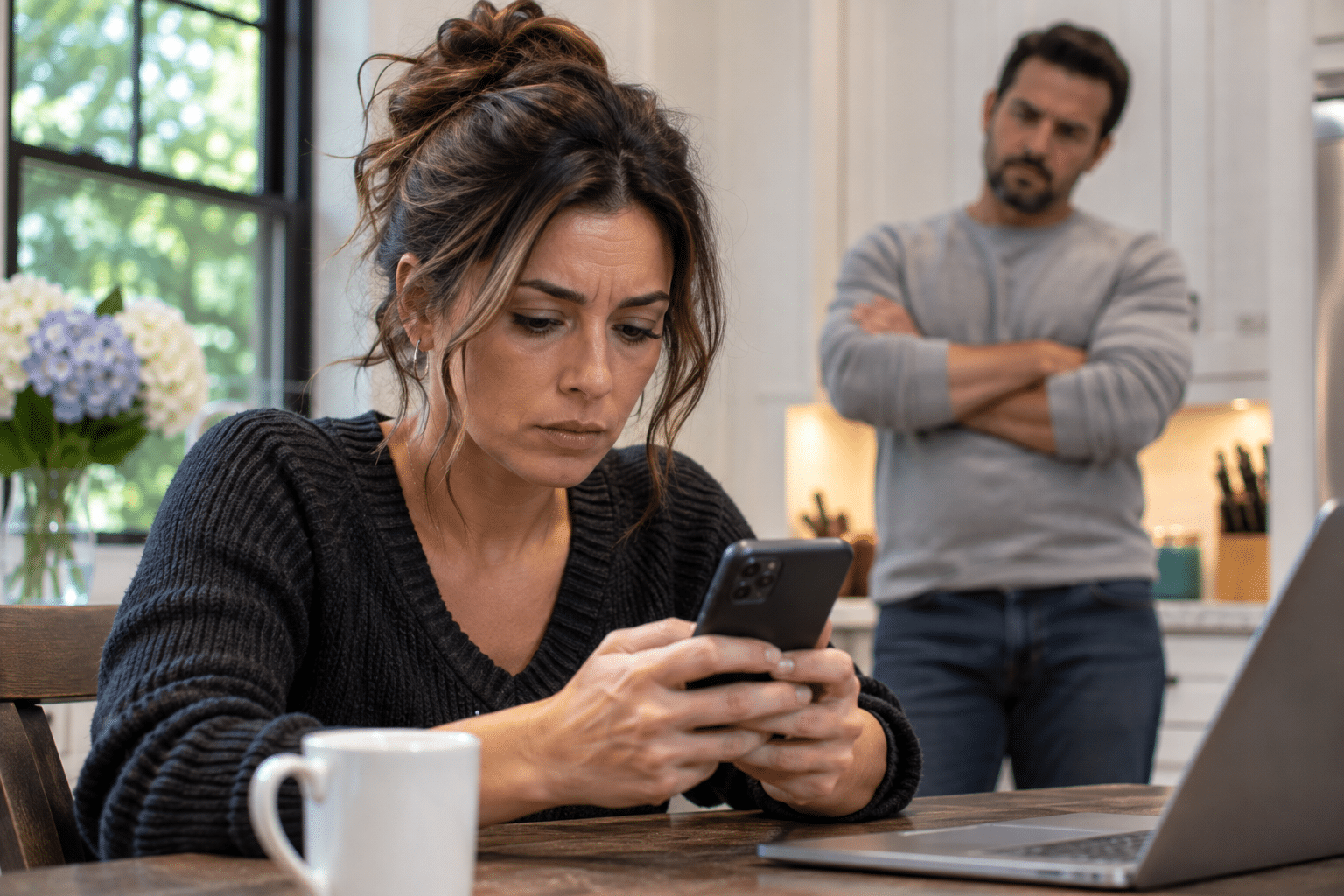
When a marriage is deteriorating, it can be tempting to secretly record conversations with your spouse in case you later need evidence in a divorce. You may believe a recording could prove threats, admissions about money, parenting problems, infidelity, or other conduct that could become important once a case is filed. Illinois law, however, places significant restrictions on secretly recording private conversations. A recording that seems useful could potentially expose you to criminal liability, civil claims, and evidentiary problems if it was obtained unlawfully. Before recording your spouse without their knowledge, I recommend understanding exactly what Illinois law allows and what risks you may create for yourself.
Illinois Law Protects Private Conversations
Illinois regulates secret recordings under Article 14 of the Illinois Criminal Code. Under 720 ILCS 5/14-2, a person can commit eavesdropping by knowingly and intentionally using an eavesdropping device in a surreptitious manner to record a private conversation without the consent required by the statute. Importantly, the statute can apply even when the person making the recording is personally participating in the conversation.
Illinois defines an “eavesdropping device” broadly under 720 ILCS 5/14-1. A smartphone, digital recorder, computer, or other device capable of recording oral conversations can potentially fall within the definition. The statute also defines “surreptitious” as conduct accomplished through secrecy, concealment, stealth, or deception.
The most important issue is whether the conversation is considered private. Under 720 ILCS 5/14-1(d), a private conversation is generally one in which at least one participant intends the communication to be private under circumstances that reasonably justify that expectation. That means the legality of a recording may depend heavily on where the conversation occurred, who was present, and whether the participants reasonably expected that what they were saying would remain private.
Recording Your Own Conversation With Your Spouse Can Still Be A Problem
People sometimes assume that they may legally record any conversation as long as they are personally participating in it. Illinois law does not make that assumption safe. Section 14-2 specifically addresses surreptitious recording by a person who is a party to a private conversation and requires the consent of the other parties when the statutory conditions are met.
For example, secretly turning on your phone during a private conversation with your spouse in the bedroom, kitchen, office, or another setting where privacy is reasonably expected could potentially raise an eavesdropping issue. The fact that you are speaking in your own home does not automatically make the recording lawful. The focus is on the nature of the conversation and whether there was a reasonable expectation of privacy.
On the other hand, not every conversation is legally private. A loud argument occurring openly in front of other people, for example, may present a different privacy question than a private conversation occurring behind closed doors. Because the analysis can depend on very specific facts, I would not advise assuming that a recording is legal simply because the conversation happened in a particular place.
An Illegal Recording May Not Help Your Divorce Case
A spouse may secretly record a conversation because they believe the recording will become powerful evidence in court. That strategy can backfire. Under 720 ILCS 5/14-5, evidence obtained in violation of Illinois’ eavesdropping law generally is not admissible in a civil or criminal trial, subject to limited statutory exceptions. A divorce proceeding is a civil matter, so an unlawfully obtained recording may be excluded rather than used to prove your allegations.
This is one reason I encourage clients to think about lawful evidence preservation instead of trying to create their own recordings. Text messages, emails, financial records, photographs lawfully obtained, witness testimony, court records, bank statements, and other documents may provide important evidence without creating the same eavesdropping concerns.
An improper recording may also shift attention away from your spouse’s conduct and toward your own. Instead of focusing exclusively on hidden assets, threats, parenting problems, or another disputed issue, the parties could end up litigating whether you violated Illinois law while gathering the evidence.
Secret Recording Can Carry Criminal And Civil Consequences
Violating the Illinois eavesdropping statute is not merely a technical problem. Under 720 ILCS 5/14-4, a first eavesdropping offense is generally classified as a Class 4 felony, while a second or subsequent offense is generally a Class 3 felony. The statute provides different enhanced classifications for certain recordings involving specified public officials performing official duties.
Illinois law also provides civil remedies for unlawful eavesdropping. Under 720 ILCS 5/14-6, an injured party may potentially seek an injunction against further eavesdropping, actual damages, and punitive damages. Those consequences could create an entirely separate legal dispute at the same time you are preparing for or litigating your divorce.
Recordings And Illinois Parenting-Time Disputes
Secret recordings can become especially tempting when parents expect a dispute over children. A parent may want to document yelling, threats, alcohol use, statements about the children, or other conduct they believe could affect parenting time. Illinois courts, however, decide parenting-time issues according to the child’s best interests under 750 ILCS 5/602.7.
Section 602.7 directs courts to consider numerous factors, including the child’s needs, each parent’s relationship with the child, the child’s adjustment to home and community, prior caretaking arrangements, the parents’ ability to cooperate, physical violence or threats of physical violence directed toward the child, and abuse involving the child or another member of the household. The statute also permits the court to consider other factors it expressly finds relevant.
That does not mean a parent should violate the eavesdropping statute to obtain evidence concerning parenting time. If you believe your spouse presents a genuine danger to your child, I can discuss lawful ways to preserve evidence and seek appropriate court relief. Depending on the facts, witnesses, police reports, medical records, written communications, photographs, school records, or other admissible evidence may be available.
What Should You Do If You Already Made A Secret Recording?
If you already recorded your spouse without their knowledge, I recommend speaking with a lawyer before distributing the recording, posting it online, sending it to relatives, or attempting to use it in court. Section 14-2 also addresses the use or disclosure of information that a person knows or reasonably should know was obtained through unlawful eavesdropping. Sharing a questionable recording can therefore create additional legal concerns.
Do not alter, edit, or destroy the recording simply because you later become concerned about how it was obtained. The better approach is to preserve the situation as it exists and obtain legal advice about what happened. Your lawyer can evaluate the circumstances surrounding the recording and determine whether Illinois’ eavesdropping law applies.
If you are still only considering making a recording, getting legal advice first may prevent a much larger problem. Divorce litigation already involves significant financial, parenting, and personal consequences. Evidence should strengthen your position rather than expose you to an unnecessary criminal or civil dispute.
Frequently Asked Questions About Secretly Recording A Spouse In Illinois
Is Illinois An All-Party Consent State For Private Conversations?
Illinois law generally prohibits surreptitiously recording a private conversation without the consent required by 720 ILCS 5/14-2. The statute can apply even when the person making the recording is one of the participants. Whether the law applies depends in part on whether the conversation qualifies as private under 720 ILCS 5/14-1. A conversation is generally private when one or more participants intend it to remain private and that expectation is reasonable under the circumstances.
Can I Record My Spouse In Our Own Home?
Being inside your own home does not automatically give you the right to secretly record a private conversation. In fact, a conversation inside a bedroom, home office, or other private area may support an argument that the participants reasonably expected privacy. The specific circumstances matter, including who was present, how the conversation occurred, and whether the recording was concealed. I recommend getting legal advice before making any secret recording that you may later hope to use in a divorce.
Can I Use A Secret Recording To Prove My Spouse Is Abusive?
Evidence of violence or abuse can be highly important in an Illinois parenting case because 750 ILCS 5/602.7 directs courts to consider physical violence, threats of violence, and abuse when determining a child’s best interests. However, an unlawfully obtained recording may be inadmissible under 720 ILCS 5/14-5. If you are concerned about abuse, I can help identify lawful evidence such as police reports, photographs, medical records, witnesses, written threats, or other documentation.
What Happens If My Spouse Secretly Recorded Me?
If you discover that your spouse secretly recorded a private conversation, the legality of the recording should be evaluated under Article 14 of the Illinois Criminal Code. Depending on the circumstances, the recording may be inadmissible, and unlawful eavesdropping may potentially expose the person who made it to criminal penalties and civil remedies. I would want to know when and where the recording occurred, who participated in the conversation, how the recording was made, and whether anyone consented before determining what options may be available.
Should I Record Conversations Before Filing For Divorce?
I generally recommend that someone considering divorce first determine whether the proposed evidence-gathering method is lawful. A secret recording can create risks that far outweigh its potential value. There are often safer ways to document financial problems, parenting concerns, threats, or other misconduct. Speaking with a divorce lawyer before taking action can help you preserve useful evidence without accidentally creating another legal issue.
Speak With The Law Office Of Fedor Kozlov Before Recording Your Spouse
Preparing for divorce often involves gathering information, but how that information is obtained matters. Secretly recording a private conversation with your spouse can potentially violate Illinois law, expose you to criminal or civil consequences, and leave you with evidence that cannot be used in court. If parenting time, hidden assets, threats, or another serious concern is involved, I can help identify lawful ways to document the issue and protect your position.
The Law Office of Fedor Kozlov represents clients in Schaumburg and throughout Chicago, Illinois, in divorce, parenting-time disputes, property division, financial disputes, and other family-law matters. To discuss what evidence you should preserve before filing for divorce, or what to do if you have already made or discovered a secret recording, contact our Schaumburg divorce lawyer at the Law Office of Fedor Kozlov by calling (847) 241-1299 to schedule your consultation.
