
Can Text Messages Help Prove Parenting Interference?
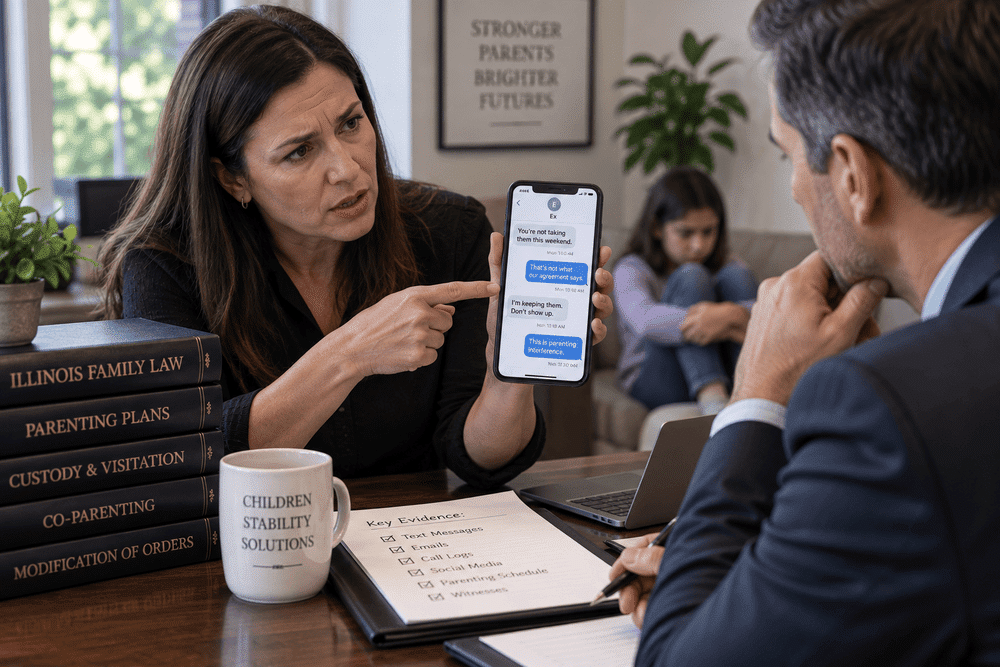
Text messages can be key evidence in Illinois parenting disputes because they often show what happened as it unfolded. If one parent keeps canceling visits, refuses exchanges, or makes excuses for not following the schedule, these messages can help show a pattern. However, a few messages alone rarely tell the whole story, and courts look at the bigger picture. I tell clients to save all communications, stay calm, and focus on what the messages actually prove. In Schaumburg, the main question is whether the behavior affects the child’s best interests and if a parent is following the parenting plan or court order.
What Parenting Interference Can Look Like
Parenting interference can happen in different ways. Sometimes, a parent directly refuses to allow scheduled visits. Other times, it shows up as frequent last-minute cancellations, unnecessary changes to the schedule, or not making the child available for exchanges. It can also happen if a parent pressures the child not to go to visits, speaks badly about the other parent, or creates obstacles that make regular time together hard.
Not every disagreement amounts to unlawful interference. Parents may occasionally need to change schedules because of illness, emergencies, school events, transportation problems, or other legitimate circumstances. What matters is whether there is a recurring pattern and whether the conduct appears designed to interfere with the other parent’s relationship with the child. Text messages can be especially useful because they may document the exact dates, explanations, and responses connected to disputed parenting time.
Why Text Messages Can Be Important Evidence
Text messages give a written record of conversations that might otherwise turn into a disagreement about what was said. For example, a message like, “You are not getting him this weekend because I said so,” is very different from a parent later saying the visit was missed because of an emergency. Repeated messages about changing pickup times, refusing visits, or making unrelated demands can also help show a pattern.
The value of text messages often comes from consistency. One message may mean very little on its own, but a series of communications over several weeks or months may show that missed parenting time was not accidental. The messages may also help establish whether the parent attempting to exercise parenting time remained reasonable, proposed alternatives, and attempted to resolve the problem.
Text Messages May Help Prove Violations Of A Parenting Plan
When a parenting plan or allocation judgment already exists, text messages may help document violations of that order. Illinois law provides an enforcement mechanism under 750 ILCS 5/607.5 when a parent does not comply with allocated parenting time.
To enforce parenting time, a petition usually needs to name the current parenting order, explain what was violated, give the dates, and show that you tried to fix the problem. Text messages can help with these steps by showing the date of the missed visit, the reason given, and any efforts to resolve the issue.
For example, if a parent sends messages confirming the scheduled pickup, receives a response refusing to make the child available, and then proposes make-up time that is also rejected, those communications may provide a clear timeline for the court.
Courts Can Order Remedies For Parenting Time Violations
If the court finds that a parent failed to comply with allocated parenting time, Section 607.5 authorizes various remedies depending on the circumstances and the child’s best interests. The purpose is generally to enforce the parenting arrangement and reduce future violations rather than simply punish a parent.
Possible remedies may include additional terms and conditions for parenting time, make-up parenting time, participation in parental education, counseling, modification of transportation arrangements, reimbursement of certain expenses, or other relief authorized by statute. Repeated or serious violations can create increasingly significant legal consequences.
This is one reason why documenting interference properly matters. A detailed record may allow the court to distinguish between an isolated scheduling problem and an ongoing refusal to follow the parenting arrangement.
Save The Entire Conversation Rather Than Isolated Screenshots
One of the biggest mistakes I see is preserving only the messages that appear favorable. A few selected screenshots may leave out surrounding conversations that materially change the meaning of what was said.
Whenever possible, I recommend preserving the complete conversation, including dates and times. This can help establish context and reduce arguments that a message was edited, selectively presented, or taken out of sequence. Backing up the original messages may also be important if the phone is lost, damaged, replaced, or reset.
Do not alter messages or create edited screenshots. Evidence is much more useful when its authenticity and context can be established clearly.
Avoid Creating Bad Evidence Yourself
Parents involved in contentious disputes sometimes become so focused on collecting evidence against the other parent that they forget their own messages may also be reviewed. Angry responses, threats, insults, excessive profanity, or statements suggesting that parenting time is being used as leverage can weaken an otherwise legitimate complaint.
I encourage clients to communicate as though a judge may eventually read the conversation. Messages should remain focused on the children, the schedule, and practical solutions. If the other parent sends a hostile message, responding calmly may make the factual record much clearer than escalating the argument.
This approach is not about sounding artificial. It is about avoiding unnecessary conduct that distracts from the real issue.
Do Not Coach A Child To Create Evidence
Parents should never pressure children to send messages, record conversations, or make statements designed to support litigation. Involving children directly in adult disputes can harm them emotionally and may create concerns about the parent’s judgment.
If a child independently expresses concerns about parenting time, those concerns should be handled carefully and appropriately. Depending on the circumstances, legal procedures may exist for addressing the child’s needs without placing the child in the middle of the dispute.
The strongest parenting cases usually focus on objective evidence and the child’s welfare rather than efforts to recruit the child into the conflict.
Text Messages Work Best When Combined With Other Evidence
Text messages may be powerful, but they are often most useful when supported by other evidence. Calendars showing missed parenting time, school attendance records, exchange logs, emails, parenting applications, witness testimony, and prior court orders may help confirm what the messages show.
For example, a parent claiming repeated denial of weekend parenting time may have texts documenting the refusals, a calendar identifying missed dates, and the parenting plan showing the scheduled weekends. Together, those records can create a much clearer picture than any single item standing alone.
The goal is not to overwhelm the court with every communication between the parents. The goal is to present relevant evidence that clearly demonstrates what occurred and why it matters.
FAQs About Text Messages And Parenting Interference
Can Screenshots Of Text Messages Be Used In An Illinois Parenting Case?
Yes, text message screenshots may potentially be used as evidence, but the messages generally must be shown to be authentic and relevant. The court needs a reasonable basis to determine that the messages are what the party claims they are and that they relate to an issue the court must decide.
What Kind Of Text Messages Can Show Parenting Interference?
Messages may be relevant when they show repeated refusals to follow scheduled parenting time, threats to withhold the child, unnecessary cancellations, attempts to condition parenting time on money or other demands, or intentional efforts to disrupt exchanges. Messages showing that one parent repeatedly refuses reasonable make-up time may also become important.
Can One Missed Visit Be Considered Parenting Interference?
A single missed visit usually does not establish the same type of pattern as repeated interference. Families encounter illnesses, emergencies, transportation issues, school obligations, and other legitimate scheduling problems. Courts generally consider the surrounding circumstances rather than treating every missed exchange as misconduct.
What Should I Text If The Other Parent Refuses My Parenting Time?
Keep the communication calm, factual, and focused on the parenting plan. Identify the scheduled parenting time, ask whether the child will be available, and request an explanation if the exchange is being refused. If appropriate, propose a reasonable solution or make-up time.
Can Text Messages Show That A Parent Is Turning A Child Against Me?
They can sometimes contribute to that argument, but proving improper interference with the parent-child relationship often requires more than a few messages. Communications may be relevant if one parent admits telling the child not to attend visits, makes repeated disparaging statements, encourages the child to reject the other parent, or discusses plans to interfere with contact.
What Happens If The Other Parent Deletes The Messages?
The fact that messages are deleted from one person’s phone does not necessarily mean they no longer exist elsewhere. You may still have copies on your own device, backups, screenshots, or records contained in another messaging platform.
Can Parenting Interference Change Parenting Time?
Potentially. The outcome depends on the seriousness, frequency, and effect of the conduct. Illinois courts make parenting decisions based on the child’s best interests, and persistent interference with the other parent’s access may become relevant to restrictions, enforcement, or modification proceedings.
Can A Parent Lose Parenting Time For Interfering With The Other Parent?
Serious or persistent interference can lead to significant court action, but losing parenting time is not automatic. Courts generally tailor remedies to the facts of the case and the child’s best interests.
Should I Record Every Missed Parenting Exchange?
Keeping an accurate record is often helpful. A calendar can identify the date, scheduled exchange time, what occurred, and whether make-up time was offered. Those records can then be compared with text messages, emails, parenting applications, or other communications.
Do I Need A Lawyer If Parenting Interference Keeps Happening?
Repeated interference may justify legal action, especially when an existing parenting plan or allocation judgment is being violated. Illinois law provides procedures for enforcing allocated parenting time under 750 ILCS 5/607.5, and persistent interference can become relevant to other parenting decisions.
Speak With The Law Office Of Fedor Kozlov About Parenting Interference
Parenting interference can create serious problems for both parents and children, particularly when occasional disagreements become a repeated pattern. Text messages may provide valuable evidence because they can document refusals, excuses, threats, scheduling disputes, and attempts to resolve the problem. The strongest evidence is usually clear, complete, and supported by the existing parenting plan and an accurate record of missed or disrupted parenting time.
If another parent is interfering with your parenting time, or if you have been accused of improperly interfering with the other parent’s relationship with your child, the details matter. Text messages, parenting schedules, court orders, and the history between the parents may all become important in determining what happened and how the issue should be addressed. Contact our Schaumburg child custody attorney at the Law Office of Fedor Kozlov at (847) 241-1299 to receive a consultation.
