
Can My Ex-Spouse Use Frozen Embryos Without My Consent?
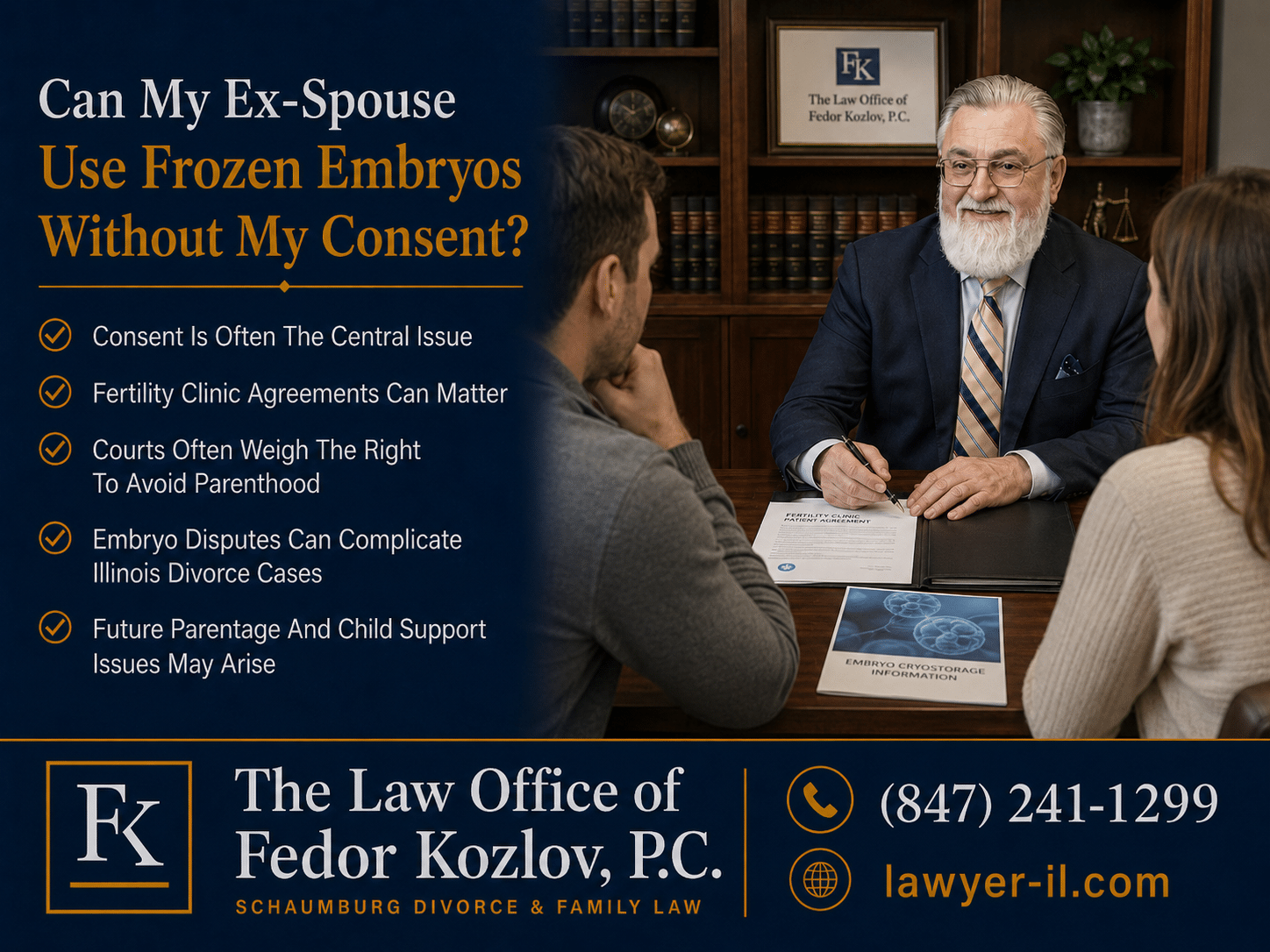
Frozen embryos can lead to some of the most emotional and difficult legal disputes during and after a divorce. While advances in reproductive technology let couples save embryos for future family planning, these embryos can become a source of conflict if the marriage ends. One person may want to use the embryos to have a child, while the other may not want to become a parent after divorce. These situations involve personal choices, important rights, and complicated legal questions. Illinois courts must weigh both sides, including any agreements made before the embryos were created. If frozen embryos are part of your Schaumburg divorce, it is important to know your rights under Illinois law.
How Illinois Courts View Frozen Embryo Disputes
Frozen embryos do not fit into traditional legal categories. Illinois law does not treat them exactly like property or like children. Because of this, courts use a special legal approach to handle embryo disputes.
Often, the first thing courts look at is whether the couple signed an agreement with the fertility clinic about what should happen to the embryos if they divorce. These agreements usually include instructions about future use, destruction, donation, or storage of the embryos.
Illinois courts usually give a lot of importance to valid contracts about reproductive materials. They also recognize that people have important rights when it comes to deciding if they want to become genetic parents in the future.
The Illinois Marriage and Dissolution of Marriage Act, found at 750 ILCS 5/101, provides the legal framework for divorce proceedings throughout Illinois. While the statute does not specifically govern frozen embryo disputes, it gives courts authority to resolve property and related issues arising during divorce proceedings.
The Importance Of Consent In Embryo Cases
Consent is usually the main issue in frozen embryo disputes. One spouse might say that both agreed to use the embryos for future pregnancies. The other might argue that things have changed and both must still agree before any embryo is used.
Courts across the country often recognize a person’s right to avoid becoming a parent. This is especially important if one ex-spouse does not want the embryos used after the marriage ends.
Illinois courts have looked at whether making someone become a genetic parent against their wishes would violate their basic rights. Each case is different, but courts often check if both people still agree to use the embryos.
A written agreement can have a big impact on the outcome. If both people clearly stated their wishes before the embryos were created, courts may follow those terms unless there is a strong reason not to.
Fertility Clinic Agreements Can Determine The Outcome
Many couples may not realize how important the documents they sign at fertility clinics are. These agreements can become key evidence if there is a divorce.
A fertility clinic contract may address questions such as:
- Whether embryos may be used after a divorce.
- Whether both parties must consent before implantation.
- Whether embryos should be donated or destroyed if the marriage ends.
- Who will control future decisions regarding the embryos?
Illinois courts often look closely at these agreements because they can show what both people wanted when the embryos were created.
Contract rules often decide if one spouse can move forward with implantation or if both must agree. The exact wording in the agreement can strongly influence the court’s decision.
Can One Spouse Become A Parent Over The Other Spouse’s Objection?
This is often the most difficult question in embryo litigation.
When one spouse wishes to use the embryos and the other objects, courts must weigh competing interests. One party may argue that the embryos represent the only realistic opportunity to have a biological child. The other party may argue that being forced into parenthood after divorce is fundamentally unfair.
Courts frequently examine whether alternative options exist for the spouse seeking parenthood. They may also consider whether enforcing a prior agreement would result in an outcome that both parties knowingly accepted before the divorce.
The analysis is highly fact-specific. No single rule applies in every case. The existence of signed agreements, the medical circumstances of the parties, and the parties’ intentions at the time of embryo creation may all affect the result.
How Frozen Embryos Affect Divorce Proceedings
Embryo disputes can significantly complicate divorce litigation. What might otherwise be a straightforward divorce can become a lengthy legal battle involving constitutional rights, contract law, reproductive technology, and family law principles.
Under 750 ILCS 5/503, Illinois courts divide marital property according to principles of equitable distribution. Although frozen embryos are not treated as ordinary marital property, disputes involving them may arise during the same proceedings in which other marital assets are divided.
These cases often require extensive evidence, including fertility clinic records, consent forms, medical testimony, and communications between the parties regarding their intentions.
Because of the emotional nature of these disputes, settlement discussions can sometimes provide a more practical solution than prolonged litigation.
Potential Impact On Future Parenting Issues
If embryos are ultimately used to create a child, additional legal issues may arise.
Questions involving parentage, allocation of parental responsibilities, parenting time, and child support may become relevant depending on the circumstances and applicable court orders.
Illinois parentage laws, including provisions contained in the Illinois Parentage Act of 2015, 750 ILCS 46/101 et seq., may affect how parental rights and responsibilities are determined.
When frozen embryos are involved, it is important to consider not only the immediate dispute but also the long-term legal consequences that could follow.
Why Early Legal Guidance Matters
Frozen embryo disputes involve legal issues that extend beyond a typical divorce case. They combine family law, constitutional considerations, contract interpretation, and reproductive rights.
The decisions made early in the process can significantly affect the outcome. Documents signed years earlier may suddenly become critical evidence. Statements made during settlement discussions can also influence future proceedings.
If frozen embryos are part of your divorce, obtaining legal advice as early as possible can help protect your interests and clarify your options under Illinois law.
Illinois Frozen Embryo FAQs
Can My Ex-Spouse Use Frozen Embryos Without Telling Me?
In most situations, the answer depends on the terms of any agreements signed with the fertility clinic and the applicable court orders. Many fertility clinics require documentation from both parties before allowing embryos to be used. If there is a dispute, court involvement may be necessary before implantation can occur.
Do Frozen Embryos Count As Children Under Illinois Law?
No. Illinois courts generally do not treat frozen embryos as children for purposes of custody or parenting determinations. Instead, courts analyze embryo disputes under legal principles involving contracts, reproductive rights, and related family law considerations.
What Happens If We Signed A Fertility Clinic Agreement Before The Divorce?
The agreement may play a major role in determining the outcome. Courts frequently review these documents to determine the parties’ intentions regarding future use, storage, donation, or destruction of the embryos. The specific language of the agreement can be extremely important.
Can A Court Force Me To Become A Parent After Divorce?
Courts carefully consider a person’s right to avoid unwanted parenthood. Whether a court will allow embryo use over one party’s objection depends on the facts of the case, any prior agreements, and the legal principles involved. These cases are highly fact-specific.
What If The Embryos Are My Ex-Spouse’s Only Chance To Have A Biological Child?
Courts may consider this factor when evaluating competing interests. However, it is only one part of the analysis. Courts also examine the rights of the objecting spouse and any agreements that were signed before the embryos were created.
Are Frozen Embryos Considered Marital Property?
Not in the same way as bank accounts, homes, or retirement assets. Although embryo disputes often arise during property division proceedings under 750 ILCS 5/503, courts generally recognize that embryos involve unique constitutional and personal interests that distinguish them from ordinary property.
Can We Resolve The Dispute Without Going To Court?
Yes. Many couples negotiate agreements concerning the future disposition of frozen embryos during settlement discussions. Mediation and negotiated resolutions can sometimes avoid the expense and uncertainty of litigation.
What Evidence Is Important In An Embryo Dispute?
Important evidence may include fertility clinic contracts, informed consent forms, medical records, correspondence between the parties, text messages, emails, and testimony regarding the parties’ intentions when the embryos were created.
Could Child Support Become An Issue If The Embryos Are Used?
Potentially. If a child is born as a result of embryo implantation, questions involving parentage and financial responsibilities could arise depending on the circumstances and applicable court rulings.
Should I Speak With A Divorce Attorney If Frozen Embryos Are Involved?
Absolutely. Frozen embryo disputes involve complex legal issues that go beyond traditional divorce matters. Early legal guidance can help protect your rights, preserve important evidence, and ensure that your interests are properly presented to the court.
Talk To Our Schaumburg Embryo About Frozen Embryo Disputes During Divorce
Disputes involving frozen embryos can be among the most emotional and legally complex issues that arise during a divorce. Whether you wish to preserve your right to use frozen embryos or you want to prevent their use without your consent, it is important to understand your rights under Illinois law. These cases often involve detailed contract analysis, reproductive rights, parentage issues, and divorce litigation strategy. Careful legal representation can make a significant difference in protecting your interests and helping you pursue the outcome you seek.
If you are facing a divorce involving frozen embryos, parental rights issues, child custody matters, visitation disputes, paternity concerns, or any other family law matter, contact the Law Office of Fedor Kozlov. I represent clients throughout Schaumburg and across the Chicago area in complex family law cases. Contact our Schaumburg embryo dispute lawyer at the Law Office of Fedor Kozlov at (847) 241-1299 to receive a consultation.
