
Can An Illinois Court Force Someone To Become A Parent After IVF?
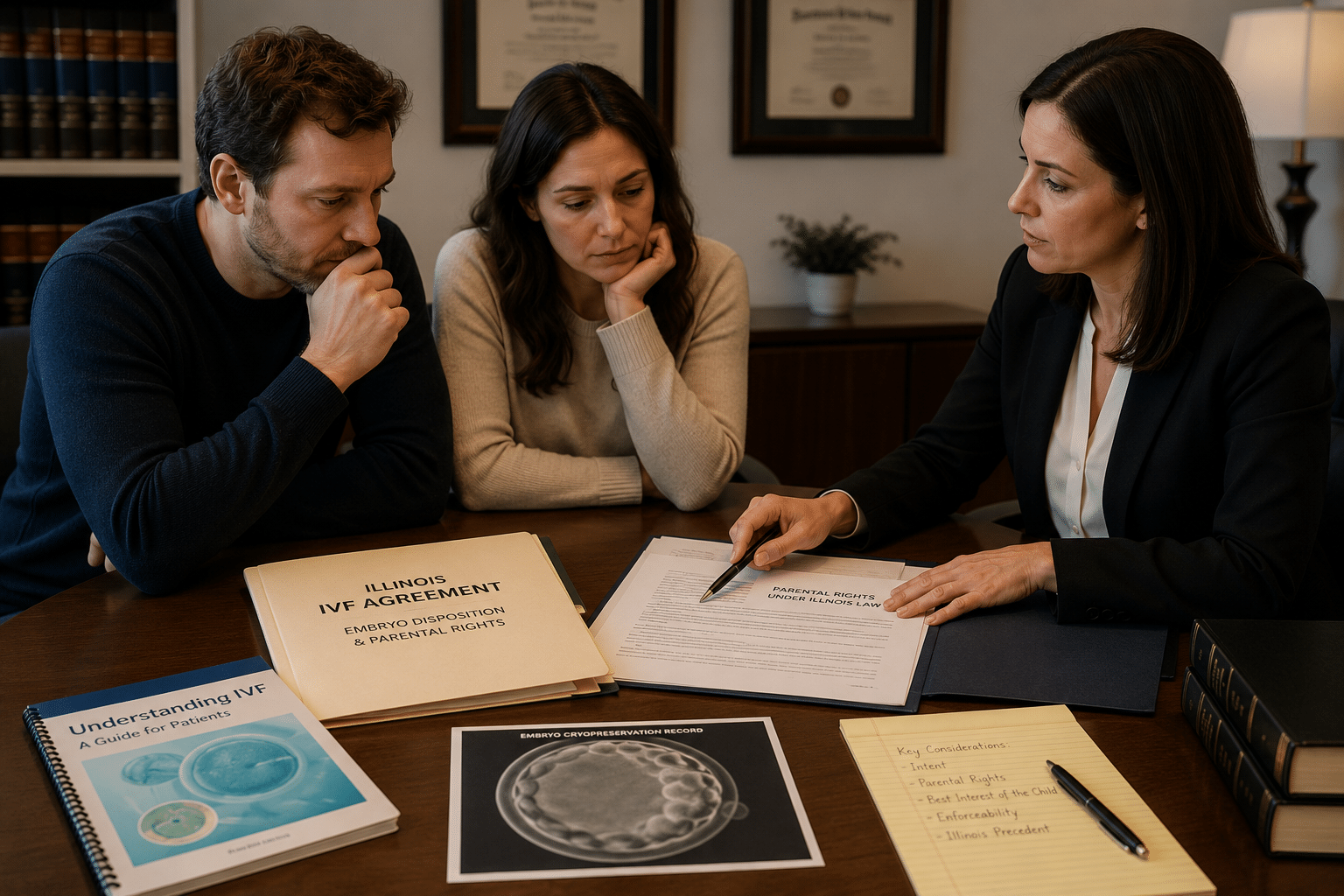
IVF often leads to tough legal questions, especially if a relationship ends, someone changes their mind, or there is disagreement about frozen embryos. Many people wonder if an Illinois court can make someone become a parent after they no longer want to be involved. The answer depends on what happened, which documents were signed, whether an embryo was transferred, and if a child has already been conceived or born. Illinois law makes a clear distinction between forcing someone to have a medical procedure and legally recognizing someone as a parent. If you are facing these issues, act quickly. Consent, written records, clinic documents, and the timing of any withdrawal can all affect the outcome.
A Court Generally Cannot Force Someone To Undergo IVF
In most cases, an Illinois court cannot make someone go through IVF, provide eggs or sperm, become pregnant, or have an embryo transfer. These are very personal medical and reproductive choices. If partners disagree, one person cannot force the other to take part in future fertility treatment.
Things get more complicated once eggs and sperm have been used to create embryos. At that point, disputes may be about whether an embryo can be transferred, who gets to decide what happens to it, and whether one person agreed the other could use it. The court then looks at rights based on earlier consent and the embryos that already exist, instead of making someone start IVF against their wishes.
Consent And Intent Can Establish Legal Parentage
Article 7 of the Illinois Parentage Act of 2015 governs children conceived through assisted reproduction. Under 750 ILCS 46/703, an individual who consents to assisted reproduction with the intent to become a parent is a legal parent of the resulting child. This rule can apply regardless of whether that individual is genetically related to the child.
Consent can be shown with a signed record or an agreement made before conception that shows both the person giving birth and the intended parent planned to be the child’s parents. Fertility clinic forms, written agreements, parentage acknowledgments, emails, texts, and testimony about what the parties did can all be important if there is a dispute about intent.
So, if someone later regrets their decision, the court is not forcing them to become a parent. Instead, the court is recognizing or enforcing the legal results of an earlier choice to consent to assisted reproduction with the intent to be a parent.
Withdrawing Consent Before Embryo Transfer
Timing matters a lot if an intended parent wants to take back their consent. Under 750 ILCS 46/704, if someone withdraws consent before insemination or embryo transfer, they are not a parent of the resulting child. If you no longer want to be a parent, do not rely on a casual conversation or think that breaking up automatically cancels your earlier consent.
You should clearly document your withdrawal and give it to both the fertility center and the other intended parent before the procedure happens. Review the clinic documents and any separate agreements carefully. If you wait until after an embryo transfer, the legal situation may change a lot because conception may have already happened based on your earlier consent.
A person who has changed their mind should obtain legal guidance immediately. Delays, unclear messages, or inconsistent conduct may create disputes about whether consent was effectively withdrawn and when the other party received notice.
Frozen Embryo Disputes Can Depend On Written Agreements
Illinois courts often examine the agreements signed before or during fertility treatment when deciding who may use frozen embryos. Under 750 ILCS 46/704.5, when intended parents no longer agree about the medical use of cryopreserved fertilized ova, the most recent informed consent executed at the fertility center or an applicable marital settlement agreement may govern their disposition.
Illinois appellate courts have also addressed disputes involving frozen pre-embryos. In Szafranski v. Dunston, the court held that an advance agreement concerning the disposition of pre-embryos should generally be honored. When no controlling agreement exists, the court may consider the parties’ competing interests in using or avoiding the use of the embryos.
The wording in an IVF agreement is very important. Some documents require both people to agree before a transfer, while others let one person decide after a separation. Never treat a fertility clinic form as just routine paperwork. Always review sections about separation, divorce, death, storage, donation, destruction, and future use carefully.
Embryo Use And Legal Parenthood Are Related But Separate Issues
Permission to use an embryo does not always resolve every question about legal parentage. A document may address who controls the embryo without clearly stating whether both parties intend to become legal parents of a resulting child. Conversely, a signed agreement may demonstrate both consent to the procedure and an intent to assume parental rights and responsibilities.
When a dispute occurs, I look at the entire record rather than a single signature. The court may consider the language of the documents, statements made to medical providers, communications between the parties, payment for treatment, participation in selecting donors, and preparations made for the child.
Clear documentation can reduce uncertainty. Couples should address embryo disposition and intended parentage in separate, precise provisions instead of assuming that a general fertility consent form resolves every family law issue.
A Legal Parent May Have Child Support Obligations
Once an Illinois court determines that a person is a legal parent, that status carries both rights and obligations. A parent may have a duty to provide financial support even if the relationship with the other parent has ended or the parent no longer wishes to participate in the child’s life.
Parents generally cannot privately waive a child’s right to support. Therefore, an agreement stating that one parent will never seek child support may not prevent a court from entering an appropriate support order. The child’s financial needs remain separate from the disagreements between the adults.
A legal parent may also seek parenting time and decision-making authority. Parentage is not limited to financial responsibility. It creates a legally recognized parent-child relationship that can affect inheritance, medical information, parental decision-making, and the child’s long-term family relationships.
Parenting Time Is Decided Under The Child’s Best Interests
After parentage is established, Illinois courts allocate parenting time under 750 ILCS 5/602.7. The controlling standard is the child’s best interests. The court considers factors such as the child’s needs, each parent’s prior caretaking role, the relationship between the child and each parent, the parties’ ability to cooperate, and the child’s adjustment to home, school, and community.
An IVF agreement may document the parties’ intentions, but it cannot permanently dictate parenting time if its terms conflict with the child’s best interests. Once a child exists, the court must focus on the child’s welfare rather than simply enforcing every parenting provision contained in an earlier contract.
Illinois generally presumes that parents are fit, and parenting time is not restricted unless the court finds that a parent’s exercise of parenting time would seriously endanger the child’s physical, mental, moral, or emotional health. A parent cannot avoid legal parentage simply by declining to request parenting time.
Decision-Making Responsibilities May Also Be Allocated
Under 750 ILCS 5/602.5, Illinois courts allocate significant decision-making responsibilities according to the child’s best interests. These responsibilities may concern education, health care, religion, and extracurricular activities. The court can allocate the subjects jointly or give one parent primary authority over particular areas.
The fact that a child was conceived through IVF does not create a different best interests standard. Once legal parentage is established, the same family law principles generally apply to decisions involving the child’s care. The court may consider each parent’s prior participation, ability to make informed decisions, history of cooperation, and willingness to support the child’s relationship with the other parent.
A person who is contesting parentage should address that issue promptly. Ignoring a parentage petition can expose the person to court orders entered without a full presentation of their position.
Donors Are Treated Differently From Intended Parents
Illinois law distinguishes between a donor and an intended parent. Under 750 ILCS 46/702, a donor is not a legal parent of a child conceived through assisted reproduction. Donating sperm or eggs does not automatically create parental rights or support obligations when the person qualifies as a donor under the statute.
Disputes can arise when a person believed they were only providing reproductive material while the other party claims they also agreed to become a parent. Labels used by the parties are relevant, but the court may also examine consent records, agreements, communications, and conduct.
A written donor agreement can be especially important when friends, unmarried partners, or known donors are involved. Informal promises may leave major questions unresolved and lead to costly parentage litigation after a child is born.
Legal Advice Should Be Obtained Before Treatment Begins
The strongest time to address parentage and embryo disposition is before eggs are fertilized or embryos are transferred. Each person should understand whether they are acting as a donor, an intended parent, or a participant with limited rights concerning stored embryos.
Independent legal representation can help ensure that each party understands the agreement and signs it voluntarily. A properly prepared agreement should address separation, divorce, withdrawal of consent, future embryo use, storage fees, death, incapacity, donation, destruction, and whether each participant intends to become a legal parent.
When a dispute has already begun, immediate action may still protect important rights. The available options will depend on the signed records, the stage of treatment, and whether a transfer or birth has occurred.
FAQs About IVF And Parentage In Illinois
Can A Judge Order Me To Participate In An IVF Procedure?
A judge generally cannot order you to provide eggs or sperm, undergo an embryo transfer, become pregnant, or participate in a new IVF procedure against your will. The court may, however, decide whether an embryo that already exists may be used under a valid agreement. It may also determine whether your earlier consent and intent make you the legal parent of a child who was conceived through assisted reproduction. The distinction is between compelling a medical act and enforcing the legal consequences of prior consent.
Can I Withdraw My Consent After Signing IVF Documents?
Illinois law permits an intended parent to withdraw consent before insemination or embryo transfer. Under 750 ILCS 46/704, a person who withdraws consent before that point is not a parent of the resulting child. The withdrawal should be made clearly, in writing, and delivered to both the clinic and the other participant. Because clinic forms and separate agreements may contain notice requirements, I recommend having the documents reviewed before relying on the withdrawal.
What Happens If I Change My Mind After The Embryo Is Transferred?
Changing your mind after embryo transfer presents a much more difficult legal issue. If you previously consented to assisted reproduction with the intent to become a parent, 750 ILCS 46/703 may support a finding that you are a legal parent of the resulting child. Ending the relationship or expressing regret may not erase that earlier consent. The court will examine the records, the timing of your statements, and the evidence concerning your intent when the procedure occurred.
Can My Former Partner Use Frozen Embryos Without My Permission?
The answer depends on the controlling agreements and the circumstances surrounding the creation of the embryos. Under 750 ILCS 46/704.5, the most recent informed consent executed at the fertility center or an applicable marital settlement agreement may govern disposition when intended parents no longer agree. Some agreements require mutual consent, while others give one party authority to use the embryos following separation. The exact language must be reviewed before determining whether additional permission is required.
Does Providing Sperm Automatically Make Someone The Father?
No. Illinois distinguishes between a donor and an intended parent. Under 750 ILCS 46/702, a donor is not a parent of a child conceived through assisted reproduction. However, a person who provided sperm and also consented to the procedure with the intent to parent may be treated as a legal parent under 750 ILCS 46/703. Courts may examine written agreements, communications, clinic records, and the parties’ conduct to determine which role the person intended to assume.
Can An IVF Agreement Eliminate Child Support?
An IVF agreement generally cannot eliminate a child’s right to financial support once legal parentage is established. Child support belongs to the child, and parents cannot permanently bargain it away for their own convenience. Even when an agreement says one party will have no financial obligations, an Illinois court may enter support orders consistent with state law. The enforceability of provisions concerning expenses between the adults may be a separate issue.
Does Legal Parentage Guarantee Equal Parenting Time?
No. Establishing parentage gives a person legal standing to seek parenting time, but it does not guarantee an equal schedule. Under 750 ILCS 5/602.7, parenting time is allocated according to the child’s best interests. The court considers the child’s needs, each parent’s caretaking history, the distance between residences, the parties’ schedules, and their ability to cooperate. The child’s welfare controls the outcome rather than the method of conception.
Can An IVF Agreement Decide Who Makes Medical And Educational Decisions?
An agreement may state the parties’ intentions, but the court retains authority to allocate significant decision-making responsibilities under 750 ILCS 5/602.5. The court considers the child’s best interests and may approve an agreed parenting plan when it is appropriate. If the parents disagree, the judge can allocate responsibility for education, health care, religion, and extracurricular activities. Earlier IVF documents may provide evidence of intent, but they do not automatically control every future parenting question.
What If There Was Only An Oral Agreement About The Embryos?
An oral agreement can create substantial evidentiary problems because the parties may remember the conversation differently. Illinois courts have considered oral agreements and surrounding conduct in embryo disputes, but proving the terms can require testimony, emails, text messages, medical records, and statements made to clinic personnel. A detailed written agreement is much safer because it can identify each party’s rights and intentions before a conflict begins.
Should Unmarried Couples Sign A Separate IVF Agreement?
Unmarried couples should strongly consider a separate agreement addressing parentage and embryo disposition. They may not receive every legal presumption that applies to married spouses, and clinic forms may be written primarily to document medical consent rather than resolve future family law disputes. A separate agreement can identify intended parents, donor status, withdrawal procedures, financial responsibilities, and what happens to stored embryos after separation, death, or incapacity.
Contact The Law Office Of Fedor Kozlov About IVF And Parentage Disputes
IVF disputes can involve reproductive consent, frozen embryos, legal parentage, child support, parenting time, and major decisions affecting a child. The outcome often depends on the language of signed documents and the timing of important events. I represent individuals on either side of family law disputes and can evaluate the records, explain how Illinois law applies, and protect your position in negotiations or court proceedings.
At the Law Office of Fedor Kozlov, I represent clients in Schaumburg and throughout Chicago, Illinois, in divorce proceedings, child custody disputes, allocation of parental responsibilities, parenting time, visitation rights, paternity cases, IVF-related parentage matters, and other family law proceedings. If you are concerned about an IVF agreement, frozen embryos, withdrawal of consent, or whether you may be recognized as a legal parent, contact our IVF lawyer the Law Office of Fedor Kozlov at (847) 241-1299 to schedule a consultation.
