
Can A Prenuptial Agreement Address Frozen Embryos?
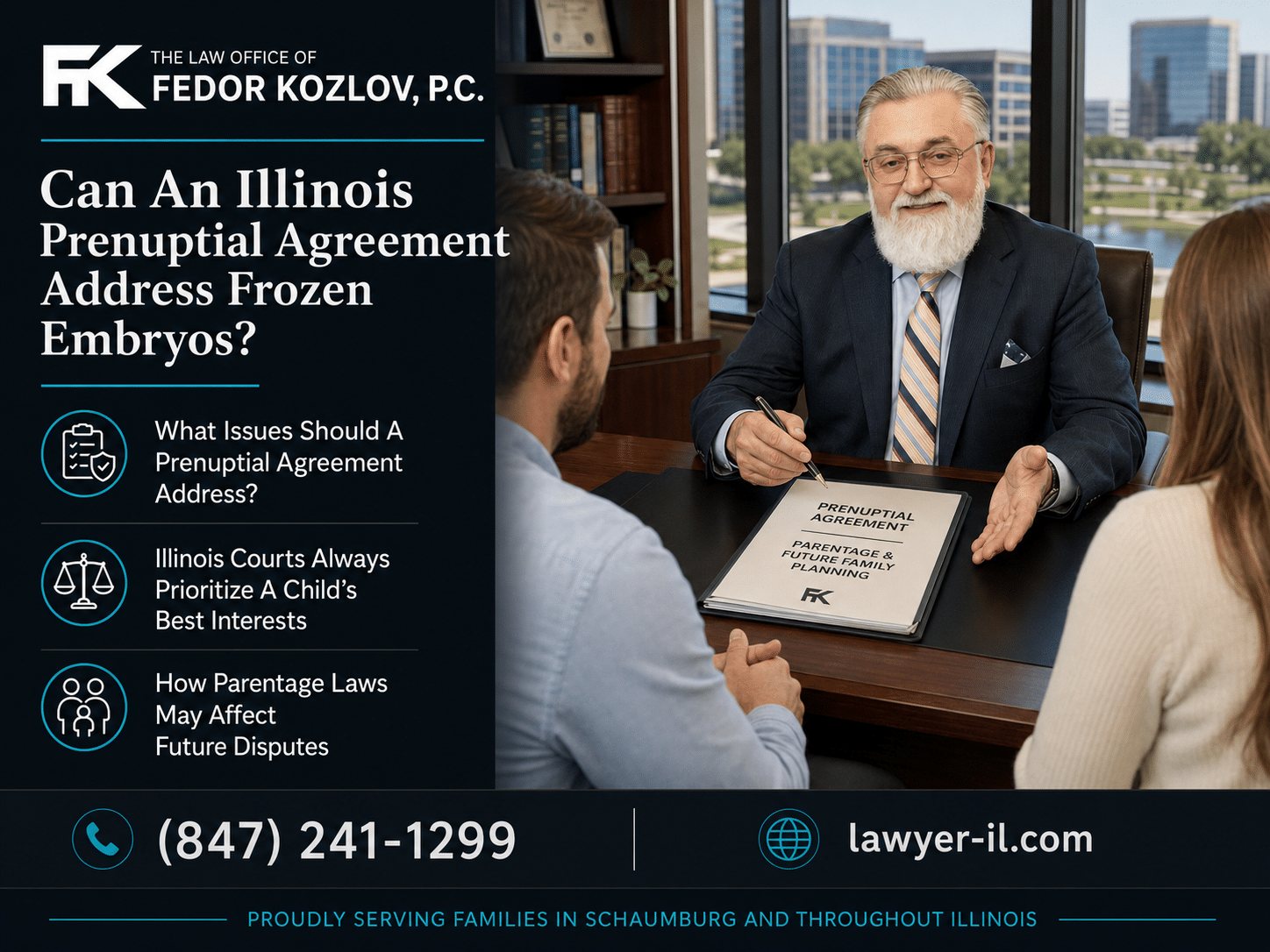
When planning a marriage, most couples think about finances, property, and future plans. Now, more people are also considering how assisted reproductive technology might affect their legal rights. Fertility treatments let individuals preserve embryos before they are ready to have children. Even though couples are hopeful about their future, tough legal questions can come up if they divorce.
A common concern is who controls frozen embryos after a separation and whether a prenuptial agreement can address this in advance. In Schaumburg, planning ahead can help reduce uncertainty, but couples should know what these agreements can and cannot do. Disputes over frozen embryos often involve contract law, reproductive rights, parentage, and family law, so it is important to think about these issues before problems arise.
Why More Couples Are Addressing Frozen Embryos Before Marriage
More couples are choosing to preserve their fertility so they can start a family later. Some use IVF because of infertility, while others create embryos before medical treatments that might affect their fertility. This means many people get married with frozen embryos already stored or plan to create them soon after marriage.
These situations raise legal questions that most couples do not expect to discuss while planning a wedding. If the marriage ends, who controls the embryos? Can one spouse use them without the other’s consent? Can one spouse stop implantation? These issues can be very emotional because frozen embryos often mean both a possible child and a big financial and medical investment.
I encourage clients to consider these issues early. A prenuptial agreement lets couples talk about their expectations before any conflict happens. No one likes to think about divorce while engaged, but having these conversations before marriage can help avoid future disputes and lets both people make informed choices.
Can Illinois Prenuptial Agreements Address Frozen Embryos?
In many circumstances, yes. Illinois prenuptial agreements can address frozen embryo issues as part of a larger marital agreement. Under the Illinois Uniform Premarital Agreement Act, found at 750 ILCS 10/1, prospective spouses may enter into agreements concerning various property rights and responsibilities.
A prenuptial agreement can include terms about who owns the embryos, who makes decisions about them, and what happens to them if the marriage ends. Couples might agree to preserve, donate, destroy, or require both to consent before using the embryos.
But whether the agreement is enforceable depends on how it is written. Courts prefer agreements that both people entered into freely, with full information and a chance to get their own legal advice. If the language is unclear, it can lead to more legal battles instead of preventing them.
I often remind clients that fertility clinics require consent forms, but these are not the same as well-prepared legal agreements. Clinic forms usually focus on medical steps, not the long-term family law issues that can come up later.
This difference matters because courts sometimes have to balance one person’s wish to become a parent with the other’s wish not to. These competing interests can make embryo disputes especially complicated.
Many courts throughout the country have analyzed embryo disputes by reviewing existing contracts and consent agreements between the parties. When clear agreements exist, courts are often more likely to enforce those arrangements. Without clear documentation, litigation can become expensive, emotionally exhausting, and unpredictable. This is why proactive planning matters. A carefully prepared agreement provides a framework that may significantly reduce future uncertainty.
What Issues Should A Prenuptial Agreement Address?
Every family situation is unique, but several subjects deserve careful attention when drafting a prenuptial agreement involving frozen embryos. First, the agreement should identify whether embryos already exist or whether the parties anticipate creating embryos in the future. Specific language helps avoid confusion if circumstances change years later.
Second, the agreement should address what happens if the marriage ends before implantation occurs. Couples may decide that both spouses must provide consent before embryos are used. Others may agree that embryos will be donated or destroyed after divorce.
Third, financial obligations should be addressed. Embryo storage fees, future fertility treatments, and preservation costs can become substantial over time. Clearly assigning responsibility for these expenses may prevent future disputes. Finally, the agreement should discuss unexpected circumstances such as death, incapacity, or long-term separation. Many people overlook these scenarios until they become urgent problems.
Illinois Courts Always Prioritize A Child’s Best Interests
While prenuptial agreements can address frozen embryos, parents cannot contract around Illinois laws that protect children once a child is born. Family law courts always retain the authority to make decisions based on a child’s best interests.
Under 750 ILCS 5/602.7 of the Illinois Marriage and Dissolution of Marriage Act, courts allocate parental responsibilities according to multiple factors affecting a child’s welfare. Judges consider the child’s needs, each parent’s involvement, the ability to cooperate, and the willingness to encourage healthy relationships between the child and both parents.
This means a prenuptial agreement cannot permanently predetermine future parenting disputes. Once a child exists, Illinois law prioritizes the child’s interests over prior agreements between adults. I advise clients to understand this distinction clearly. Prenuptial agreements may establish intentions and expectations, but courts retain authority to protect children regardless of contractual language.
How Parentage Laws May Affect Future Disputes
The Illinois Parentage Act of 2015, codified at 750 ILCS 46, also plays an important role in assisted reproductive technology cases. This law governs legal parent-child relationships and addresses parentage issues that may arise from assisted reproduction.
Questions about parentage can become more complicated if a relationship changes during fertility treatment or if one spouse attempts to use embryos after separation. Proper legal documentation can help establish intentions and reduce uncertainty.
I often encourage clients to coordinate their fertility planning with broader estate planning and family law strategies. Parentage issues frequently intersect with divorce proceedings, allocation of parental responsibilities, and financial support obligations. The more comprehensive the planning process is at the beginning, the fewer surprises clients tend to encounter later.
Why Independent Legal Counsel Is Important
One of the biggest mistakes couples make is assuming they can share one attorney during this process. While couples may currently agree on every issue, a prenuptial agreement is designed to address future disagreements.
Independent legal representation helps demonstrate that both parties understood their rights, voluntarily entered the agreement, and had an opportunity to protect their interests. These factors can become important if enforceability is challenged later.
Legal planning is not about preparing for failure. It is about creating clarity during a period when both individuals are cooperative and capable of making thoughtful decisions together. Many difficult legal battles can be reduced or avoided entirely when couples invest time in proper planning before disputes arise.
FAQs About Prenuptial Agreements And Frozen Embryos In Illinois
Can A Prenuptial Agreement Decide Who Gets The Embryos After Divorce?
Yes, a prenuptial agreement can address how frozen embryos will be handled if a divorce occurs. Couples may agree that embryos will be donated, destroyed, remain in storage, or require mutual consent before use. However, enforceability depends on how clearly the agreement is written and whether both parties voluntarily entered into the agreement.
Can One Spouse Use Frozen Embryos Without The Other Spouse’s Consent?
That depends on the agreements already in place. Fertility clinic documents, consent forms, and prenuptial agreements may all become relevant. Without clear language, disputes can become highly contested and may require court intervention.
Are Frozen Embryos Considered Marital Property In Illinois?
Frozen embryos occupy a unique legal category and are not treated exactly like traditional property. Courts often analyze contractual agreements and competing reproductive interests when resolving disputes.
Can A Prenuptial Agreement Address Future Custody Rights?
No. Illinois courts always prioritize a child’s best interests once a child is born. Parents cannot permanently predetermine custody or parenting arrangements years in advance through a prenuptial agreement.
Does Illinois Use The Term “Visitation”?
Illinois primarily uses the term parenting time instead of visitation. Parenting time and allocation of parental responsibilities are determined according to a child’s best interests under Illinois law.
Should Fertility Clinic Documents Be Reviewed By An Attorney?
Yes. Fertility clinic forms often focus on medical procedures and may not address all of the long-term family law implications that could arise during a divorce or parentage dispute.
Can A Prenuptial Agreement Address Death Or Incapacity?
Yes. Couples should strongly consider including provisions that address death, disability, or incapacity because these situations may affect who controls frozen embryos in the future.
Should Both Parties Hire Separate Attorneys?
Yes. Independent legal representation is strongly recommended. Separate attorneys help establish fairness and may strengthen the enforceability of the agreement.
Contact Fedor Kozlov For Help With Frozen Embryo And Family Law Matters
Assisted reproductive technology has created entirely new legal questions for modern families. Whether you are planning a marriage, considering IVF treatment, preserving fertility, or preparing a prenuptial agreement, legal planning today can help reduce future uncertainty. Taking proactive steps before problems arise often provides the greatest protection for everyone involved.
At the Law Office of Fedor Kozlov, I represent clients in Schaumburg and throughout Chicago, Illinois in family law matters involving divorce proceedings, allocation of parental responsibilities, parenting time, visitation rights, paternity matters, and other complex family law disputes. If you have questions about prenuptial agreements involving frozen embryos or other family law concerns, contact our IVF agreement attorney the Law Office of Fedor Kozlov at (847) 241-1299 to schedule a consultation.
