
Does A Fertility Clinic Agreement Control After Divorce?
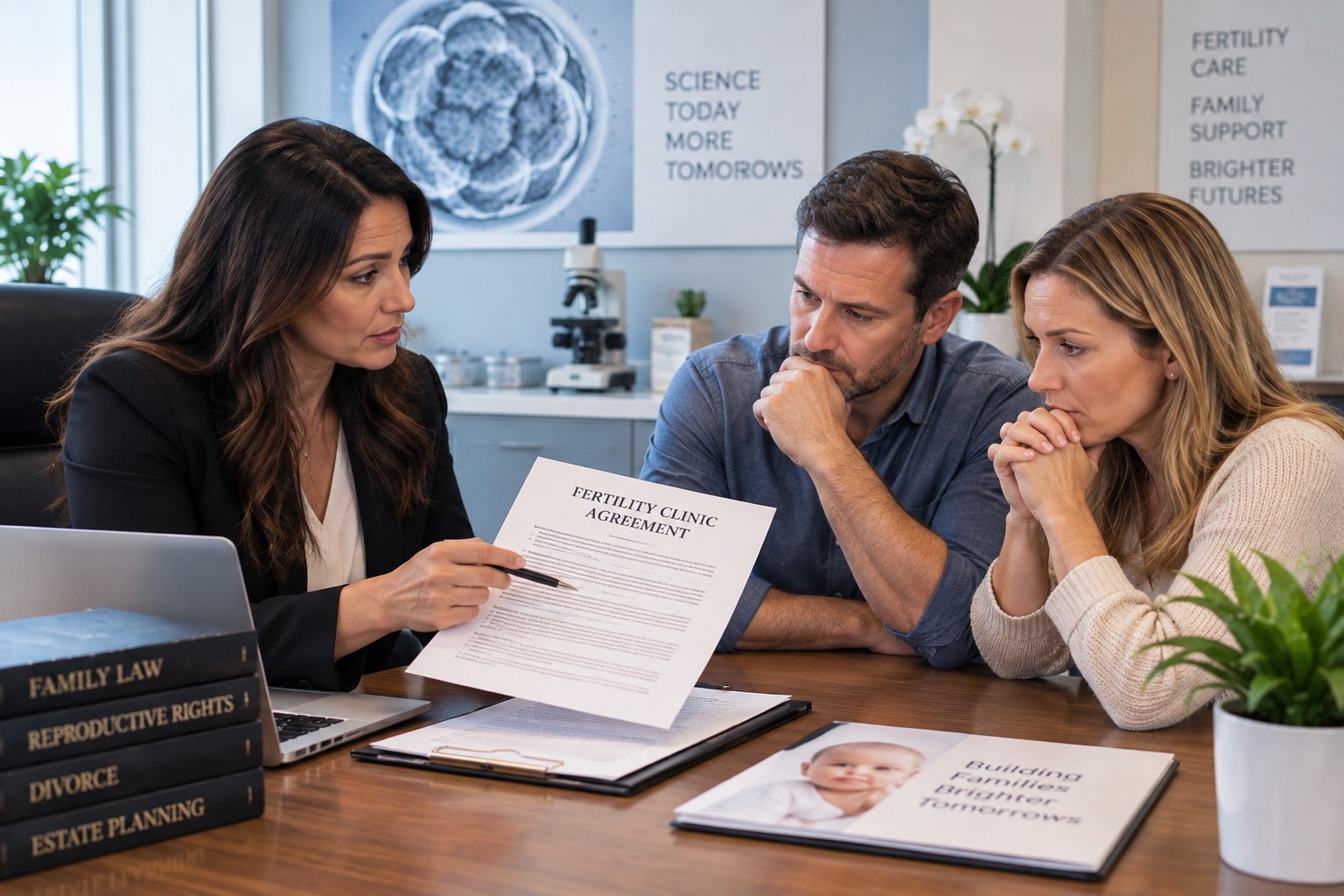
Fertility treatment often requires couples to sign detailed consent forms before embryos are created, stored, transferred, donated, or discarded. Those forms may seem like routine medical paperwork when a couple is trying to have a child, but they can become extremely important if the marriage later ends. A disagreement over frozen embryos can involve reproductive decisions, contractual rights, parentage, and the terms of a divorce judgment.
Illinois law now specifically addresses what happens when intended parents no longer agree about the use of cryopreserved fertilized ova. A fertility clinic agreement can have significant legal force, but it does not automatically control every issue that may arise after divorce. The precise language of the clinic agreement, any later marital settlement agreement, and whether a child has already been conceived or born can all make a major difference.
Illinois Law Gives Fertility Agreements Significant Importance
Under 750 ILCS 46/704.5, Illinois law addresses disputes involving cryopreserved fertilized ova when intended parents no longer agree about their medical use. The statute provides that the terms of the most recent informed consent executed by the intended parents at the fertility center or a marital settlement agreement entered under a judgment of dissolution, legal separation, or dissolution of a civil union govern disposition.
This means the documents signed at the fertility clinic should not be treated as meaningless intake paperwork. If a married couple later divorces and disagrees about whether embryos should be used, donated, stored, or otherwise disposed of, the clinic consent can become a central document in the dispute.
I would want to review the exact language of every consent form signed at the fertility center. Different documents may address different circumstances, including separation, divorce, death, nonpayment of storage fees, or disagreement between intended parents.
A Later Divorce Agreement May Change The Result
A fertility clinic agreement is not necessarily the final word if the divorcing spouses later enter into a marital settlement agreement that specifically addresses the embryos. Under 750 ILCS 46/704.5, a marital settlement agreement entered under the divorce judgment can govern disposition.
For that reason, embryo disposition should not be ignored during divorce negotiations. If the parties have frozen embryos, I would ordinarily want the settlement agreement to address what will happen to them rather than leaving the issue unresolved.
The agreement may need to address whether embryos will remain in storage, be donated, be discarded, or be available for future reproductive use. The language should also be coordinated with the fertility center’s requirements so that the legal agreement and the clinic’s records do not create unnecessary conflict.
Consent To Assisted Reproduction Can Be Withdrawn
Illinois law also addresses when an intended parent may withdraw consent to assisted reproduction. Under 750 ILCS 46/704, an intended parent may withdraw consent before an insemination or embryo transfer that results in pregnancy by providing written notice or filing a legal pleading and giving notice to the other participants and, when applicable, the clinic or health care provider.
If consent is properly withdrawn before the insemination or embryo transfer, the withdrawing person is not considered a parent of the resulting child under that provision.
Timing is therefore extremely important. A dispute that arises while embryos remain frozen is legally different from one that arises after an embryo has already been transferred and pregnancy has resulted.
A Fertility Agreement Does Not Automatically Decide Parenting Time
A fertility agreement may help determine embryo disposition or establish evidence of an individual’s intent to become a parent, but it does not permanently determine custody or parenting time after a child is born.
Illinois courts determine parenting time according to the child’s best interests under 750 ILCS 5/602.7. The court considers factors such as each parent’s caretaking history, the child’s relationship with each parent, the child’s needs, the parents’ ability to cooperate, and each parent’s willingness to support the child’s relationship with the other parent.
A fertility clinic cannot decide years in advance how much parenting time each parent will receive after divorce. Once a child exists and parentage has been established, parenting issues are governed by Illinois family law and the child’s best interests.
Parentage And Embryo Disposition Are Different Legal Questions
It is important to distinguish between deciding what happens to frozen embryos and determining who is legally considered a parent of a child conceived through assisted reproduction.
Under 750 ILCS 46/703, an individual who consents to assisted reproduction with the intent to become a parent may be recognized as a legal parent. Illinois law allows parentage to be established based on written consent or an agreement entered into before conception, depending on the circumstances.
This means a clinic agreement may be relevant to parentage as well as embryo disposition, but the legal questions are not identical. One part of the document may address what happens to embryos after divorce, while another may provide evidence that both individuals intended to become parents.
Divorce Lawyers Should Review IVF Documents Early
I recommend providing fertility clinic agreements to your divorce attorney as early as possible if frozen embryos exist. Waiting until the end of settlement negotiations can create unnecessary problems, especially when the spouses have different plans for the embryos.
Review the documents alongside the divorce petition, marital settlement agreement, parenting plan, and any existing parentage documents. If the spouses disagree about reproductive use, they may need to address the issue directly rather than treat it as an ordinary property dispute.
These cases can be particularly sensitive because one spouse may view the embryos as a future opportunity to have children while the other may strongly oppose future reproductive use. Illinois law provides a framework, but the specific documents and timing remain extremely important.
Frequently Asked Questions About Fertility Clinic Agreements After Divorce
Does My Fertility Clinic Agreement Still Matter After Divorce?
Yes. A fertility clinic agreement can remain extremely important after divorce. Under 750 ILCS 46/704.5, the most recent informed consent signed at the fertility center may govern the disposition of cryopreserved fertilized ova if the intended parents no longer agree about their use.
However, the statute also recognizes a marital settlement agreement entered under a divorce, legal separation, or civil-union judgment. If your divorce settlement specifically addresses the embryos, that agreement may become critical in determining what happens next. I would review both documents rather than assuming one automatically overrides every provision of the other.
Can My Ex-Spouse Use Frozen Embryos Without My Permission?
The answer depends heavily on the agreements that were signed and when consent was withdrawn. Illinois law specifically addresses the disposition of cryopreserved fertilized ova when intended parents disagree, and 750 ILCS 46/704.5 directs attention to the most recent fertility-center informed consent or a marital settlement agreement.
If you no longer consent to future reproductive use, timing can be critical. Illinois law separately permits withdrawal of consent to assisted reproduction before an insemination or embryo transfer that results in pregnancy. If a dispute has already developed, I would recommend addressing it immediately rather than assuming the clinic will independently resolve the legal issue.
Can I Withdraw My Consent To IVF During A Divorce?
Potentially, yes. Under 750 ILCS 46/704, an intended parent may withdraw consent to assisted reproduction before an insemination or transfer that results in pregnancy. The withdrawal must be made in writing or through a legal pleading, with notice to the other participants and applicable medical providers.
The timing of withdrawal matters substantially. A withdrawal made while embryos remain frozen presents a different situation from an attempted withdrawal after an embryo has already been transferred and pregnancy has begun.
What Happens If Our Divorce Agreement Says Something Different From The Clinic Agreement?
A marital settlement agreement can be extremely important. Illinois law expressly recognizes a marital settlement agreement entered under a judgment of dissolution, legal separation, or dissolution of a civil union when determining the disposition of cryopreserved fertilized ova.
For that reason, divorce settlement language involving embryos should be carefully drafted. The parties should clearly state what will happen to existing embryos and avoid vague language that leaves reproductive decisions unresolved.
Contact The Law Office Of Fedor Kozlov About IVF And Divorce Issues
Divorce involving frozen embryos can raise legal questions that are very different from ordinary disputes over property or finances. Fertility clinic agreements, withdrawal of consent, parentage, embryo disposition, parenting time, and parental responsibilities may all become relevant depending on what has happened and whether a child has already been conceived or born. I can review the fertility records, divorce documents, and applicable Illinois law to determine what rights and obligations may exist.
If you have frozen embryos and are going through a divorce, do not assume that the documents signed at the fertility clinic no longer matter. Those agreements may become central to determining what happens to the embryos, whether consent can be withdrawn, and how future parentage issues are handled. Call our IVF lawyer at the Law Office of Fedor Kozlov at (847) 241-1299 to schedule a consultation.
