
What Rights Does A Non-Biological Parent Have After IVF?
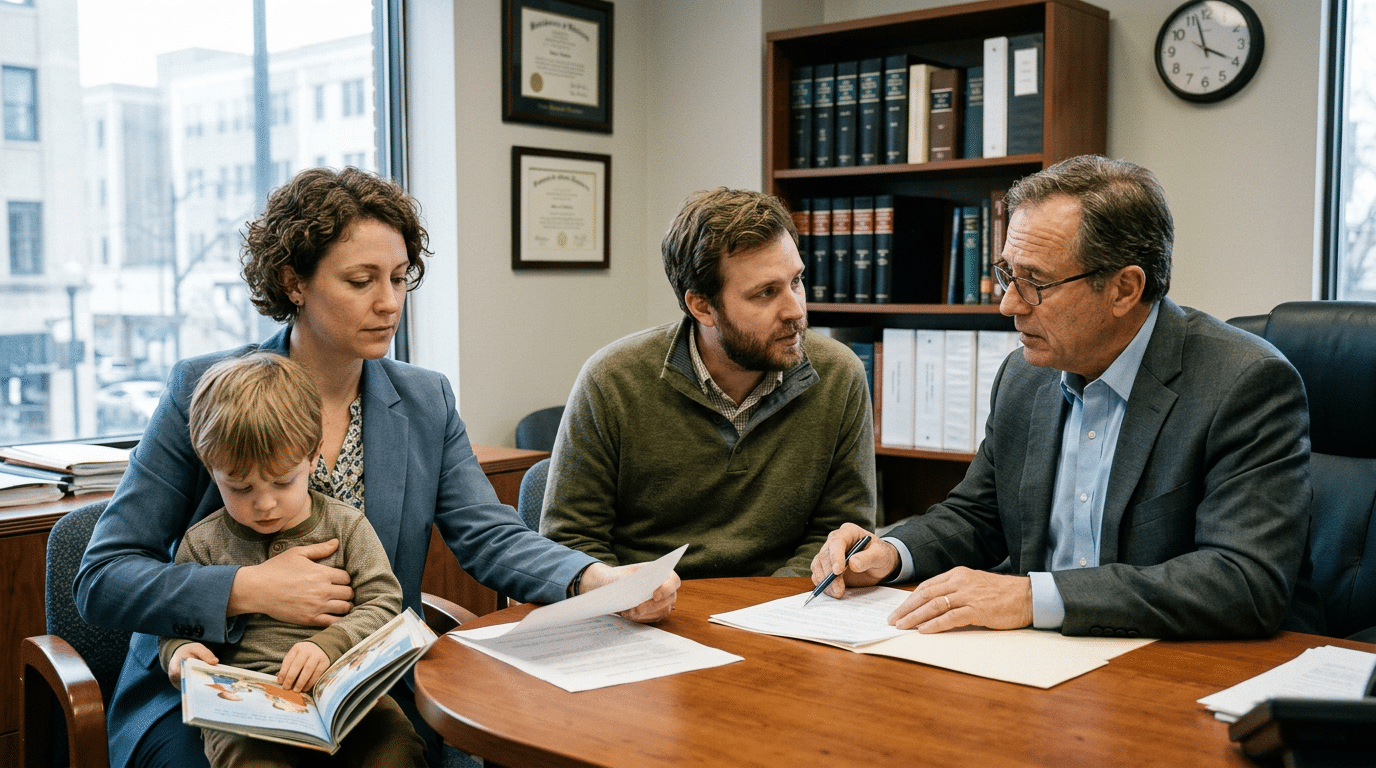
IVF and other forms of assisted reproduction can create families in ways that do not always fit traditional ideas about biological parenthood. A person may fully intend to become a parent, participate in fertility treatment, help raise a child from birth, and still have no genetic connection to that child. When a relationship later ends, questions can arise about whether the non-biological parent has the same legal rights as the biological parent.
Illinois law recognizes that biology is not the only basis for parentage in assisted-reproduction cases. The documents signed before treatment, the parties’ intent to become parents, and the legal steps taken before and after birth can all become important. I tell clients not to assume that a lack of genetic connection automatically means a lack of parental rights.
Illinois Law Recognizes Parentage Based On Intent And Consent
The Illinois Parentage Act directly addresses assisted reproduction. Under 750 ILCS 46/703, an individual who consents to assisted reproduction with the intent to be a parent of a child conceived through that process is considered a parent of the child.
That provision is especially important for non-biological parents. A spouse or partner may not have provided an egg or sperm but may still qualify as a legal parent if that person consented to the assisted-reproduction process with the intent to parent the resulting child.
The legal analysis therefore does not necessarily stop with DNA. I look closely at fertility clinic documents, written consents, agreements between the parties, medical records, and other evidence showing what each person intended when IVF treatment began.
Written IVF Documents Can Be Extremely Important
Fertility clinics often require patients and intended parents to sign consent forms addressing IVF treatment, embryo creation, storage, and future use. Those documents can become highly significant if parentage is later disputed.
Under Illinois law, a person’s consent and intent can establish parentage in an assisted-reproduction case. Clear documentation showing that both individuals intended to become parents may provide strong evidence if one person later tries to deny the other’s legal status.
This is one reason I encourage intended parents to treat IVF documents as legal records rather than routine medical paperwork. The language signed before conception may later affect parental rights, child support, parenting time, and major decisions concerning the child.
Consent Can Be Withdrawn Before A Pregnancy Results
Illinois law also addresses situations where an intended parent changes their mind. Under 750 ILCS 46/704, an intended parent may withdraw consent to assisted reproduction before an insemination or embryo transfer that results in pregnancy. The withdrawal must be made in writing or in a legal pleading with notice to the other participants and relevant clinic or health care providers.
If consent is properly withdrawn before the insemination or embryo transfer, that person is not considered a parent of the resulting child under the statute.
Timing matters greatly. Once a pregnancy results from the assisted-reproduction process, the legal analysis can be very different. A person should not assume that simply ending a relationship or verbally saying they no longer want to participate automatically eliminates parental status.
A Legal Parent May Seek Parenting Time After Separation Or Divorce
Once a non-biological parent is legally recognized as a parent, that parent may seek parenting time after a divorce or separation just as another legal parent would.
Under 750 ILCS 5/602.7, Illinois courts allocate parenting time according to the child’s best interests. The court considers factors such as the amount of time each parent has spent performing caretaking functions, the relationship between the child and each parent, the child’s adjustment to home and community, the parents’ ability to cooperate, and other circumstances affecting the child.
The statute does not create a rule giving preference to the biological parent simply because the other parent lacks a genetic connection. If both individuals are legal parents, the court focuses on the child’s best interests rather than biology alone.
Non-Biological Parents May Also Receive Decision-Making Responsibilities
Parenting time is only one part of parental rights. Illinois law separately addresses significant decision-making responsibilities under 750 ILCS 5/602.5.
A court may allocate responsibility for major decisions involving education, health care, religion, and extracurricular activities to one or both parents. The court considers the child’s best interests, including each parent’s past participation in major decisions, the parents’ ability to cooperate, and the child’s needs.
A legally recognized non-biological parent may therefore have substantial rights concerning important decisions in the child’s life. The biological parent does not automatically receive exclusive decision-making authority.
A Non-Biological Parent May Also Have Child Support Obligations
Legal parentage creates responsibilities as well as rights. A person recognized as a parent through assisted reproduction may be required to provide financial support for the child after separation or divorce.
This point is sometimes overlooked when relationships deteriorate. A person who previously intended to become a parent cannot necessarily disclaim that role later simply because the relationship ended or because there is no genetic connection.
Once parentage is legally established, child support and parenting issues are generally addressed under the same family law framework that applies to other parents.
Problems Can Arise When Parentage Was Never Clearly Documented
The most difficult cases often involve couples who proceeded with IVF without clearly documenting the non-biological partner’s parental intent. This may occur when parties relied only on informal understandings, failed to review clinic paperwork, or assumed that marriage or cohabitation automatically resolved every parentage issue.
When parentage is disputed, I examine the entire history of the assisted-reproduction process. Medical records, fertility clinic agreements, correspondence, financial records, birth documents, and evidence concerning the person’s relationship with the child may all become relevant.
Resolving parentage early can be particularly important because parenting time and decision-making rights may depend on first establishing that the person is legally recognized as a parent.
Divorce Does Not Automatically End A Non-Biological Parent’s Rights
A divorce ends the marital relationship, but it does not automatically terminate a legal parent-child relationship. If a non-biological spouse is legally recognized as a parent, that status generally continues after divorce unless another legal process changes it.
The divorce court can address parenting time, parental responsibilities, child support, and related matters. Under 750 ILCS 5/602.5 and 750 ILCS 5/602.7, the child’s best interests remain the controlling consideration for decision-making and parenting time.
For families created through IVF, the most important legal question is often not who provided the genetic material. It is whether Illinois law recognizes each person as a legal parent and what arrangement serves the child’s best interests going forward.
Frequently Asked Questions About Non-Biological Parent Rights After IVF
Can A Non-Biological Parent Have The Same Rights As A Biological Parent In Illinois?
Yes. A non-biological parent may have the same legal parental status as a biological parent when parentage has been established under Illinois law. Under 750 ILCS 46/703, an individual who consents to assisted reproduction with the intent to become a parent is considered a parent of the resulting child.
Does The Non-Biological Parent Need To Adopt The Child After IVF?
Not always. Assisted reproduction can establish parentage under the Illinois Parentage Act without requiring an adoption in every case. Section 703 specifically recognizes parentage based on consent to assisted reproduction and intent to become a parent.
Can A Biological Parent Prevent A Non-Biological Parent From Seeing The Child After Divorce?
Not simply because the other parent lacks a genetic connection. If the non-biological parent is legally recognized as a parent, that person may seek parenting time under 750 ILCS 5/602.7.
Does Being Listed On The Birth Certificate Prove Parentage?
A birth certificate can be important evidence, but parentage should not be analyzed based on one document alone. In an IVF case, fertility clinic consent forms, assisted-reproduction agreements, statutory presumptions, and evidence of parental intent may also be important.
Contact The Law Office Of Fedor Kozlov About IVF Parentage Rights
Families created through IVF can face legal issues that are very different from those in traditional parentage cases. A lack of genetic connection does not necessarily mean a lack of parental rights, and Illinois law expressly recognizes parentage based on consent and intent in assisted-reproduction cases. When divorce or separation occurs, determining legal parentage may be the first step toward resolving parenting time, decision-making responsibilities, child support, and other family law issues.
If you are a non-biological parent involved in an IVF-related divorce or separation, or if you are disputing another person’s claim to parental rights, obtaining legal advice early can help clarify your position. These cases can involve both the Illinois Parentage Act and the Illinois Marriage and Dissolution of Marriage Act, making the underlying documentation especially important. Call our IVF attorney at the Law Office of Fedor Kozlov at (847) 241-1299 to schedule a consultation.
