
Can Filing First Help Me Get Temporary Child Support Or Maintenance?
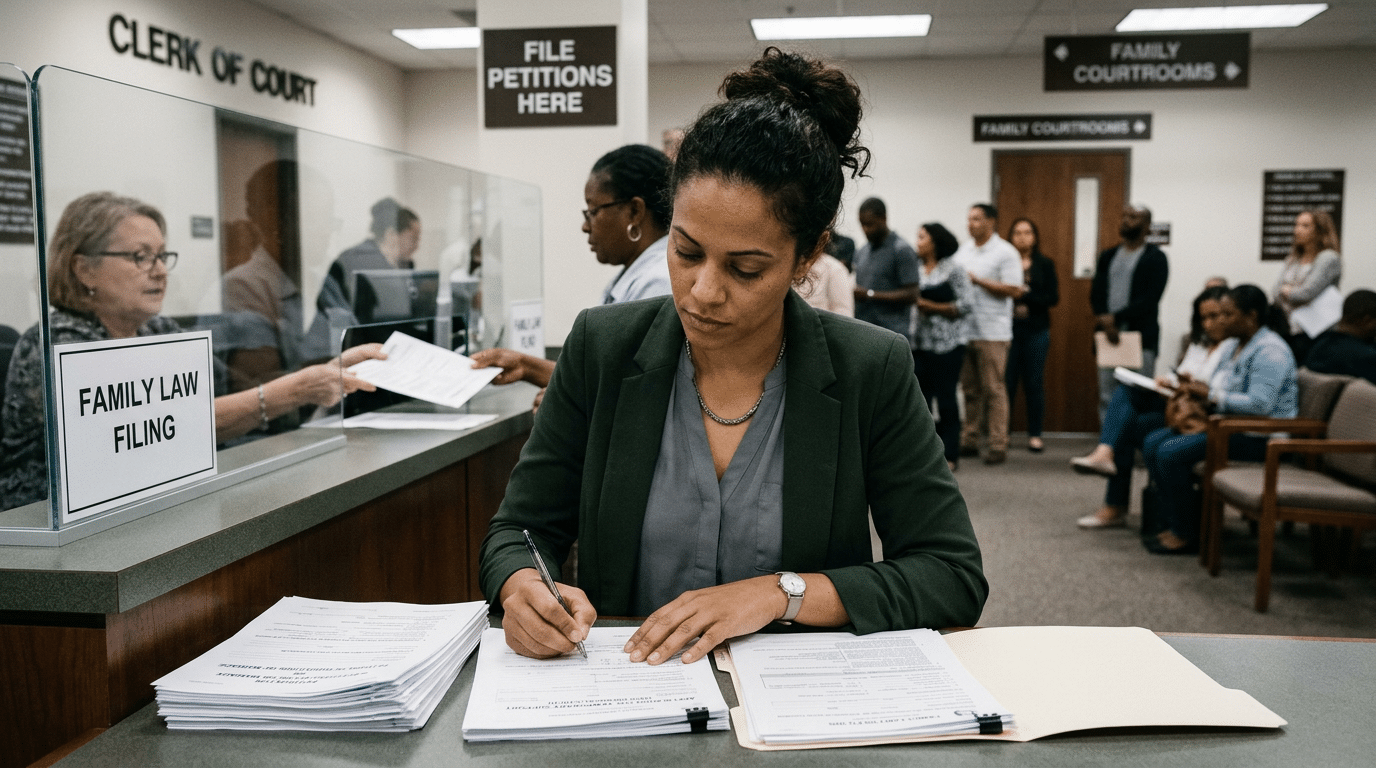
When a marriage ends, one spouse may rely on the other’s income to cover everyday expenses like the mortgage, rent, groceries, health insurance, and child care. This often leads to a key question: does filing for divorce first make it easier to get temporary child support or maintenance?
In Illinois, filing first does not automatically mean you will receive money or have a better legal position. However, it does start the court process and lets you bring temporary financial issues to the judge’s attention. Temporary orders in Schaumburg can help keep things stable while the divorce is ongoing, especially if one spouse earns much more or one parent is paying most of the children’s expenses.
I tell clients to see filing first as a way to start the process, not as a guarantee of a good outcome. Whether you get temporary support depends on both parties’ incomes, parenting arrangements, expenses, financial records, and the rules set by Illinois law.
Filing First Can Allow You To Request Temporary Relief Sooner
The main benefit of filing first is that it starts the legal process where you can ask for temporary relief. Section 501 of the Illinois Marriage and Dissolution of Marriage Act, 750 ILCS 5/501, allows either spouse to request temporary maintenance or child support while the divorce is ongoing. To make this request, you need to provide a factual affidavit, and Illinois requires a statewide financial affidavit with documents like tax returns, pay stubs, and bank statements.
This does not mean the spouse who files the divorce petition receives preferential treatment. Once the case exists, either spouse may request temporary relief. Filing the divorce petition does not give that spouse special treatment. Once the case is open, either spouse can ask for temporary relief. Still, the person who files first can prepare their request for temporary support right away, instead of waiting for the other spouse to start the process. This timing can be important if household income stops suddenly, one spouse will not help with expenses, or a parent needs money to cover the children’s needs. the court earlier.
How Temporary Child Support Works In Illinois
Temporary child support is meant to help cover children’s needs while the divorce is still in progress. Finalizing a divorce can take months or even longer if there are disagreements about assets, income, businesses, or parenting issues. During this time, children still need food, housing, clothing, transportation, medical care, and other essentials.
Under 750 ILCS 5/501, temporary child support may be requested while the case is pending. Section 501 specifically provides that temporary support issues may be decided on a summary basis using information such as allocated parenting time, financial affidavits, tax returns, pay stubs, banking statements, and other relevant documentation.
The underlying child support calculation is governed primarily by 750 ILCS 5/505. Illinois uses an income shares model that considers the income of both parents and allocates the basic support obligation between them. The court determines each parent’s monthly net income, combines those amounts, and applies the statutory guidelines to determine the support obligation. Parenting arrangements can also affect the calculation, particularly when each parent has substantial overnight parenting time.
Filing first does not change how support is calculated. However, it lets the parent who files ask the court to set up a temporary support order before the divorce is final.
Parenting Time Can Affect The Temporary Child Support Calculation
Child support and parenting time are separate legal issues, but they can interact financially. Under 750 ILCS 5/505, Illinois child support calculations take the child’s physical care arrangements into account. When each parent exercises at least 146 overnights per year with the child, the statute provides a shared-care calculation that adjusts the basic support obligation.
This makes it important not to treat parenting time as Because of this, you should not use parenting time as a way to try to raise or lower support payments. Illinois courts decide parenting time based on what is best for the child under 750 ILCS 5/602.7. They look at things like how much each parent has cared for the child in the past, the child’s needs, how the child is adjusting to home, school, and community, how far apart the parents live, and whether each parent supports a good relationship between the child and the other parent. The court’s focus in parenting matters remains the child’s welfare. If parenting time and support are both disputed, I work to make sure the financial issues are addressed without losing sight of the separate best-interest analysis that controls the parenting decision.
Filing First May Matter When One Parent Has Stopped Paying Expenses
Temporary support is especially important if one spouse suddenly stops helping with regular family expenses. One parent might end up paying for the children’s food, school, transportation, insurance, activities, and housing, while the other parent has most of the family’s income.
Without a court order, it is hard to make sure informal financial agreements are followed. One spouse might promise to pay certain bills and then stop suddenly. Filing for divorce gives you a way to ask the court to set up temporary support that can be enforced.
I often tell clients to keep records of their real household financial needs instead of just guessing. Bank statements, mortgage or lease papers, utility bills, insurance payments, child care invoices, school costs, and pay records all help show your financial situation. Having accurate information is very important because 750 ILCS 5/501 requires financial documents and allows penalties if someone submits false or misleading information.
Temporary Maintenance Is Different From Child Support
Maintenance, sometimes called spousal support or alimony, is governed primarily by 750 ILCS 5/504. Unlike child support, maintenance is not automatically awarded simply because one spouse earns more than the other. The court must first determine whether maintenance is appropriate.
Under Section 504, the court considers relevant circumstances such as the income and property of each spouse, each spouse’s needs, realistic present and future earning capacity, impairments to earning capacity, the standard of living established during the marriage, the duration of the marriage, age, health, and other statutory factors. Marital misconduct generally does not determine whether maintenance should be awarded.
Section 501 expressly permits a request for temporary maintenance while the divorce is pending. This can be particularly important when one spouse has historically depended on the other’s income, stayed home to raise children, reduced a career to support the family, or cannot immediately earn enough to maintain reasonable living expenses.
Again, filing first does not guarantee temporary maintenance. It can, however, allow the spouse seeking assistance to present the issue to the court without waiting for the other party to initiate proceedings.
The Court Will Look Closely At Financial Affidavits
A request for temporary child support or maintenance should not be approached casually. Illinois law places significant emphasis on financial disclosure. Under 750 ILCS 5/501, the request for temporary maintenance or child support must be supported by a financial affidavit and relevant documentation, including records such as income tax returns, pay stubs, and bank statements.
The court may examine differences between what a spouse reports on the affidavit and what the supporting records actually show. Section 501 also authorizes significant penalties and sanctions, including attorney’s fees and costs, when a party intentionally or recklessly files a misleading financial affidavit.
For that reason, I encourage clients to begin organizing financial information before the temporary relief hearing. A well-prepared financial presentation can make it easier to explain actual income, household expenses, debts, child-related expenses, and available resources. Problems often arise when a spouse guesses at numbers or submits incomplete information.
High Earners And Business Owners Can Create Additional Support Issues
Temporary support becomes more complicated when income does not come from a straightforward salary. A business owner, physician, executive, independent contractor, salesperson, or partner may receive bonuses, distributions, reimbursements, company-paid benefits, deferred compensation, or irregular income.
Section 505 contains specific rules concerning business income for child support purposes. Ordinary and necessary business expenses may be deducted in calculating net business income, but inappropriate or excessive expenses may be excluded. Significant reimbursements or in-kind benefits that reduce personal living expenses may also be treated as income under certain circumstances.
These cases often require a closer examination of tax returns, business records, compensation statements, and bank activity. Filing first does not prevent the higher-earning spouse from challenging the requested support amount, but initiating the case can allow financial disclosure issues to begin sooner.
Temporary Orders Do Not Decide The Final Divorce
One of the most important things I explain to clients is that a temporary support order is not necessarily the final support order. Section 501 provides that temporary orders do not prejudice the rights of the parties or children that will later be determined in subsequent hearings. Temporary orders may also be modified or revoked before final judgment under appropriate circumstances.
This means a temporary maintenance award does not automatically establish what maintenance will look like after divorce. Likewise, temporary child support may later change because of updated income information, a different parenting schedule, or other developments.
Temporary orders exist to address current needs while the case is pending. Their importance should not be minimized, but neither should they be mistaken for a final determination of every financial issue.
Filing First Does Not Give You An Advantage In Child Custody Or Visitation
Parents sometimes worry that the spouse who files first will automatically receive more parenting time or become the favored parent. Illinois law does not work that way. The legal term generally used today is parenting time rather than visitation between parents, and the court must allocate parenting time according to the child’s best interests under 750 ILCS 5/602.7.
Section 602.7 directs the court to consider numerous factors, including each parent’s prior caretaking role, the child’s needs, the child’s relationships, school and community adjustment, the parents’ schedules, and the willingness of each parent to encourage the child’s relationship with the other parent. Simply being listed as the petitioner on the divorce case does not satisfy those factors.
Similarly, significant decision-making responsibilities involving education, health, religion, and extracurricular activities are addressed under 750 ILCS 5/602.5 based on the child’s best interests. Filing first should therefore not be viewed as a way to gain automatic control over the children.
When Filing First May Be Worth Considering
The decision to file first should depend on the circumstances rather than fear that the other spouse will somehow win by reaching the courthouse first. Timing can become important when financial support has stopped, assets appear to be at risk, parenting arrangements are suddenly changing, or one spouse needs the court to establish temporary rules for the family.
Section 501 also provides other forms of temporary relief in appropriate cases. For example, a court can issue certain restraints involving transfers or concealment of property and can address attempts to remove a child from the court’s jurisdiction for more than 14 days. These remedies depend on the facts and procedural requirements of the case.
If you are financially dependent on your spouse or carrying most of the children’s expenses, filing first may allow you to request necessary relief sooner. The stronger focus, however, should always be on preparation. Accurate financial records, a realistic assessment of household needs, and a clear understanding of the parenting arrangements can matter much more than simply being the person whose name appears first on the case caption.
Speak With Our Schaumburg Divorce Attorney About Temporary Support During Divorce
Temporary financial issues can have an immediate impact on your ability to maintain a household and provide for your children while a divorce is pending. If one spouse controls most of the income, has stopped contributing to family expenses, or disputes how much support should be paid, waiting without understanding your legal options can create additional financial strain. I can evaluate the parties’ income, expenses, parenting arrangements, property, and other relevant circumstances to determine what temporary relief may be appropriate under Illinois law.
The Law Office of Fedor Kozlov handles matters involving divorce, temporary child support, maintenance, allocation of parental responsibilities, child custody decisions, parenting time and visitation rights, paternity, property disputes, and other Illinois family law matters. I represent clients on either side of these disputes and work to protect their interests throughout the case. Contact our Schaumburg divorce law attorney at the Law Office of Fedor Kozlov at (847) 241-1299 to receive a consultation.
