
Can A Parent Lose Parenting Time For Violating Court Orders?
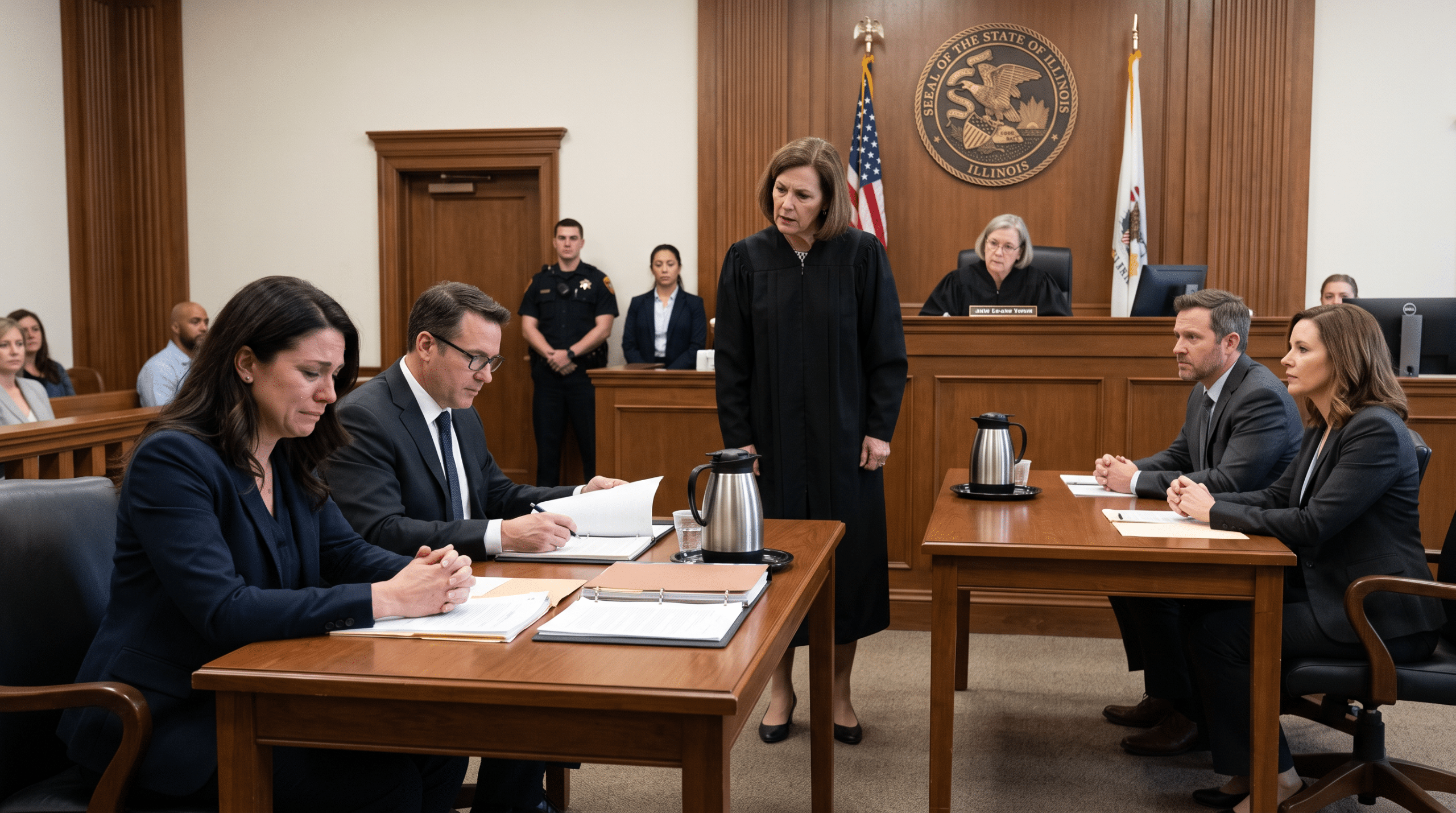
A parenting-time order is a formal requirement, not something either parent can ignore when it is inconvenient. After an Illinois court sets a parenting plan or allocation judgment, both parents must follow its terms unless the court agrees to a change. If a parent keeps breaking court orders, there can be serious consequences, such as make-up parenting time, fines, paying the other parent’s legal fees, limits on parenting time, or, in serious cases, a reduction or loss of parenting time. Still, Illinois courts usually do not cut off a parent’s contact with a child just to punish them. The main issue is whether the violations harm the child’s best interests, safety, stability, or relationship with the other parent.
I work with Schaumburg parents on both sides of these issues. Sometimes, one parent needs help making sure an order is followed, while the other may be accused of violations that happened because of emergencies, misunderstandings, safety concerns, or things beyond their control. What matters most is the evidence, how serious and frequent the behavior is, and its impact. For example, being late once is not the same as regularly keeping the child away, ignoring safety rules, or interfering with the other parent’s time.
Illinois Courts Allocate Parenting Time Based On The Child’s Best Interests
Illinois courts allocate parenting time according to the child’s best interests under 750 ILCS 5/602.7. The statute directs judges to consider factors such as the child’s needs, each parent’s prior involvement, the distance between the parents’ homes, the parties’ ability to cooperate, and each parent’s willingness to place the child’s needs ahead of personal conflict.
The court also looks at whether each parent is willing and able to support a strong relationship between the child and the other parent. If a parent keeps interfering with exchanges, plans activities during the other parent’s time, or pressures the child to avoid the other parent, this can hurt their case. The court is not just counting rule violations. It is looking at whether the parent’s actions show they cannot or will not support a stable parenting plan.
Illinois law usually assumes both parents are capable. A court will not limit parenting time unless it finds that a parent’s actions seriously put the child’s physical, mental, moral, or emotional health at risk. Losing all parenting time is rare. However, if a parent keeps breaking the rules and it causes real harm or danger to the child, the court may add restrictions or change the arrangement.
Violations That May Lead To Parenting-Time Consequences
Violating a court order can happen in many ways. A parent might refuse to let the child go for scheduled time, bring the child back late over and over, block phone or video calls, or take the child out of state against the court’s decision. Other violations can involve rules about transportation, supervision, alcohol use, communication, medical care, or contact with certain people.
Some violations are more serious than others. For example, a parent who knowingly allows contact between the child and someone barred by a court order may face immediate restrictions. Under 750 ILCS 5/603.10(c), a court may revoke parenting time when a parent knowingly uses that time to facilitate prohibited contact with a parent who has been barred from seeing the child or to violate restrictions imposed by another court.
Judges also distinguish between isolated mistakes and deliberate patterns. One missed exchange caused by a vehicle breakdown is not the same as repeatedly withholding the child without legal justification. The court will generally consider the parent’s explanation, efforts to resolve the issue, communications with the other parent, and whether the violation was intentional.
Parenting-Time Abuse Can Result In Specific Penalties
Section 607.5 of the Illinois Marriage and Dissolution of Marriage Act provides an expedited process for enforcing allocated parenting time. Under 750 ILCS 5/607.5, a parent may file a petition identifying the existing parenting order, describing the violations, providing relevant dates, and explaining the reasonable efforts made to resolve the dispute.
If a court decides a parent has abused parenting time, it can order several solutions. These might include new rules to make sure the parent follows the order, make-up time with the child, counseling, education programs, paying back expenses, civil fines, and covering reasonable attorney’s fees and court costs. This finding can also matter if the court later needs to decide whether to change the parenting schedule.
These solutions are meant to give back lost time, help parents follow the rules, and protect the child’s relationship with both parents. They also make it clear that neither parent can change a court order on their own. If the current order is not working, the right thing to do is ask the court for a change instead of just ignoring it.
When Violations Can Lead To Restricted Parenting Time
A court may restrict parenting time if it finds that a parent’s conduct seriously endangered the child’s physical, mental, moral, or emotional health. Restrictions may be appropriate when violations involve domestic violence, substance abuse, dangerous driving, neglect, threats, abduction risks, prohibited contact, or conduct that causes serious emotional harm.
A restriction does not always mean a parent loses all time with their child. Depending on the situation, the court might order supervised visits, ban overnight stays, require exchanges at a safe place, ask for alcohol or drug testing, limit transportation, or keep certain people away. The court can also set conditions that must be met before regular parenting time starts again.
Restrictions are meant to keep the child safe, not to punish the parent. The judge should match the restriction to the specific problem shown by the evidence. When it makes sense, the court can set steps for the parent to fix the issue and work toward getting more parenting time later.
Repeated Violations May Support A Modification
Parenting time may be modified under 750 ILCS 5/610.5 when changed circumstances make a modification necessary to serve the child’s best interests. A repeated pattern of violating the existing schedule may qualify as an important changed circumstance, particularly when the violations disrupt the child’s routine, education, medical care, or relationship with the other parent.
For example, a parent who regularly fails to exercise scheduled time may cause the child uncertainty and disappointment. A court could modify the schedule to reflect the parenting time that the parent is realistically able to exercise. Likewise, a parent who consistently blocks the other parent’s time may cause the court to reconsider which arrangement will better protect the child’s relationship with both parents.
A change to the parenting plan does not happen automatically just because there was a violation. The parent asking for a change must show evidence that the new plan is better for the child. The court will look at the whole family situation, not just one event.
Violating Decision-Making Orders Can Also Affect A Parenting Case
Parenting disputes are not limited to schedules. Under 750 ILCS 5/602.5, courts allocate significant decision-making responsibilities concerning education, health care, religion, and extracurricular activities. A parent who repeatedly makes major decisions without consulting the other parent may violate the allocation judgment.
For example, if a parent enrolls a child in a new school, changes doctors, starts major treatment, or makes other big decisions without talking to the other parent, this can lead to enforcement actions. If one parent keeps refusing to cooperate, the court may decide that joint decision-making is no longer possible.
A court may allocate decision-making responsibility primarily or entirely to one parent when the evidence shows that shared authority is no longer serving the child. Once again, the goal is not to reward or punish either parent. The issue is whether the existing arrangement allows important decisions to be made reliably and in the child’s best interests.
A Parent Should Not Withhold A Child Without Legal Justification
Sometimes, parents keep the child from the other parent because they think the other parent broke a different part of the court order. For example, one parent might refuse to exchange the child because the other parent has not paid child support. This is usually not allowed. Child support and parenting time are separate legal duties, and not paying support does not give a parent the right to deny court-ordered time with the child.
Safety concerns need to be handled carefully. If a parent truly believes the child is in immediate danger, emergency action might be needed. Still, the parent should keep records of the concern and ask the court for help quickly, instead of keeping the child away based only on their own judgment. Making claims without proof or exaggerating can hurt the parent’s credibility.
The safer legal approach is usually to request emergency relief, a modification, or appropriate restrictions. Taking unilateral action without sufficient cause can expose a parent to an enforcement petition and other penalties.
Evidence Is Critical In A Court-Order Violation Case
Courts need clear proof, not just general accusations. Useful evidence can include the parenting plan, calendars, records of exchanges, emails, text messages, school attendance, medical records, photos, police reports, witness statements, and receipts for expenses caused by missed parenting time.
Parents should keep all communications in their original form and save records with exact dates, times, and details. Written messages should stay calm and focus on the child. Angry messages, threats, or repeated personal attacks can be used as evidence against the sender.
I also warn parents not to secretly change messages, coach children, or make up evidence. In family law cases, credibility is very important. Accurate and organized records are more convincing than emotional claims that cannot be proven.
Call Our Schaumburg Attorney To Enforce Your Parenting-Time Orders
Parenting orders provide structure, predictability, and enforceable rules for families living in separate households. When one parent ignores those rules, the resulting conflict can affect the child as much as the adults. Illinois courts have the authority to enforce their orders, restore missed parenting time, impose financial consequences, modify schedules, and restrict parenting time when serious endangerment is proven.
I represent parents seeking enforcement as well as parents responding to allegations of noncompliance. The appropriate approach depends on the language of the order, the evidence, the reasons for the alleged violations, and the effect on the child. Addressing the issue promptly can prevent an isolated dispute from becoming a damaging pattern.
At the Law Office of Fedor Kozlov, I represent clients in Schaumburg and throughout Chicago, Illinois, in parenting-time enforcement proceedings, divorce cases, child custody decisions, allocation of parental responsibilities, visitation disputes, paternity matters, and other family law cases. If a parent is violating your court order or you have been accused of noncompliance, contact our Schaumburg family law attorneys at the Law Office of Fedor Kozlov at (847) 241-1299 to receive a consultation.
