
Can Police Enforce An Illinois Parenting-Time Order?
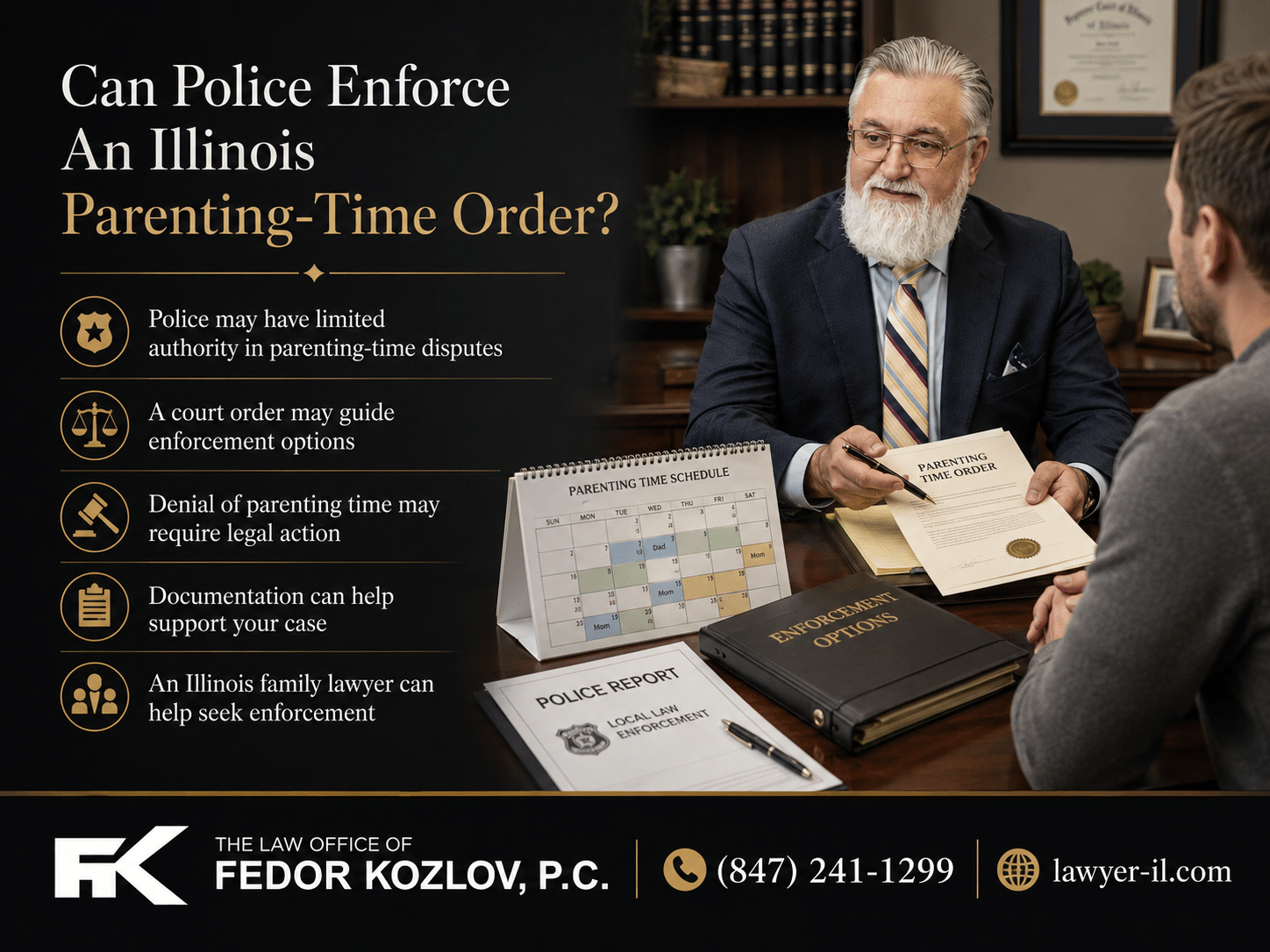
Parenting-time disputes can be some of the most difficult challenges parents face after a divorce or custody case. If one parent does not follow the court-ordered schedule, the other parent may wonder if the police can help. Many people in Schaumburg think police will enforce parenting-time orders just like other court orders, but it is usually more complicated. Although these orders are legally binding in Illinois, police usually have limited power to get involved in family law matters. Knowing what the police can and cannot do is important for protecting your rights and your relationship with your child.
Parenting-time conflicts can happen in divorce cases, paternity matters, or between unmarried parents. Whether you are being denied parenting time or accused of breaking a court order, it helps to know how Illinois courts handle these situations and what legal options you have.
Understanding Parenting Time Under Illinois Law
Illinois no longer uses the traditional terms “custody” and “visitation” in most family law cases. Instead, the Illinois Marriage and Dissolution of Marriage Act refers to parenting time and the allocation of parental responsibilities.
Parenting time is governed by 750 ILCS 5/602.7. Under this statute, courts allocate parenting time according to the best interests of the child. The law requires judges to consider numerous factors, including the child’s needs, each parent’s involvement, the parents’ ability to cooperate, and the child’s adjustment to home, school, and community.
Once a parenting-time order is entered, both parents are legally required to comply with its terms. A parent cannot simply decide to ignore a court order because they disagree with it. When violations occur, the court has the authority to impose remedies and sanctions designed to enforce compliance.
Do Police Enforce Parenting-Time Orders?
In many situations, police officers are reluctant to become involved in parenting-time disputes. Law enforcement officers often view these conflicts as civil matters rather than criminal matters. As a result, a parent may be surprised to learn that calling the police does not always result in immediate enforcement of a parenting-time order.
Even if there is a valid court order, police usually will not physically move a child from one parent to the other unless the order clearly says they can help or there are safety concerns for the child.
The primary reason for this reluctance is that parenting disputes can involve complex legal and factual issues. Officers responding to a call may not have sufficient information to determine whether a violation has occurred or whether circumstances justify temporary noncompliance.
In practice, many police departments will make a record of the incident and tell the parents to go back to family court instead of trying to enforce the order themselves.
When Police May Become Involved
Although law enforcement often limits its involvement, there are circumstances in which police assistance may become appropriate.
For example, if a court order specifically directs law enforcement to assist in enforcing parenting time, officers may have greater authority to act. Similarly, police may become involved when allegations of child abduction, kidnapping, domestic violence, threats, or other criminal conduct are present.
Emergency situations involving a child’s immediate safety may also require law enforcement intervention. If a parent believes a child is in danger, contacting the police may be appropriate regardless of the existence of a parenting-time dispute.
However, even in these situations, officers frequently defer long-term parenting decisions to the family court system.
What Happens If A Parent Refuses To Follow A Parenting-Time Order?
A parent who intentionally violates a parenting-time order may face significant legal consequences. Illinois courts take violations of court orders seriously because ongoing interference with parenting time can damage the child’s relationship with the other parent.
Under 750 ILCS 5/607.5, Illinois courts have the authority to enforce parenting-time orders and address violations. If a parent has improperly denied parenting time, the court may order various remedies designed to correct the situation.
The court may award make-up parenting time to compensate for missed visitation. The judge may also require the violating parent to participate in counseling, parent education programs, mediation, or other services designed to improve compliance.
Repeated violations can result in more serious consequences, including financial penalties and other sanctions.
Filing A Petition To Enforce Parenting Time
When parenting-time violations occur, the most effective solution is often returning to court and seeking enforcement of the existing order.
A parent may file a petition asking the court to determine whether the other parent violated the parenting-time schedule. During the hearing, the court will review evidence, hear testimony, and determine whether a violation occurred.
Documentation can be extremely important in these cases. Text messages, emails, parenting-time logs, witness statements, and other records may help establish a pattern of interference.
The court’s goal is not simply to punish a parent. Instead, judges generally focus on restoring compliance and protecting the child’s relationship with both parents whenever possible.
Can A Parent Be Held In Contempt For Violating Parenting Time?
Yes. In some circumstances, a parent who willfully violates a parenting-time order may be held in contempt of court.
Contempt proceedings arise when a person intentionally disobeys a valid court order. If the court finds that a violation was deliberate and without sufficient justification, the judge may impose sanctions designed to compel compliance.
Potential consequences can include attorney’s fees, fines, make-up parenting time, and other court-ordered remedies. Continued noncompliance can result in increasingly serious penalties.
Parents should understand that court orders are not suggestions. Once an order is entered, both parties are expected to follow it unless and until the court approves a modification.
Parenting-Time Enforcement In Paternity Cases
Parenting-time enforcement issues are not limited to divorced parents. Similar disputes arise in paternity cases involving unmarried parents.
The Illinois Parentage Act of 2015, found in 750 ILCS 46, provides legal procedures for establishing parentage and determining parental rights and responsibilities. Once parenting-time orders are entered in a parentage case, those orders carry the same legal force as orders entered in a divorce proceeding.
Whether parents were married or unmarried, Illinois courts expect compliance with parenting-time schedules and may impose similar enforcement remedies when violations occur.
Why Self-Help Solutions Often Create More Problems
When denied parenting time, some parents attempt to solve the problem on their own by withholding future parenting time, refusing exchanges, or violating the court order in retaliation.
These actions often make matters worse. Illinois courts generally expect parents to comply with existing orders even when the other parent is not doing so. Retaliatory conduct can undermine a parent’s position and create additional legal issues.
Instead of taking matters into your own hands, it is usually more effective to document the violations and seek assistance through the court system. This approach demonstrates respect for the legal process and helps preserve credibility before the judge.
The Importance Of Addressing Parenting-Time Disputes Promptly
Parenting-time problems rarely resolve themselves. Small disputes can quickly become larger conflicts that affect both parents and children. The longer a parent waits to address ongoing violations, the more difficult the situation can become.
Prompt action can help protect your parenting rights and preserve your relationship with your child. Whether you are seeking enforcement of an existing order or defending against allegations of noncompliance, understanding your legal options is important.
Courts generally favor arrangements that promote meaningful relationships between children and both parents. Addressing parenting-time issues early can help prevent unnecessary disruption and provide greater stability for everyone involved.
Illinois Parenting-Time Order Frequently Asked Questions
Can Police Force A Parent To Follow A Parenting-Time Order?
In many situations, police officers are reluctant to physically enforce parenting-time orders because they are generally considered civil matters. While officers may document the situation, they often direct parents back to family court unless the order specifically authorizes law enforcement assistance or an emergency exists.
What Should I Do If The Other Parent Refuses To Return My Child?
You should carefully document the incident and review the language of your court order. Depending on the circumstances, you may need to seek court intervention through a parenting-time enforcement action. If there are concerns regarding the child’s safety, contacting law enforcement may also be appropriate.
Can A Parent Be Punished For Denying Parenting Time?
Yes. Under 750 ILCS 5/607.5, Illinois courts have the authority to impose remedies when a parent improperly interferes with parenting time. Consequences may include make-up parenting time, attorney’s fees, counseling requirements, and other court-ordered sanctions.
Will The Court Award Extra Parenting Time If Visits Were Missed?
Possibly. Courts frequently award make-up parenting time when a parent has been wrongfully denied scheduled parenting time. The specific remedy will depend upon the circumstances of the case.
What Evidence Helps Prove Parenting-Time Violations?
Text messages, emails, parenting-time calendars, witness testimony, photographs, and written records can all be useful evidence. Detailed documentation often strengthens a parent’s ability to demonstrate repeated violations.
Can I Refuse Parenting Time Because The Other Parent Owes Child Support?
No. Child support and parenting time are generally treated as separate issues under Illinois law. A parent’s failure to pay support does not automatically justify denying parenting time.
Can A Parenting-Time Order Be Modified?
Yes. Parenting-time orders may be modified under certain circumstances when a substantial change in circumstances or the child’s best interests justifies modification. Court approval is generally required before changes become legally enforceable.
Does Parenting-Time Enforcement Apply To Unmarried Parents?
Yes. Parenting-time orders entered in paternity cases are enforceable just like parenting-time orders entered in divorce cases. Courts have the authority to address violations regardless of the parents’ marital status.
Schedule A Consultation With Our Schaumburg Divorce Attorney Today
Parenting-time disputes can be stressful, emotional, and frustrating for both parents and children. Whether you are being denied court-ordered parenting time or facing allegations that you violated an existing order, understanding your rights under Illinois law is critical. Prompt action can often prevent ongoing conflicts from becoming more serious legal problems.
At the Law Office of Fedor Kozlov, I represent clients in Schaumburg and throughout Chicago, Illinois, in divorce proceedings, parenting-time disputes, allocation of parental responsibilities, visitation matters, paternity cases, and other family law matters. If you have questions about enforcing a parenting-time order or protecting your parental rights, contact our Schaumburg custody attorneys at the Law Office of Fedor Kozlov at (847) 241-1299 to receive a consultation.
