
Can An Illinois Prenuptial Agreement Address Frozen IVF?
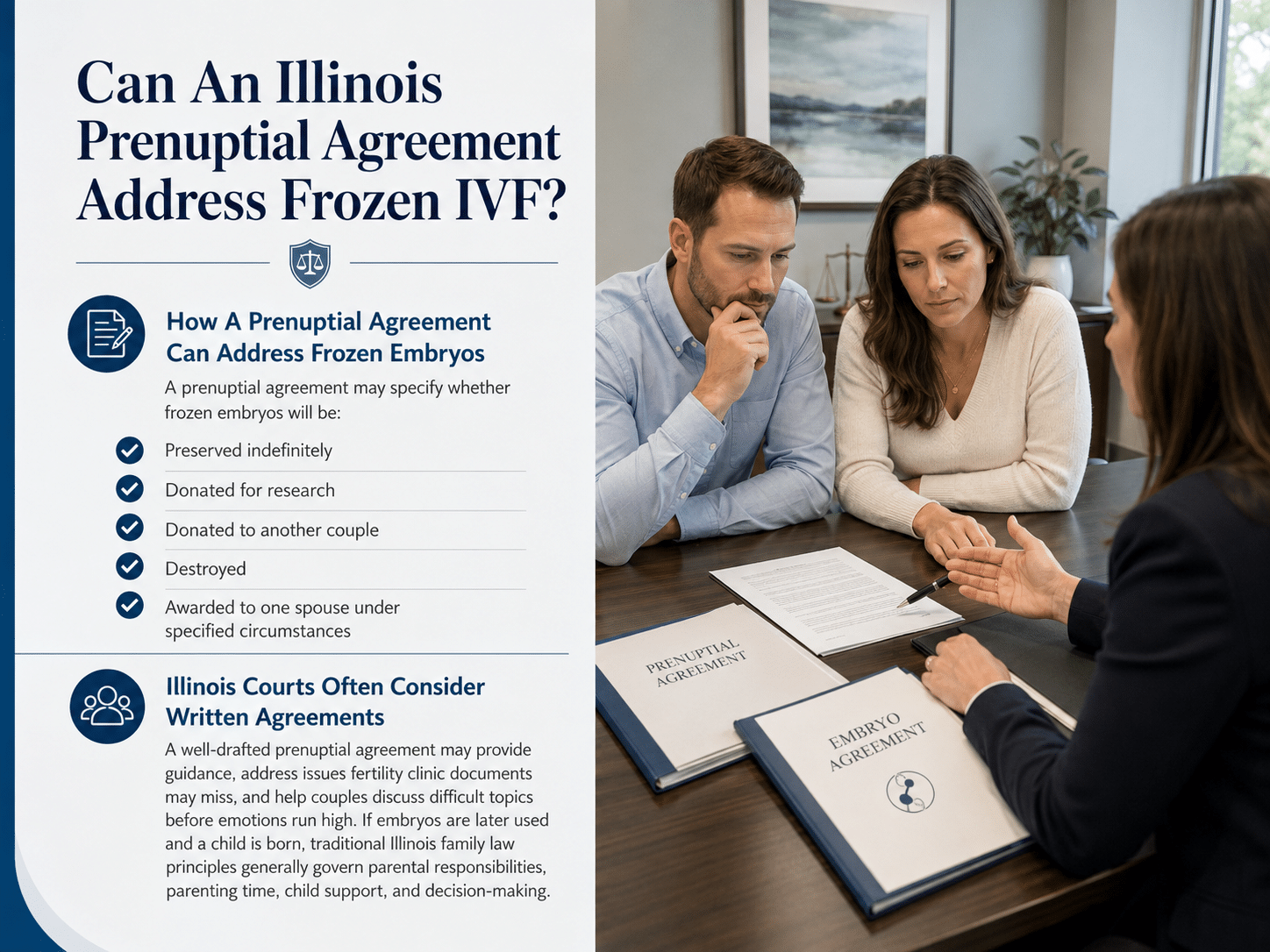
When planning a marriage, couples often talk about finances, property, inheritance, and their future family plans. For some, these conversations also cover fertility treatments and creating frozen embryos through IVF. Many couples start IVF hoping to stay together and use the embryos to grow their family, but sometimes things change. Divorce, separation, or other major life events can raise tough questions about who controls the embryos and how they might be used. A well-prepared prenuptial agreement can help address these issues before any disputes happen.
As a family law attorney in Schaumburg and across Illinois, I help people with complex family law matters, including divorce, parental rights, child custody, parenting time, paternity, and issues that come up when reproductive technology meets family law.
Understanding Frozen IVF Embryos And Divorce
IVF treatment often results in the creation of multiple embryos. Some embryos may be implanted immediately, while others are cryopreserved for future use. When a married couple later faces divorce, disagreements can arise regarding the disposition of those embryos.
Frozen embryos are different from other marital assets because they raise special legal and emotional issues. One spouse might want to use the embryos to have a child, while the other may not agree. Courts have to weigh each person’s rights, any agreements made, and public policy.
In Illinois, frozen embryos are not treated like regular marital property. Courts usually review any agreements made before or during fertility treatment. This is why a prenuptial agreement can be a helpful way to plan ahead.
How A Prenuptial Agreement Can Address Frozen Embryos
A prenuptial agreement can set out what will happen to frozen embryos if the marriage ends. This can make things clearer and help avoid future legal battles.
For example, a prenuptial agreement may specify whether frozen embryos will be:
- Preserved indefinitely.
- Donated for research.
- Donated to another couple.
- Destroyed.
- Awarded to one spouse under specified circumstances.
The agreement may also address whether either spouse will have the right to use the embryos after divorce and whether consent from both parties will be required before future implantation.
No agreement can promise a certain court decision, but courts often respect clear, valid agreements that show what both people wanted. The more detailed and well-written the agreement is, the more likely it will help settle future disagreements.
Illinois Courts Often Consider Written Agreements
Illinois courts usually value contracts and written agreements in family law. When there are disputes about reproductive materials, courts look at consent forms signed during fertility treatment and any prenuptial or postnuptial agreements about what happens to embryos.
Since these cases involve important rights about having children, courts pay close attention to the exact wording in the agreements and whether it would be fair to enforce them.
A well-drafted prenuptial agreement may provide guidance. A good prenuptial agreement can cover things that fertility clinic documents might miss. It also gives couples a chance to talk about tough topics before emotions run high during a divorce. If frozen embryos are later used and a child is born, traditional Illinois family law principles generally govern issues involving parental responsibilities, parenting time, child support, and decision-making.
Illinois courts focus on the best interests of the child when determining parental responsibilities and parenting time. Under Section 602.7 of the Illinois Marriage and Dissolution of Marriage Act, courts evaluate numerous factors when allocating parenting time. These factors include the child’s needs, the wishes of the parents, the child’s relationship with each parent, adjustment to home and school, and the ability of the parents to cooperate.
Similarly, Section 602.5 governs the allocation of significant decision-making responsibilities involving education, health care, religion, and extracurricular activities.
After a child is born, Illinois courts focus on what is best for the child, not on past arguments about who owned the embryos.
The Relationship Between Frozen IVF Issues And Visitation Rights
Even though disagreements about frozen embryos happen before a child is born, they can affect parenting issues later on.
Illinois law now uses the terms “parental responsibilities” and “parenting time” instead of “custody” and “visitation.” Still, many people use the old terms when talking about family law.
If a child is eventually born through IVF, parenting time issues are governed by Illinois law. Section 600 of the Illinois Marriage and Dissolution of Marriage Act defines parenting time as the time during which a parent is responsible for exercising caretaking functions concerning the child.
Courts decide parenting time based on what is best for the child. They do not automatically choose one parent over the other, but look at each family’s unique situation.
Since IVF can lead to unique family situations, it’s important to think about possible future parenting issues when making a prenuptial agreement.
Why Early Planning Matters
Many couples avoid discussing difficult possibilities because they hope those situations will never arise. However, addressing frozen embryo issues before marriage can reduce uncertainty and conflict later.
A carefully drafted prenuptial agreement may help:
- Clarify each party’s intentions.
- Reduce the likelihood of costly litigation.
- Protect reproductive rights.
- Address future family planning concerns.
- Create certainty regarding embryo disposition.
Early planning often allows couples to make thoughtful decisions without the emotional pressures that frequently accompany divorce proceedings.
Additional Family Law Considerations
Frozen embryo disputes may intersect with other family law issues. For example, questions may arise regarding paternity, future parental obligations, and the legal rights of individuals who seek to use embryos after divorce.
Illinois paternity laws may become relevant if a child is eventually born through assisted reproductive technology. Depending on the circumstances, courts may need to determine legal parentage and parental rights.
Family law disputes involving reproductive technology continue to evolve. Because these cases often involve complex legal and factual issues, obtaining legal guidance before entering into a prenuptial agreement can be extremely valuable.
IVF Custody FAQs
Can A Prenuptial Agreement Determine What Happens To Frozen Embryos?
Yes. A prenuptial agreement may include provisions addressing the future disposition of frozen embryos in the event of divorce, separation, death, or other specified circumstances. The agreement may state whether embryos will be preserved, donated, destroyed, or potentially used by one spouse. While courts examine each case individually, clear agreements often carry significant weight when disputes arise.
Are Frozen Embryos Considered Marital Property In Illinois?
Frozen embryos are generally not treated like traditional marital assets such as bank accounts, retirement funds, or real estate. Courts recognize that embryos involve important reproductive rights and personal interests. As a result, disputes concerning embryos often require a different legal analysis than ordinary property division matters.
What Happens If My Spouse Wants To Use The Embryos And I Do Not?
This is one of the most common disputes that arises in IVF-related divorce cases. Courts frequently examine agreements signed by the parties, including fertility clinic consent forms and prenuptial agreements. The court may weigh each party’s interests and determine whether existing agreements should be enforced.
Can A Court Ignore A Prenuptial Agreement About Frozen Embryos?
In some circumstances, courts may decline to enforce portions of an agreement if legal requirements are not satisfied or if enforcement would violate public policy. However, properly drafted agreements created with full disclosure and voluntary consent are often given substantial consideration by the court.
Why Should Couples Discuss IVF Issues Before Marriage?
Discussing IVF issues before marriage allows couples to make important decisions while they are working together toward common goals. These conversations can help avoid uncertainty, reduce future conflict, and establish clear expectations regarding reproductive choices and family planning.
If A Child Is Born From Frozen Embryos After Divorce, How Is Parenting Time Determined?
Parenting time is decided based on what is best for the child under Illinois law. Courts look at things like the child’s needs, how involved each parent is, family relationships, and each parent’s ability to care for the child. The main goal is to support the child’s well-being and stability.
Can A Prenuptial Agreement Decide Future Child Custody Or Visitation Rights?
No. Illinois courts generally will not enforce agreements that attempt to predetermine future child custody, parental responsibilities, or parenting time arrangements. Those decisions must be made according to the child’s best interests at the time the issue arises. A prenuptial agreement may address embryo disposition, but it generally cannot bind a court regarding future parenting decisions involving a child.
Are IVF-Related Divorce Cases More Complicated Than Traditional Divorce Cases?
They often are. IVF disputes can involve constitutional rights, medical considerations, contractual issues, and family law principles. Cases involving frozen embryos frequently require courts to address questions that do not arise in ordinary divorce proceedings. Because of these complexities, careful planning and legal guidance are often beneficial.
What Other Family Law Issues Can Be Connected To Frozen Embryos?
Issues involving frozen embryos may overlap with paternity, parentage determinations, parental responsibilities, parenting time disputes, child support matters, and future family planning concerns. Every situation is unique, which is why individualized legal advice is important.
Should I Review My Fertility Clinic Documents Along With My Prenuptial Agreement?
Absolutely. Fertility clinic consent forms often contain provisions regarding embryo disposition. Those documents should be reviewed together with any prenuptial agreement to ensure consistency and avoid conflicting instructions. Addressing potential inconsistencies early may help prevent future disputes.
Schedule A Consultation With Our IVF Attorneys
Questions involving frozen IVF embryos, divorce, parental rights, parenting time, visitation issues, paternity matters, and family law disputes can become highly emotional and legally complex. Careful planning before marriage and informed legal guidance during divorce proceedings can make a significant difference in protecting your interests and helping you make informed decisions. Whether you are considering a prenuptial agreement, facing a dispute involving reproductive technology, or dealing with child custody and parenting time concerns, I can help you evaluate your options and understand how Illinois law may apply to your situation.
If you have questions about whether a prenuptial agreement can address frozen IVF embryos, or if you need representation in a divorce, child custody, visitation, parenting time, paternity, or other family law matter, contact the Law Office of Fedor Kozlov today. I represent clients in Schaumburg and throughout Chicago, Illinois Contact our embryo dispute attorney the Law Office of Fedor Kozlov at (847) 241-1299 to schedule a consultation.
