
Child Custody Cases in Cook County Courts
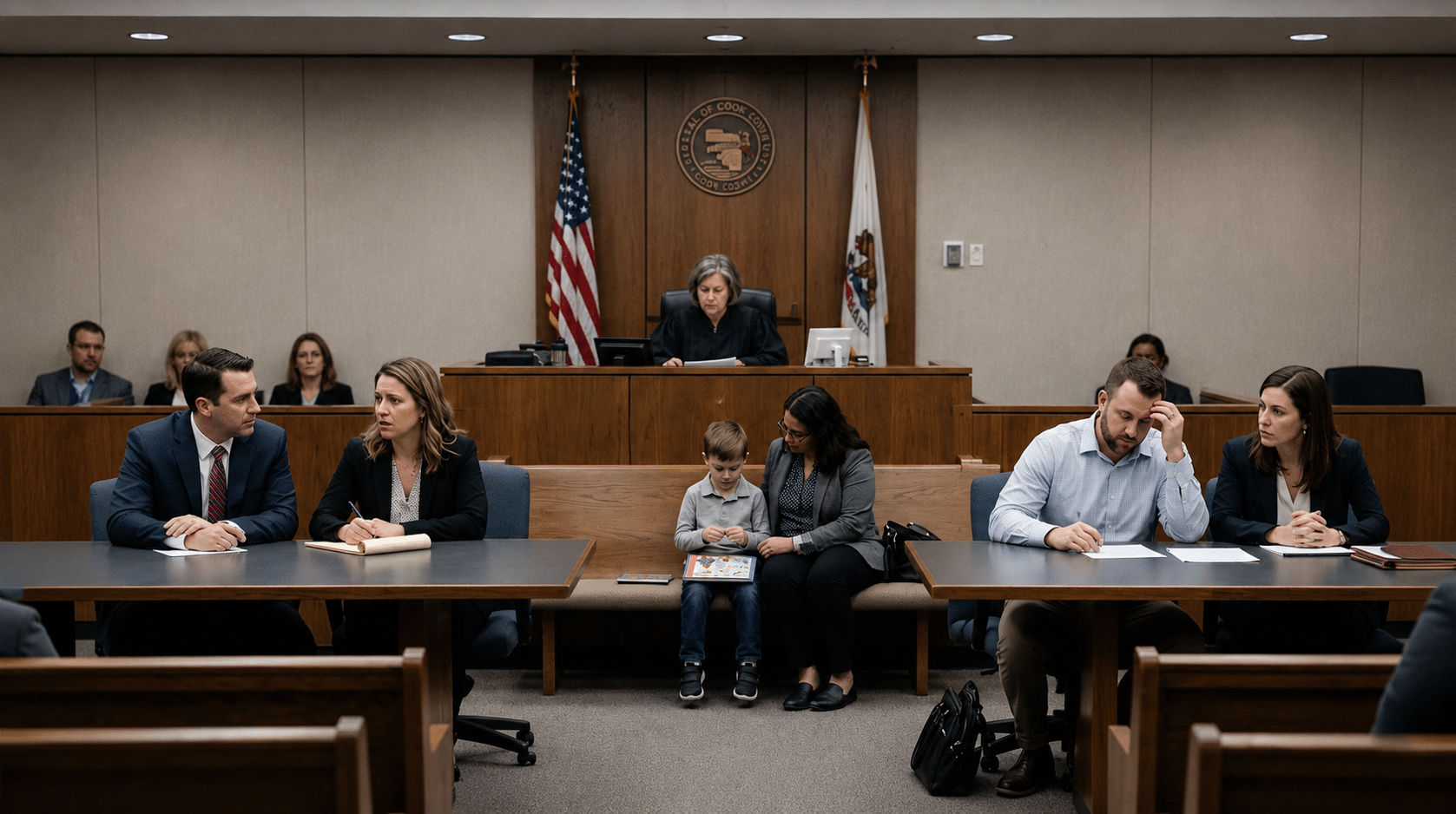
When parents separate or divorce, few issues are more important than determining how children will be raised moving forward. Child custody cases in Cook County Courts often involve difficult decisions regarding parenting responsibilities, parenting time schedules, visitation rights, and other matters affecting a child’s well-being. Illinois law focuses on protecting the best interests of the child while encouraging parents to remain actively involved in their children’s lives whenever appropriate.
Whether you are pursuing a divorce, establishing paternity, seeking parenting time, or modifying an existing court order, understanding how Cook County Courts handle child-related matters is critical. I represent mothers and fathers in family law cases throughout Schaumburg, Cook County, and the greater Chicago area, helping them protect their parental rights and their children’s futures.
Understanding Child Custody Under Illinois Law
Illinois has moved away from using the terms “custody” and “visitation” in most family law cases. Now, the Illinois Marriage and Dissolution of Marriage Act talks about dividing parental responsibilities and parenting time. These rules are mainly found in 750 ILCS 5/600.
Parental responsibilities cover important decisions about a child’s education, healthcare, religion, and activities outside of school. Parenting time is the schedule that shows when a child will be with each parent.
Cook County judges are required to make decisions based upon the child’s best interests rather than the preferences of either parent. In Illinois, courts evaluate numerous factors when determining parental responsibilities and parenting time arrangements.
The court’s goal is not to reward or punish either parent. Instead, the focus remains on creating a parenting arrangement that promotes stability, safety, and the overall well-being of the child.
How Cook County Courts Determine The Best Interests Of The Child
The best interests standard is the foundation of every child custody case in Illinois. Under 750 ILCS 5/602.7, courts consider a variety of factors before entering a parenting order.
Judges may look at things like what the parents want, what the child wants if they are old enough, the child’s relationship with each parent, how the child is doing at home and school, everyone’s mental and physical health, and whether each parent supports the child’s relationship with the other parent.
The court also checks if either parent has done anything that could harm the child. Evidence of domestic violence, substance abuse, neglect, or similar issues can strongly affect the case’s outcome.
Every family is different. As a result, there is no automatic parenting arrangement that applies in every situation. Judges review the facts of each case carefully before making decisions affecting parental rights and responsibilities.
Parenting Plans In Illinois Divorce Cases
Illinois law generally requires parents to submit a parenting plan that outlines how parental responsibilities and parenting time will be handled. The requirements for parenting plans are set forth in 750 ILCS 5/602.10.
A parenting plan may address:
- Weekly parenting schedules
- Holiday schedules
- Vacation time
- Decision-making authority
- Transportation arrangements
- Communication between parents and children
- Procedures for resolving future disputes
If parents agree on a plan, the court usually approves it as long as it is good for the child. If parents cannot agree, the court will hold hearings and decide on a parenting arrangement.
A well-drafted parenting plan can help reduce future conflicts and provide clear expectations for both parents.
Parenting Time And Visitation Rights
Parenting time disputes are among the most common family law matters heard in Cook County Courts. Illinois law recognizes the importance of maintaining meaningful relationships between children and both parents whenever appropriate.
Under 750 ILCS 5/602.7, courts generally encourage parenting schedules that allow children to maintain substantial contact with each parent. However, parenting time may be restricted if a parent’s conduct seriously endangers the child’s physical, mental, moral, or emotional health.
In some situations, grandparents or other relatives may seek visitation rights. Illinois law provides limited circumstances under which non-parents may petition for visitation under 750 ILCS 5/602.9.
When parenting time disputes arise, courts often look closely at each parent’s involvement in the child’s life, communication skills, and ability to cooperate regarding parenting decisions.
Paternity Cases And Parental Rights
Many child custody cases arise outside of marriage. In these situations, establishing legal parentage is often the first step toward obtaining parenting rights.
The Illinois Parentage Act of 2015, found at 750 ILCS 46/101 et seq., governs paternity proceedings in Illinois. Once parentage is legally established, either parent may seek parenting time, parental responsibilities, child support, and other court orders involving the child.
Establishing parentage is important because it creates legal rights and responsibilities for both parents. Without a legal determination of parentage, a parent may face challenges when seeking parenting time or participating in major decisions affecting the child.
Paternity cases can involve DNA testing, voluntary acknowledgments of parentage, and court proceedings to determine parental rights.
Modifying Existing Child Custody Orders
Life circumstances often change after a custody order is entered. Parents may relocate, children may develop different needs, or one parent’s circumstances may significantly change.
Illinois law allows modifications of parental responsibilities and parenting time under certain circumstances. Relevant provisions can be found under 750 ILCS 5/610.5.
A parent seeking modification must generally demonstrate that a substantial change in circumstances has occurred and that the proposed modification serves the child’s best interests.
Examples of circumstances that may justify modification include relocation, changes in employment schedules, educational concerns, health issues, or concerns regarding a child’s safety.
Because modifications can significantly impact parental rights, courts carefully review the evidence before changing existing orders.
Why Legal Representation Matters In Child Custody Cases
Child custody disputes can become highly emotional and legally complex. Decisions made during these proceedings may affect your relationship with your child for many years.
Whether you are involved in a divorce, paternity action, parenting time dispute, or modification proceeding, it is important to understand your rights and obligations under Illinois law. Proper preparation, strong evidence, and a clear presentation of your position can make a substantial difference in the outcome of your case.
I work closely with clients to develop strategies that protect their parental rights while focusing on solutions that promote the best interests of their children. Every case presents unique challenges, and individualized representation is often critical when addressing family law disputes in Cook County Courts.
Illinois Parenting Time Frequently Asked Questions
What Is The Difference Between Parenting Time And Parental Responsibilities?
Parenting time refers to the schedule that determines when a child spends time with each parent. Parental responsibilities refer to the authority to make important decisions regarding the child’s education, healthcare, religion, and extracurricular activities. In some cases, parents share decision-making authority, while in others, one parent may have primary responsibility for certain decisions. The court determines these arrangements based upon the child’s best interests.
Can A Child Choose Which Parent To Live With?
A child’s preference may be considered by the court, but the child does not automatically decide where he or she will live. Under Illinois law, the court may consider the wishes of a mature child as one factor among many. The judge will evaluate the child’s age, maturity, reasoning, and overall circumstances before determining what arrangement serves the child’s best interests.
How Long Does A Child Custody Case Take In Cook County?
The length of a custody case varies depending on the complexity of the issues involved and whether the parties can reach an agreement. Some cases resolve within a few months through negotiation or mediation, while highly contested cases may take significantly longer. Factors such as court scheduling, discovery, evaluations, and the number of disputed issues can affect the timeline.
Can Parenting Time Be Denied If Child Support Is Not Paid?
Generally, parenting time and child support are treated as separate legal issues. A parent typically cannot withhold parenting time because child support has not been paid. Likewise, a parent generally cannot stop paying child support because parenting time is being denied. If either issue arises, court intervention may be necessary to enforce existing orders.
What Happens If A Parent Violates A Parenting Plan?
When a parent violates a court-ordered parenting plan, the other parent may seek enforcement through the court. Judges have various remedies available, including makeup parenting time, modifications of existing orders, fines, and other sanctions. Courts take violations seriously because consistency and stability are important for children.
Can Custody Orders Be Changed After Divorce?
Yes. Illinois law permits modifications when certain legal requirements are met. A parent seeking modification must generally demonstrate a substantial change in circumstances and show that the requested change is in the child’s best interests. Courts carefully evaluate modification requests because stability is often important for children.
Do Unmarried Fathers Have Parenting Rights In Illinois?
Yes, but legal parentage must first be established. Once parentage is established under the Illinois Parentage Act, fathers may seek parenting time, parental responsibilities, and other parental rights. Establishing parentage also creates legal responsibilities, including child support obligations.
Does Relocation Affect Child Custody Orders?
Relocation can have a major impact on parenting arrangements. Illinois law contains specific requirements regarding relocation requests under 750 ILCS 5/609.2. Depending on the distance and circumstances involved, a parent may need court approval before relocating with a child. Courts evaluate whether the proposed move serves the child’s best interests while considering its impact on the parent-child relationship.
Call Our Schaumburg Parenting Time Lawyer To Discuss Your Situation
Child custody disputes often involve some of the most important decisions a parent will ever face. Whether you are seeking parenting time, parental responsibilities, visitation rights, paternity determinations, or modifications of existing orders, it is important to have strong legal representation protecting your interests and your relationship with your child. I represent clients on both sides of family law disputes and work to achieve solutions that support the best interests of children while protecting parental rights under Illinois law.
If you are involved in a child custody case in Cook County, do not face the process alone. The Law Office of Fedor Kozlov represents clients in Schaumburg, throughout Cook County, Chicago, and across Illinois in divorce, parenting time, visitation, paternity, and family law matters. Contact our Schaumburg custody lawyers at the Law Office of Fedor Kozlov at (847) 241-1299 to receive a consultation and let’s discuss your legal options.
