
What Happens If Child Support Is Not Paid In Illinois?
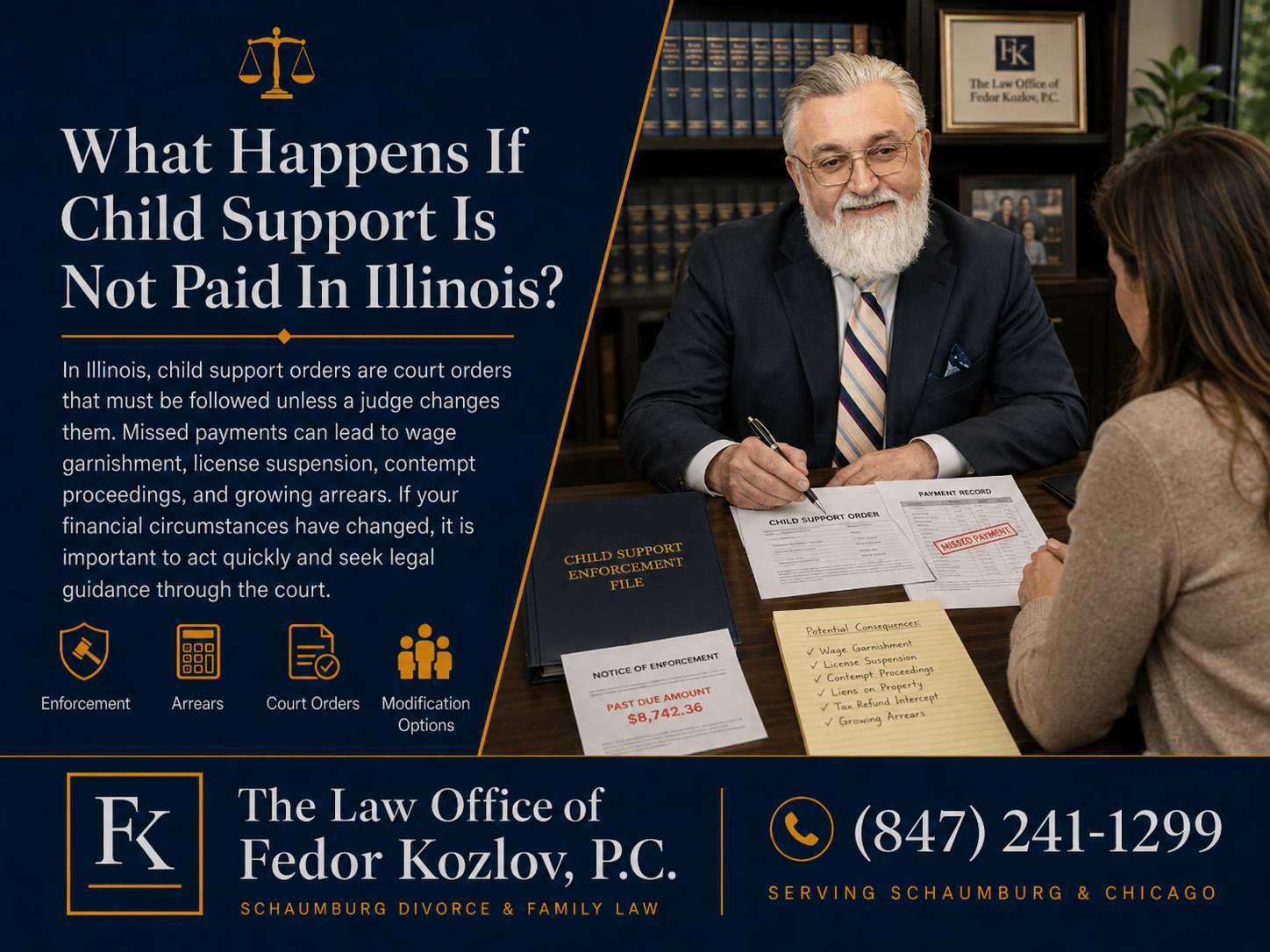
In Illinois, child support orders are official court decisions, not just informal agreements between parents. If payments stop, both the parent owed support and the parent who misses payments can face serious consequences quickly. Issues like financial stress, job loss, or disagreements about parenting time often lead to child support problems.
However, courts expect parents to follow the current order unless a judge changes it. You cannot stop paying just because you lost visitation, disagree with how the money is spent, or think your finances have changed. If you truly cannot afford your payments, you may have legal options, but you need to act quickly and go through the courts. Knowing how child support enforcement works in Schaumburg can help you protect your rights, your finances, and your relationship with your child.
How Illinois Courts Handle Child Support Obligations
Illinois child support laws are mainly based on the Illinois Marriage and Dissolution of Marriage Act, found at 750 ILCS 5/505. The state uses an income shares model to figure out support amounts. This approach looks at both parents’ incomes, how many children there are, parenting time, healthcare costs, daycare expenses, and other financial details.
After a court issues a child support order, the parent who pays must follow the terms exactly. Missing payments can quickly lead to legal trouble. Even missing part of a payment can add up to a large debt over time, since unpaid child support usually does not go away.
According to Illinois law, child support is usually enforced by taking payments directly from the paying parent’s paycheck. Employers can deduct support before the parent gets paid. Still, if payments are missed, other enforcement actions can happen even with wage withholding.
Illinois courts treat child support as very important because the law sees financial support as essential for a child’s well-being and stability.
Child Support Arrears Continue To Accumulate
It’s important for parents to know that unpaid child support keeps adding up until it is paid off. In some cases, interest can also be charged.
Under 750 ILCS 5/505(g-5), unpaid child support can become a judgment by operation of law. This means the unpaid amount may be treated similarly to other enforceable debts, and collection actions may follow.
Some parents think they can stop payments if they lose their job or have money problems, but this is not true. In Illinois, you usually need to ask the court to change your support order. Until a judge approves a change, you must keep paying the original amount.
For example, if a parent ordered to pay $1,500 per month loses employment but waits six months to seek a modification, that parent could still owe $9,000 or more in back support even if they had no income during that period. That’s why it’s important to act fast if your financial situation changes.
Penalties For Failing To Pay Child Support In Illinois
Illinois courts have different ways to enforce child support if it is not paid. Depending on the situation, the penalties can be very serious.
Income Withholding And Wage Garnishment
Illinois law lets courts take child support directly from a parent’s paycheck. Often, this starts automatically. If payments are missed, more money may be withheld to catch up.
Suspension Of Driver’s Licenses
If a parent falls far behind on child support, the state can suspend their driver’s license. Professional and recreational licenses can also be affected. Losing a license can make life harder because it can affect your job and daily activities.
Tax Refund Intercepts
Federal and state tax refunds can be taken to pay off unpaid child support. The government may use your refund to cover back support before you get the money.
Liens And Property Seizures
Illinois can put liens on your house, bank accounts, or other property if you owe child support. Sometimes, your accounts can be frozen or taken to pay what you owe.
Passport Restrictions
If you owe a lot of child support, federal law may stop you from getting or renewing a passport.
Contempt Of Court Proceedings
A very serious consequence is being held in contempt of court. If a judge thinks a parent could pay but chose not to, the parent may be found in contempt. Penalties for contempt can include fines, probation, or even jail in some cases.
Can A Parent Go To Jail For Not Paying Child Support?
Yes, Illinois courts can send someone to jail for not paying child support, especially if they think the parent did it on purpose.
Civil contempt proceedings are common in Illinois family law courts. During these hearings, the court evaluates whether the parent had the ability to pay and knowingly failed to comply with the support order.
If a parent is accused of contempt, they may need to show financial records, job history, medical details, and other proof to explain why they missed payments.
Judges often look closely at issues such as:
- Employment status
- Income history
- Spending habits
- Attempts to obtain work
- Efforts to comply with court orders
- Whether partial payments were made
The court might set conditions, like paying a lump sum or starting a payment plan, to help the parent avoid jail.
Every case is different, so having a lawyer can be very important during enforcement proceedings.
Parenting Time And Child Support Are Separate Issues
A common misunderstanding is about parenting time. Some parents think they can stop paying support if they are denied visits, while others think they can refuse visits if support is unpaid.
Illinois law generally treats these as separate legal issues.
If you are denied visitation, you usually still have to pay support while you ask the court for help. In the same way, a parent owed support usually cannot refuse visits just because payments are late.
Child support exists for the benefit of the child, not as a reward or punishment between parents.
When custody disputes and child support issues overlap, the legal situation can become much more complicated. Courts may need to evaluate parenting responsibilities, modifications, relocation issues, income disputes, and allegations involving the child’s best interests.
Modifying Child Support In Illinois
When a substantial change in circumstances occurs, Illinois law may allow child support modifications.
Under 750 ILCS 5/510, courts may modify support obligations based on significant financial changes such as job loss, reduced income, disability, serious illness, changes in parenting time, or increased expenses involving the child.
However, modifications are generally not retroactive beyond the filing date of the request. This means delaying legal action can become very costly.
Parents who anticipate financial problems should seek legal guidance immediately instead of waiting until arrears become overwhelming.
Paternity Issues And Child Support
Paternity disputes may also affect child support cases in Illinois. Before support obligations are established, legal parentage often must be determined.
Illinois courts may address paternity issues through voluntary acknowledgment, DNA testing, or court proceedings. Once paternity is established, support obligations may follow along with parenting rights and responsibilities.
Disputes involving paternity, custody, visitation, and support frequently overlap and require careful legal analysis.
Why Legal Representation Matters In Child Support Cases
Child support disputes can quickly escalate into broader family law conflicts involving divorce, custody, parenting plans, visitation schedules, and financial discovery. Whether you are seeking unpaid support or defending against enforcement allegations, the outcome may affect your finances, driver’s license, professional reputation, and parental rights.
I work with clients on both sides of Illinois family law disputes, including divorce proceedings, child custody matters, visitation disputes, paternity cases, and support enforcement actions.
Every case presents different financial realities and family dynamics. A strategic legal approach can help protect your interests while working toward solutions that comply with Illinois law.
FAQs About Unpaid Child Support In Illinois
Can Child Support Be Forgiven In Illinois?
Illinois courts generally do not automatically forgive unpaid child support. Once payments become overdue, the arrears usually remain enforceable unless the court enters an order addressing the issue. In some situations, parents may negotiate certain resolutions regarding portions of arrears, but this depends on the facts of the case and whether public assistance is involved. Courts typically focus heavily on the child’s financial needs when evaluating these matters.
What Happens If I Lose My Job And Cannot Afford Child Support?
Losing employment does not automatically stop your child support obligation. You must usually file a petition to modify support as soon as possible. Until the court changes the order, the existing payment amount generally remains enforceable. Illinois judges may consider job loss, medical conditions, or reduced earnings when evaluating modification requests, but waiting too long to file can create large arrears that continue accumulating.
Can My Driver’s License Be Suspended For Unpaid Child Support?
Yes. Illinois authorities may suspend a driver’s license when child support obligations fall significantly behind. Professional licenses and other state-issued licenses may also be affected in some situations. License suspension often creates additional employment difficulties, which can make resolving support arrears even more challenging.
Does Bankruptcy Eliminate Child Support Debt?
Child support obligations are generally not dischargeable in bankruptcy. Even if a parent files for bankruptcy protection, past-due child support usually remains enforceable. Courts continue treating child support as a priority obligation because it directly impacts the welfare of the child.
Can I Stop Paying Child Support If The Other Parent Denies Visitation?
No. Illinois courts usually treat parenting time and child support as separate legal matters. If visitation is denied, you may need to pursue enforcement through family court, but stopping child support payments can expose you to additional penalties and enforcement actions.
What If The Other Parent Is Hiding Income?
Income disputes frequently arise in Illinois family law cases. Courts may examine bank records, tax returns, business records, employment information, and other financial evidence when determining support obligations. If you believe a parent is intentionally understating income, legal action may help uncover additional financial information relevant to support calculations.
How Long Does Child Support Last In Illinois?
In most cases, child support continues until the child turns 18 or graduates from high school, whichever occurs later, but usually no later than age 19. Certain circumstances involving disabilities or college expenses may create additional support obligations depending on the facts of the case and court orders entered.
Call Our Schaumburg Divorce Attorney To Protect Your Interests
Child support disputes can create financial pressure, emotional stress, and serious legal consequences. Whether you are trying to collect unpaid support, defend against enforcement actions, modify an existing order, resolve custody disputes, address visitation concerns, or establish paternity, experienced legal guidance can make a substantial difference in your case.
The Law Office of Fedor Kozlov represents clients in Schaumburg and throughout Chicago, Illinois, in divorce proceedings, child custody disputes, visitation matters, paternity cases, and child support enforcement issues. Contact our Schaumburg child support attorney at the Law Office of Fedor Kozlov at (847) 241-1299 to receive a consultation.
