
Revisiting Divorce Agreements in Illinois Years Later
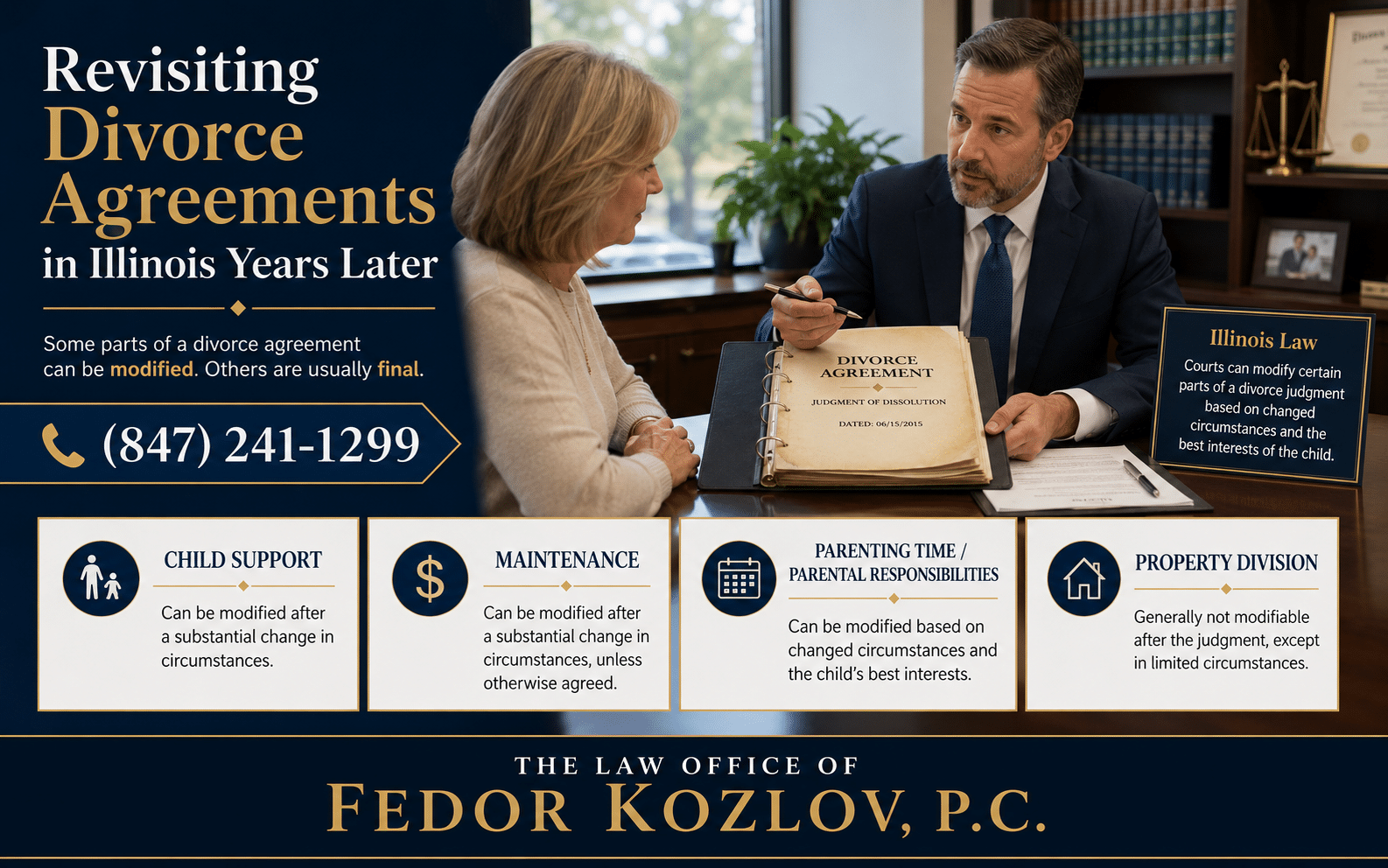
Life often changes after a divorce. A parenting schedule that once worked well may become difficult due to a new job, moving, remarriage, financial problems, or changes in a child’s needs. Many people think that once a divorce judgment is final, the terms can never change. In Illinois, that is not always the case. Some parts of a divorce agreement can be changed years later if legal requirements are met and the court finds a good reason. However, some terms, especially those about property division, are much harder to change once they are finalized. Knowing when and how post-divorce changes work is important because mistakes can affect your finances, parenting rights, and future legal responsibilities.
Why Former Spouses Return To Court Years After Divorce
It is common for former spouses to go back to court about their divorce agreements, even years after the case is over. Often, these issues involve parenting time, child support, maintenance payments, or making sure court orders are followed. Illinois courts understand that families change, so the law allows some changes when circumstances change a lot.
For example, one parent might get a job offer in another city or state. A child could develop new educational or medical needs that were not expected during the divorce. One spouse might lose their job or start earning much more. A former spouse who agreed to pay maintenance may later want to stop payments if the other person remarries or enters a new supportive relationship. Under the Illinois Marriage and Dissolution of Marriage Act, courts may modify support and parenting-related matters under certain conditions. Relevant provisions include 750 ILCS 5/510 regarding maintenance and support modifications and 750 ILCS 5/610.5 concerning parenting time and parental responsibilities.
Going back to court years later can be legally and emotionally challenging. Old divorce records may become important again, and both sides often disagree about whether things have really changed enough to change the agreement.
Modifying Child Support Under Illinois Law
Child support obligations frequently become the subject of post-divorce litigation. Illinois law allows child support to be reviewed and modified when there has been a substantial change in circumstances. Section 750 ILCS 5/510(a) provides authority for modification of child support obligations.
A substantial change may include:
- Significant increases or decreases in either parent’s income.
- Changes in parenting time arrangements.
- Medical issues affecting the child.
- Educational expenses.
- Loss of employment.
- Disability or illness.
Illinois courts now calculate child support using the income shares model, which considers both parents’ incomes and the amount of parenting time exercised by each parent. Because financial situations often evolve over the years, support amounts that once seemed fair may no longer reflect reality.
It is important to know that informal agreements between parents usually do not replace court orders. If parents agree verbally to lower support payments without court approval, problems can come up later if unpaid amounts are claimed. Illinois courts expect changes to be made officially through the court.
Revisiting Parenting Time And Decision-Making Responsibilities
Parenting disputes often continue long after a divorce judgment is entered. Illinois law allows modifications to parenting plans and allocations of parental responsibilities under certain circumstances. Section 750 ILCS 5/610.5 governs modifications involving parenting time and decision-making authority.
Courts focus heavily on the best interests of the child when evaluating requested changes. Judges consider factors such as:
- The child’s relationship with each parent.
- Stability and continuity.
- Educational and medical needs.
- The mental and physical health of the parties.
- The willingness of each parent to encourage the child’s relationship with the other parent.
A parent A parent who wants major changes usually has to show that big changes have happened since the original order. For example, one parent might keep interfering with visits, move away without agreement, or not meet the child’s needs. Under 750 ILCS 5/609.2, a parent seeking to relocate with a child may need court approval depending on the distance involved. Even years after divorce, relocation disputes can reopen difficult custody issues and significantly affect parenting schedules.
Can Property Division Be Changed Years Later?
Property division is treated differently than support or parenting matters. Once marital property has been divided through a final judgment, Illinois courts generally consider the division permanent. Section 750 ILCS 5/502(f) states that property disposition terms are ordinarily non-modifiable.
This means that people usually cannot go back years later just because they regret the agreement or think it was unfair. Courts strongly value final decisions in property matters.
However, there are limited exceptions. A property settlement may potentially be challenged if there is evidence of fraud, concealment of assets, duress, misrepresentation, and/or coercion.
For example, if one spouse hid significant bank accounts, investments, or business interests during the divorce process, the other spouse may seek relief from the judgment. Illinois courts take financial disclosure obligations seriously, and intentional concealment can create substantial legal consequences.
Cases with hidden cryptocurrency, undisclosed business income, or secret retirement accounts are becoming more common in modern divorces. Looking into these issues often takes a lot of financial investigation and legal review.
Maintenance Modifications And Termination
Spousal maintenance, also called alimony, is another issue that may be revisited after divorce. Section 750 ILCS 5/510(c) addresses termination and modification of maintenance obligations.
Maintenance may potentially be modified if substantial changes occur, including loss of income, retirement, disability, significant increases in earnings, or changes in financial needs.
Maintenance can also terminate automatically in certain situations, such as remarriage of the receiving spouse. In some cases, maintenance may terminate if the receiving spouse enters a resident, continuing conjugal relationship with another person.
Whether maintenance is reviewable or non-modifiable depends heavily on the language contained in the original divorce agreement. Some parties intentionally agree that maintenance will remain fixed and non-modifiable. Others leave future review rights open.
Because maintenance disputes can involve complex financial evidence and interpretation of prior agreements, courts often examine both the original judgment and the current circumstances very carefully.
Enforcement Problems Years After Divorce
Not every post-divorce case involves modifying an agreement. Sometimes one party simply refuses to follow existing court orders. Enforcement proceedings are common in Illinois family courts.
Examples include failure to pay child support, refusal to comply with parenting schedules, failure to transfer property, violations of court-ordered obligations, or interference with visitation rights.
Illinois courts have the authority to enforce judgments through contempt proceedings and other legal remedies. A party that intentionally violates court orders may face fines, attorney’s fees, wage garnishment, suspension of licenses, or even jail time in serious contempt cases.
When old divorce issues remain unresolved for years, financial records, communications, and prior court filings often become critical evidence. Keeping organized records can make a major difference when enforcement becomes necessary.
FAQs About Revisiting Divorce Agreements Years Later
Can Child Support Be Changed Years After A Divorce?
Yes. Illinois law allows child support modifications when there has been a substantial change in circumstances. Examples may include changes in income, parenting time, employment status, medical conditions, or the child’s financial needs. The court will review financial information from both parents before determining whether modification is appropriate under 750 ILCS 5/510.
Can Parenting Time Orders Be Modified After Several Years?
Yes. Parenting plans and allocation judgments may be modified if the requested change serves the child’s best interests. Courts consider many factors, including the child’s stability, school performance, parental cooperation, and the child’s overall welfare. Illinois courts take parenting modifications seriously because changes can significantly affect the child’s daily life.
Can I Stop Paying Maintenance If My Former Spouse Remarries?
In many situations, maintenance obligations terminate when the receiving spouse remarries. Illinois law also allows possible termination if the receiving spouse enters a resident, continuing conjugal relationship. However, each case depends on the exact wording of the divorce agreement and the facts involved. Court approval may still be necessary before stopping payments.
What Happens If My Former Spouse Violates The Divorce Agreement?
If a former spouse refuses to comply with court orders, enforcement proceedings may be filed. Illinois courts can impose penalties for contempt of court, including attorney’s fees, wage garnishment, fines, and other enforcement remedies. Documentation and evidence often become extremely important in these cases.
Can Property Division Ever Be Changed After Divorce?
Property division is usually final and non-modifiable under Illinois law. However, there are limited situations where a judgment may be challenged, including fraud, hidden assets, or intentional misrepresentation. These cases can become financially and legally complex.
What If We Informally Agreed To Different Terms Without Going To Court?
Informal agreements may create serious legal problems later. Even if both parties verbally agreed to changes involving support or parenting arrangements, the original court order generally remains enforceable until officially modified by the court. It is important to properly document modifications through legal proceedings.
How Long Does A Post-Divorce Modification Case Take?
The timeline varies depending on the complexity of the issues, the amount of evidence involved, and whether the parties can reach agreements. Some cases resolve within a few months, while contested litigation involving finances or parenting disputes may take much longer.
Do I Need A Lawyer To Modify A Divorce Agreement?
While Illinois law does not require legal representation, post-divorce litigation can become highly technical. Court procedures, financial disclosures, statutory requirements, and evidentiary rules often affect the outcome. A lawyer can help evaluate whether a modification is legally justified and properly present the case to the court.
Contact Our Schaumburg Divorce Law Firm To Discuss Your Case
Divorce agreements can continue affecting your life for many years. Whether you are seeking modifications involving child custody, visitation rights, child support, maintenance, paternity matters, or enforcement of court orders, it is important to understand your rights under Illinois law. I represent clients on either side of family law disputes and work to protect their financial interests, parenting rights, and long-term stability.
The Law Office of Fedor Kozlov represents clients in Schaumburg and throughout Chicago, Illinois, in divorce proceedings and family law matters. Call our Schaumburg divorce law firm at the Law Office of Fedor Kozlov at (847) 241-1299 to receive a consultation and discuss your situation.
